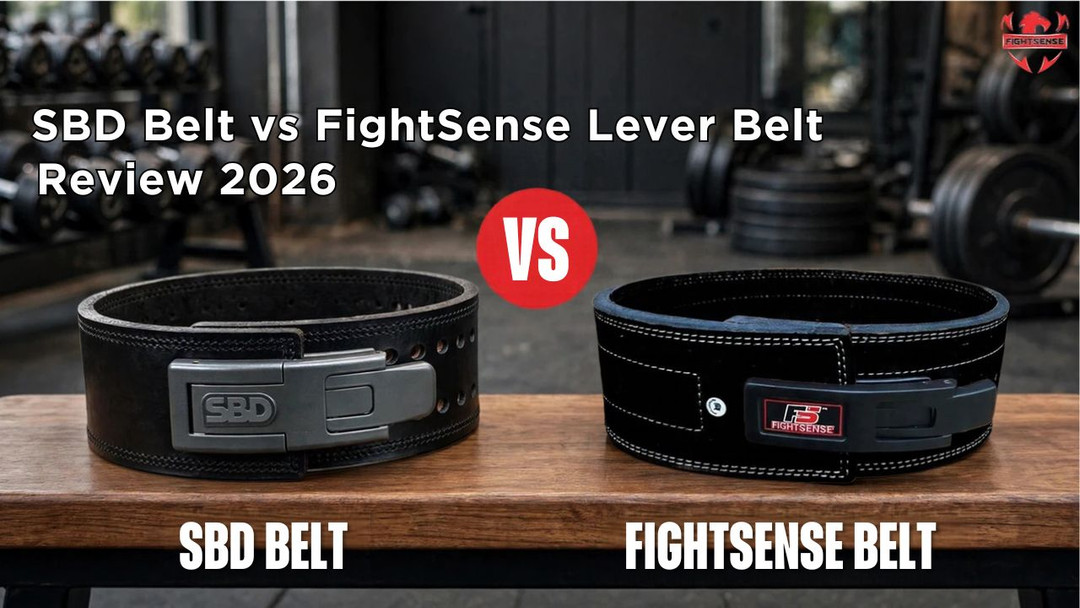
SBD Belt vs FightSense Lever Belt Review 2026
Introduction
An sbd belt is a familiar sight on powerlifting platforms, where its stiff leather and rigid support have earned it a strong reputation among competitive lifters. The FightSense Lever Belt is the comfort-first alternative: a premium lever belt that combines support with ready-to-use comfort at a lower price. This review compares the two neutrally on support, comfort, durability and value, so you can make an informed choice.
Quick Answer: Which One Wins?
In short, SBD wins on maximum rigidity, while FightSense wins on comfort, speed and value. The SBD option is stiffer, needs a real break-in and costs more. The FightSense Lever Belt is comfortable out of the box, adjusts fast between sets and costs less. Advanced powerlifters may prefer SBD; most lifters, including beginners, will be happy with FightSense.
What Is an SBD Belt?
The SBD option is built from thick, stiff leather with a standard lever mechanism, and it is known for maximum stability on squats and deadlifts. Sizes cover all lifters, the construction is extremely durable, and the belt is trusted by competitive lifters who prioritise support over comfort. The trade-off is a real break-in period: the leather feels rigid at first and softens only with weeks of use. A stiff belt raises intra-abdominal pressure and helps stabilise the spine under heavy loads.
Support and Stability Head to Head
On pure support, an sbd belt is hard to beat: the stiff 13mm leather barely flexes, giving maximum pushback for squats and deadlifts under extreme loads. FightSense uses dense premium leather that stays close on support while flexing slightly more around the ribs and hips, which many lifters find more comfortable on long sessions.
For a closer look at the two closure styles, the lever belt guide explains how lever and prong belts differ, and the leather belt guide covers what makes a good leather belt last.
Comfort, Fit and Break-In
Comfort is where an sbd belt asks the most patience: the stiff leather needs a real break-in period and can pinch ribs and hips until it softens. FightSense arrives with a slightly softer feel and a quick-adjust lever, so it is comfortable from the first session and easy to put on and take off between sets.
The how to wear a lifting belt guide shows how to position any belt for a proper brace, and the how to use a belt guide explains bracing and fit in detail.
Lever Mechanism and Adjustments
The lever on an sbd belt is a standard steel mechanism that locks tight, while the FightSense quick-adjust lever is built for faster setup and release between sets. Both hold firm under load; the difference is speed and convenience, not holding power.
The good weight lifting belt guide covers how to judge hardware quality and value before buying.
Price and Value
On price, an sbd belt costs more than the FightSense Lever Belt, and the premium buys maximum rigidity and competition pedigree rather than extra comfort. FightSense offers similar support with better comfort and adjustability at a lower price, which makes it the better value for most lifters.
If you prefer a buckle to a lever, the FightSense Leather Weight Lifting Belt is the prong-buckle option in the same heavy-duty leather, and the where to buy a weightlifting belt guide covers what to check before you spend money.
Who Should Choose Which Belt?
Choose an sbd belt if you are an experienced powerlifter chasing maximum rigidity under extreme weights and you do not mind a long break-in. Choose FightSense if you are a beginner or intermediate lifter, or if you want comfort without sacrificing support.
Either way, size matters more than brand: measure around your navel with your stomach relaxed, never your trouser waist, and check the sizing chart before ordering. The weightlifting leather straps guide covers the grip support that pairs well with heavy pulling days.
Performance Across the Big Lifts
In testing across squats, deadlifts and bench press, the SBD felt most at home on maximal squats and deadlifts, where its rigidity pays off, while the FightSense option was more comfortable on bench press and quicker to adjust between sets. For everyday lifting, that comfort and speed matter more than the last bit of rigidity.
FAQs
Is an sbd belt worth the premium price?
For advanced powerlifters who need maximum rigidity under extreme weights, yes. For most lifters, FightSense gives similar support with more comfort for considerably less money.
Is the FightSense Lever Belt as durable as the SBD option?
Yes. Both belts are long-lasting, but FightSense balances durability with comfort, so it is easier to live with in daily training.
Can I use the FightSense Lever Belt for all types of lifts?
Yes — squats, deadlifts, bench press and overhead presses. Size it at your navel and wear it only for heavy sets.
How do I choose the right size?
Measure your waist around the navel with your stomach relaxed and check the FightSense sizing chart. Never use your trouser waist size.
Which belt is better for beginners?
FightSense, because it is comfortable from the first session and easy to adjust. Beginners should still learn to brace without a belt before relying on one.
Final Verdict
For most lifters, an sbd belt is a superb but expensive tool, and the FightSense Lever Belt is the smarter everyday choice: similar support, faster adjustments, comfort from day one and a lower price. Pick the SBD option only if you need maximum rigidity under extreme weights; otherwise, FightSense does the job for less.
Disclaimer:
This article is for informational purposes only and is not medical advice. Consult a healthcare professional before starting any new exercise programme, especially if you have a back, core or abdominal injury.