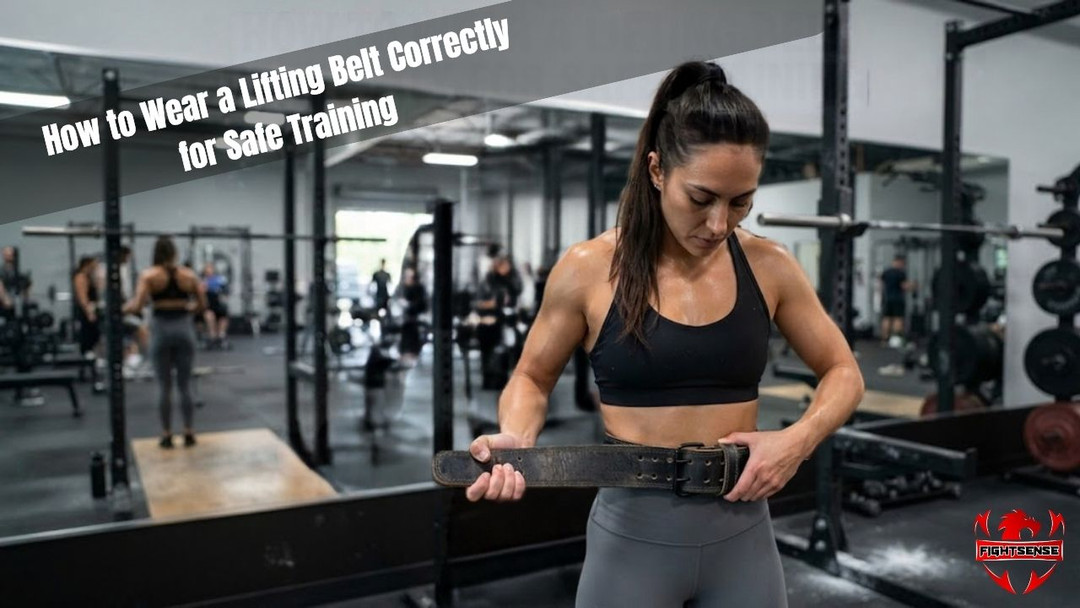
How to Wear a Lifting Belt Correctly for Safe Training
If you are new to strength training, knowing how to wear a lifting belt can make a big difference in your workouts. A lifting belt is not something that instantly makes you stronger — it simply gives your body extra support when you use it the right way. Proper position, comfortable tightness, and good technique help you stay stable during heavy lifts.
In this guide, you will learn how to wear a lifting belt correctly, when it actually helps, and how to avoid mistakes so you can train smarter and feel more confident in the gym.
Key Takeaways:
- A lifting belt is a support tool, not a shortcut — your strength comes from consistent training, proper form, and smart effort.
- Correct positioning makes the difference — a belt works best when it feels secure, comfortable, and allows natural movement.
- Proper bracing creates real stability — the belt supports your core, but your technique is what makes it effective.
- Use your belt with purpose — save it for movements and sets where extra support can improve control and confidence.
- Better training habits lead to better results — combine the right equipment, patience, and consistency to build long-term strength.
What Is a Weightlifting Belt and Why Do People Use It?
A weightlifting belt is a training tool used to support your core during hard strength training workouts. This gives lifters additional stability, as their abdominal muscles have something to press against when bracing.
People use lifting belts during workouts like squats, deadlifts, and other big lifts because they wish to have better control, increased confidence, and additional support when lifting difficult weights. But a belt is no substitute for solid technique – it works best when you have strong form and good training habits.
Why Does Wearing a Lifting Belt Correctly Matter?
A lifting belt is not simply another piece of gym equipment. When utilized appropriately, it helps your body stay in control when you are performing activities that need strength and stability.
Squats, deadlifts, and heavy presses all demand good core activation. You need your core muscles to keep your body balanced. A belt provides you a surface to push against when you create pressure by correct bracing.
A correctly used lifting belt can assist you:
- Better body control for big lifts
- Build confidence while training
- Raise awareness of your core position
- Create safer lifting habits
The belt should help you move, not do the work for you.
Strong lifters don't use their belts. They use them to increase their performance while also building natural strength.
How to Wear a Lifting Belt for Safe Training: Finding the Right Position
Where the belt lies on your body is one of the main aspects that will affect your results.
The belt may be excessively high and uncomfortable across your ribs or too low and restrictive in your movement. The right position enables you to breathe, brace, and move naturally.
For most lifters, the belt should be positioned around the center of the body, at the abdominal region.
What is a good place?
- The belt sits comfortably around your core
- It doesn’t move when you move
- You can sleep soundly
- You have a full range of motion
Depending on the exercise, the optimum position may vary.
Some lifters choose a bit higher set during squats as it allows them to create more pressure.
For deadlifts, going a little lower could feel better since it provides you more mobility around the hips.
You aren't trying to imitate someone else's setup. The aim is to discover a position where you can rise in control.
How Tight Should Your Belt Feel Before a Heavy Set?
The problem many beginners make is one simple one: they over-tighten their belt.
When you try a lifting belt on, it should feel tight and supportive, but it should never feel like it’s interfering with your breathing.
You should be able to: Before a big set;
- Take a deep breath.
- Extend your belly
- Tighten your core
- Keep walking normally
If your belt is bothering you or limiting your ability to breathe freely, it has to be adjusted.
A belt is supposed to keep you more stable, not make you feel crappy.
A good-fitting belt allows you to apply pressure without compromising your body’s strong and natural position.
What Is the Best Way to Brace Against a Belt?
A belt does not create stability – your technique does.
Many individuals wear a belt, but forget that the fundamental reason it works is to brace properly.
To brace to starboard:
- Stand in your posture for lifting
- Breathe deeply into your stomach
- Suck in your stomach
- Push your core slightly outwards against the belt.
- Keep the tension through the whole movement
It puts pressure on your stomach to assist in keeping your body steady under strain.
Learning to wear a lifting belt for safe training also entails learning how to mix breathing, core control, and movement style.
When Does a Lifting Belt Actually Help Your Training?
A lifting belt is especially effective during workouts that require additional support for your body.
It is widely used in:
- Squats – big
- Deadlift
- heavy lines
- Military press
These moves require you to use your whole body, particularly your core.
However, having a belt doesn’t mean you should use it for every exercise.
Warm-up sets, gentler exercises and technique development are often better done without any apparatus.
The wise lifter knows when to bring in the reinforcements and when to let the body do its own thing.
Why Choose Fightsense for Your Training Support?
Good training equipment can make workouts more comfortable and focused.
Fightsense provides fitness gear designed for people who want practical support during their training journey. Whether you are improving strength, practicing better technique, or building consistency in your workouts, reliable equipment can help you train with more confidence.
A quality lifting belt should support your movement while allowing proper breathing and natural mobility.
Choosing equipment that fits your training style is an important step toward creating a better workout experience.
When Does a Lifting Belt Add Value to Your Workout?
|
Training Style |
Belt Approach |
|
Learning basic movements |
Focus on technique first |
|
Heavy strength sessions |
Belt can provide extra support |
|
Light workout days |
Usually not needed |
|
Advanced lifting |
Useful for better stability |
Which Lifting Belt Mistakes Can Slow Your Progress?
- A belt too high or too low might hinder comfort and movement
- Belt too tight and not allowing good breathing
- Using a belt before learning proper lifting technique
- Relying on the belt instead of developing natural core strength
- Wearing a belt for every workout, even when not essential
- Using a belt to raise weights beyond your present capacity
- Not adjusting and fitting the belt properly
Who Should Take Care When Wearing a Lifting Belt?
A weight lifting belt might be a good thing to have, but use it correctly.
Be careful if you:
- You’re still learning basic moves.
- You lift with a belt that is beyond your abilities
- The belt is uncomfortable.
- You’re not using proper form
Your technique and your training habits come first always.
Belts are a support aid, not a shortcut.
FAQs:
Can a lifting belt make me lift heavier right away?
No. A belt helps support and stabilize, but strength develops via constant exercise.
How to wear a lifting belt during warm-up sets?
Not usually. Warm-ups are a fantastic time to practice natural movement and control.
Will a lifting belt help faulty form?
No. A belt encourages strong technique, but it cannot fix bad movement patterns.
Can I train beltless and yet get strong?
Yes. A belt is optional equipment, not required for gaining strength.
How do I know I am wearing my belt correctly?
You want to feel supported, secure, and capable of maintaining proper movement over the duration of the lift.
Final Thoughts:
Learning how to wear a lifting belt for safe training means learning how the belt works with your body, not relying on the belt to do the work for you. When worn appropriately, adjusted comfortably and used with proper bracing technique, a lifting belt can support your improvement.
Learning how to wear a lifting belt properly will give you more support while you continue to develop your form, control, and strength. Work on sensible lifting habits and train with patience, and let your equipment help support all the work you put into getting stronger.
Disclaimer:
This content is for educational purposes only and is not a substitute for professional training advice. Use lifting equipment responsibly and focus on proper technique to support safe workouts.