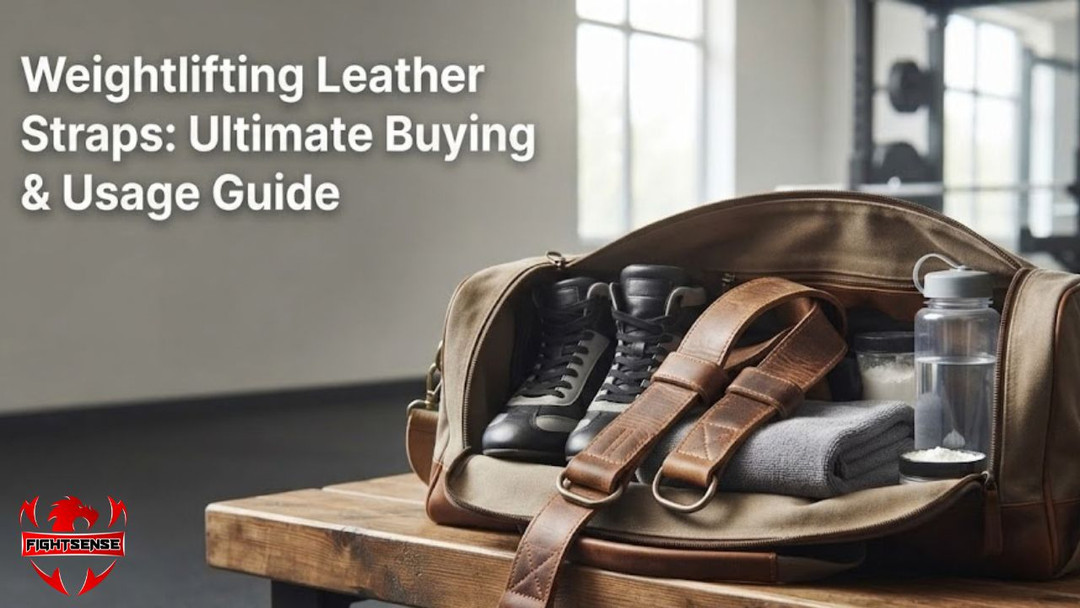
Weightlifting Leather Straps: Ultimate Buying & Usage Guide
Your grip should never be the bottleneck that keeps you from hitting a new personal record on deadlifts, rows, or snatch pulls. If your forearms give out long before your back, glutes, or hamstrings reach full fatigue, investing in quality weightlifting leather straps can instantly change your training game.
While canvas and nylon options saturate the market, real leather lifting straps offer a tactile bite, durability, and natural comfort that synthetic materials simply cannot replicate. In this guide, we break down why leather straps belong in your gym bag, how to use them safely, and how to pick the right pair for your lifting style.
What Are Weightlifting Leather Straps and Why Do You Need Them?
When heavy iron starts pulling down on your hands, material strength and tactile friction matter. Cotton straps stretch over time and fray along the edges under heavy tensile loads. Nylon gym straps are tough, but their smooth finish can slick up when exposed to sweat, causing the barbell to slip unexpectedly.
High-quality fitness gear brands like Fightsense engineer their weightlifting leather straps to deliver maximum performance where synthetic alternatives fail. Leather sits in a unique sweet spot:
- Natural Grip Friction: Premium leather molds to your hands and grips knurling with a natural, tacky feel—often requiring far less chalk.
- No Cut or Burn: Unlike stiff nylon webbing, which can slice into the front of your wrists during heavy snatch pulls or Romanian deadlifts (RDLs), full-grain leather softens with use and conforms comfortably to your wrist contours.
- Extreme Tensile Strength: Top-grain or buffalo leather straps easily handle 600+ lbs without tearing or stretching.
Get Yours Now!
Leather vs. Cotton vs. Nylon Comparison
|
Material |
Grip & Friction |
Wrist Comfort |
Lifespan |
Best Application |
|
Leather |
Excellent (Tacky Grip) |
High (Softens over time) |
5–10+ Years |
Heavy Powerlifting & RDLs |
|
Cotton |
Moderate (Needs Chalk) |
High (Soft instantly) |
1–2 Years |
Light Bodybuilding |
|
Nylon |
Low (Slippery when wet) |
Low (Rigid edges) |
3–5 Years |
Quick-Release Olympic Lifts |
Key Benefits of Leather lifting straps
What do leather lifting straps do?
Weightlifting leather straps anchor your wrists directly to the barbell, dumbbell, or machine handle. By taking over the effort required by your forearm flexors and grip straps, they allow you to train prime target muscles (latissimus dorsi, hamstrings, glutes, upper back) to complete muscular failure without grip fatigue stopping the set early.
Eliminates Grip as a Weak Link
Your back muscles are capable of moving significantly more weight than your fingers can hold onto. Using leather wrist straps on heavy pulls ensures your target muscle groups receive maximum mechanical tension.
Ergonomic Wrist Comfort
Canvas straps often pinch or dig into the radial bone of your wrist under high loads. Quality leather naturally stretches just enough under tension to distribute force evenly across the joint surface.
Long-Term Value
While canvas straps need replacement every season or two, a well-conditioned pair of leather straps will outlast almost every other piece of equipment in your gym bag.
How to Use Leather weight straps Step-by-Step
Learning how to wrap your weightlifting leather straps tightly around a barbell with one hand takes a bit of practice, but follows a simple mechanics sequence:
Step 1: Thread the Strap Loop
Pass the straight end of the leather strap through the loop on the opposite end to create a circle.
Step 2: Orient on Your Wrist
Slide your hand through the circle. Ensure the tail of the strap runs along the length of your palm, directly aligned with the space between your thumb and index finger.
Step 3: Wrap Under the Barbell
Reach down to the bar. Wrap the leather tail under and around the barbell from back to front (opposite to the direction your fingers wrap).
Step 4: Tighten the Loop
Twist the barbell toward you like a motorcycle throttle. This pulls all excess slack out of the leather, cinching the strap snugly against your wrist and the bar knurling.
Step 5: Secure Your Hand Position
Close your hand firmly over both the barbell and the wrapped strap. Repeat the sequence for your second hand using your fingers to assist the final cinch.
Types of Leather Used in Lifting Straps
Not all leather lifting straps are crafted equally. Understanding material quality prevents buying cheap bonded options that snap under heavy tension:
- Full-Grain Leather: The highest quality outer hide. Retains natural toughness, provides maximum tensile resistance, and develops a beautiful patina over time.
- Top-Grain Leather: Smooth and pliable out of the box with slightly thinner density. Very durable and comfortable.
- Buffalo Leather: Sourced from water buffalo, offering thicker fiber density. Excellent choice for heavy powerlifters lifting 500+ lbs.
- Suede Leather: Brushed finish offering high surface friction right away without a long break-in period.
Expert Maintenance & Care Tips
To ensure your leather gear lasts a lifetime:
- Air Dry After Workouts: Sweat contains salts that dry out natural hide. Never leave damp leather straps crumpled in a sealed gym bag.
- Apply Leather Conditioner: Every 3 to 6 months, rub a small dime-sized amount of leather balm or mink oil into the hide to keep the fibers supple and prevent cracking.
- Avoid Machine Washing: Never submerge full-grain weightlifting leather straps in a washing machine or dryer. Wipe them down with a slightly damp microfiber cloth instead.
FAQs:
Do leather weightlifting straps break in?
Yes. Fresh leather feels stiff during the first few sessions, but as it absorbs warmth and natural hand oils, it softens and permanently shapes to your hand geometry.
How much weight can leather lifting straps hold?
High-quality full-grain or buffalo leather straps are routinely load-tested to hold over 600–1,000 lbs (270–450 kg) without snapping.
Should we use chalk with leather straps?
You can use chalk, but leather naturally grips steel knurling far better than synthetic fabrics, meaning you'll need significantly less chalk.
Are leather straps good for deadlifts?
Leather straps are ideal for deadlifts, Romanian deadlifts (RDLs), and rack pulls because they prevent grip fatigue from cutting your heavy pulling volume short.
What length should weightlifting leather straps be?
Standard lasso straps usually measure between 20 to 24 inches long and 1.5 inches wide, which provides enough length to wrap around a standard barbell 2–3 times.
Are leather lifting straps allowed in powerlifting competitions?
Raw powerlifting federations (such as USAPL or IPF) do not permit lifting straps of any material during competitive attempts. However, powerlifters frequently use them during off-season training to manage fatigue.
Conclusion:
If grip strength limits your back development or holds back your pull workouts, upgrading to weightlifting leather straps is one of the most effective, cost-efficient investments you can make. They protect your hands, eliminate grip failure, and withstand years of intense training.
Disclaimer:
This article is for informational purposes only. Consult a certified coach or physician before starting any heavy strength training program.