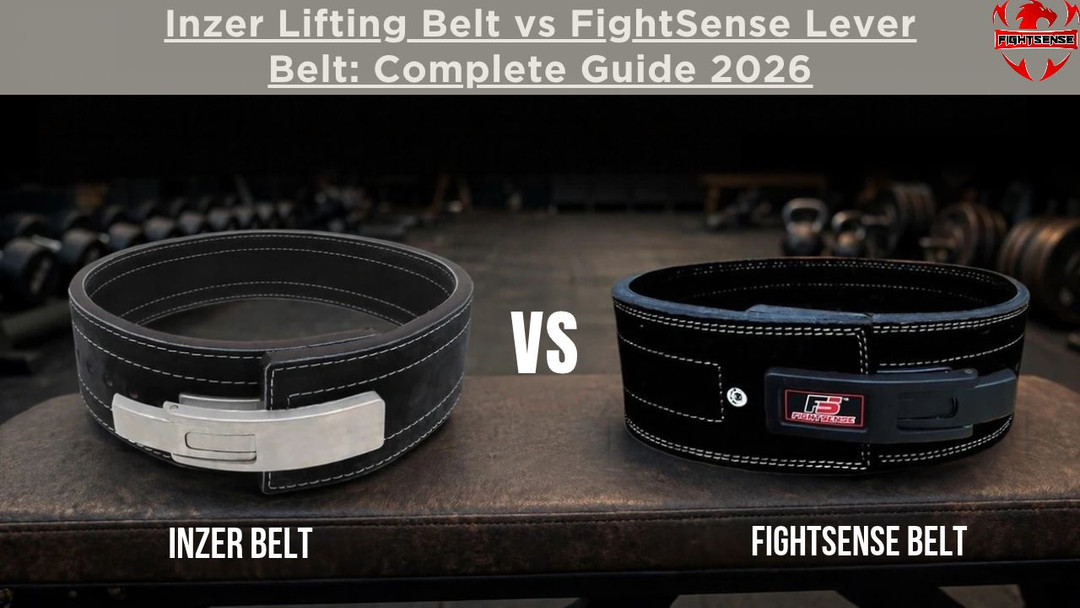
Inzer Lifting Belt vs FightSense Lever Belt: Complete Guide 2026
Introduction
When lifters talk about heavy support, an inzer lifting belt is often the first name mentioned. It has a long reputation on powerlifting platforms, and many lifters treat it as the standard every other belt is measured against. At the same time, modern lever belts from brands like FightSense offer the same thick leather support with a faster closure and a lower price. This guide compares the two honestly, so you can decide which belt deserves a place in your gym bag.
Quick Answer: Two Belts, One Job
Both belts do the same job: they give your abdomen a rigid wall to brace against, which helps you stay tight under a heavy squat or deadlift. The main differences are the closure, the fit and the price. A prong buckle adjusts in small steps, while a lever locks to one setting in seconds. Choose by how you train, not by the logo on the front.
What Is an Inzer Lifting Belt?
An inzer lifting belt is a thick leather belt built for heavy squats, deadlifts and other maximal lifts. It is usually 10 mm or 13 mm thick, with a uniform width that supports the whole core rather than tapering at the front. The leather is stiff when new and breaks in over weeks of training, moulding slowly to the shape of your waist.
The belt is best known among competitive powerlifters, and many models are approved for competition use. That reputation is earned: the construction is heavy duty, the stitching is strong, and a well-kept belt can last for years. If you are shopping for your first serious belt, the buying guide explains where to look and what to check first. A stiff belt helps lifters brace and protect the lower back.
Build Quality Compared
On build, the inzer lifting belt and the FightSense lever belt share the same idea: thick leather, strong stitching and a steel closure that holds under load. The Inzer belt is famous for its dense leather and its long break-in period, while the FightSense lever belt arrives more flexible and ready to train in sooner. Neither belt is a fashion item, and both are built to survive years of heavy sessions.
The real difference is the closure. A lever gives the same tightness every session with one flick, which suits lifters who train at a steady body weight. A prong buckle takes longer to fasten but adjusts in small steps when your waist size changes. The lever belt guide explains how the lever mechanism works, and the leather belt guide covers how full-grain leather ages with training.
Fit and Feel
Fit is where it shows its competition roots. It is stiff, wide and unforgiving at first, and some lifters need weeks before it feels comfortable. That stiffness is the point: a belt that flexes easily gives less to brace against. Once broken in, it feels like a solid wall around the core.
A lever belt feels similar once it is on, but the fit is set with a screwdriver rather than by feel, so you need to spend a few minutes dialling it in before your first session. If your weight changes often, that fixed setting can become a nuisance. The how to wear a lifting belt guide shows the right position and tightness for either style.
Lever vs Prong Closure
Most versions of the inzer lifting belt close with a prong buckle, although lever versions exist too. A prong buckle is simple and reliable: push the pin through the hole that fits and lift. A lever is faster between sets and gives exactly the same tightness every time, which many lifters prefer on heavy days.
The trade-off is adjustment. A prong belt adapts in seconds if you are bloated or leaner than usual, while a lever belt needs a screwdriver to change. For general training, either closure works well, and the choice comes down to habit. A premium lever belt gives you the lever advantage at a lower price than the competition favourite, and the how to use a belt guide covers bracing technique for both styles.
Which Belt Suits Your Training?
Choose the inzer lifting belt if you compete in powerlifting and want a belt with a long competition history and approved status. It is a proven choice, and its resale value stays high because lifters trust the name. For most gym lifters, though, the differences in performance are small, and the deciding factors are price, comfort and how quickly the belt breaks in.
If you train heavy squats and deadlifts a few times a week but never compete, a quality lever belt gives you the same support for less money. The good lifting belt guide explains how to judge any belt on thickness, leather and stitching, and a leather weight lifting belt is a solid alternative if you prefer a classic prong buckle.
What to Check Before You Buy
Before you buy an inzer lifting belt, check the thickness, the width and the sizing chart. A 10 mm belt suits most lifters, while a 13 mm belt is stiffer and better for maximal attempts. Measure your waist where the belt will sit, not your trouser size, and check the return policy in case the fit is wrong. A belt should feel tight when you brace, but it should never stop you breathing between sets.
FAQs
Is an inzer lifting belt worth it for a beginner?
It can be, but most beginners do better with a 10 mm belt that breaks in faster. Learn to brace without a belt first, then add one when your squat and deadlift loads get heavy.
How long does it take to break in a thick leather belt?
Expect a few weeks of regular training. Wear it for heavy sets only at first, and it will slowly mould to your waist.
Is a lever belt better than a prong belt?
Neither is better for everyone. A lever is faster and more consistent, while a prong buckle adjusts more easily when your waist size changes.
Can I use a lifting belt for every exercise?
No. Use it for heavy squats, deadlifts and overhead lifts. Train lighter sets without it so your core keeps doing its own work.
How do I clean a leather lifting belt?
Wipe it with a damp cloth after training and let it air dry. Avoid soaking it, and keep it away from direct heat.
Final Verdict
An inzer lifting belt remains a respected choice for serious lifters, especially competitors who want proven gear with a long history. For most gym lifters, a quality lever belt offers the same support for less money, with a faster closure and a shorter break-in. Judge any belt on thickness, fit and leather quality, buy the one that matches how you train, and let your bracing do the real work.
Shop the product: FightSense Premium Lever Belt
Disclaimer:
This article is for informational purposes only and is not medical advice. Consult a healthcare professional before starting any new exercise programme, especially if you have a back or core condition.