
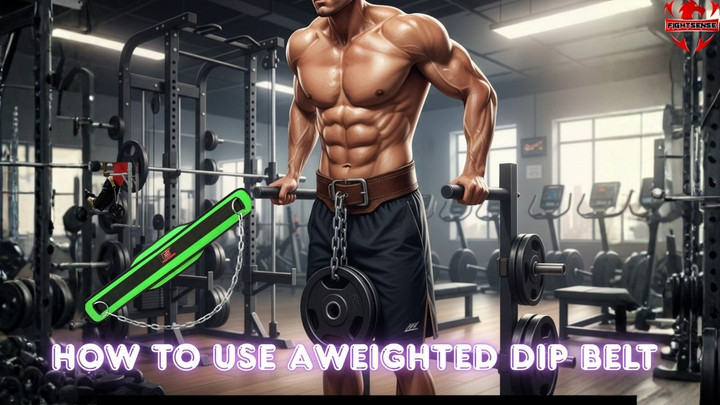
How to Use a Weighted Dip Belt for Maximum Gains
7th Nov 2025
A weighted dip belt can drastically change your routines if you've outgrown bodyweight pull-ups and dips. You may increase your strength, size, and control by adding incremental resistance.
Learning how to use a weighted belt correctly guarantees safe and effective results whether you practice at home or at the gym.
Keynotes:
1. Before utilizing heavier weights, always warm up.
2. Focus on form over load and start light.
3. Maintain a firm core during every exercise.
4. For consistent progress, increase the weights gradually.
5. Check for wear and tear on a regular basis.
My First Experience with Fightsense Weighted Dip Belt
I was instantly struck by the Fightsense weighted dip belt's improved comfort and construction quality when I first used it. The chain was strong enough to support several plates without slipping, and the leather dip belt style felt snug around my waist.
The belt evenly distributed the strain during my initial sets of weighted dips; I experienced neither discomfort nor sliding. I gained the confidence to gradually increase the weight and push harder as a result. The Fightsense model, a great weight lifting belt for women, is an excellent place to start if you're new to dip belts because of its performance and longevity.
What Is a Weighted Dip Belt?
A weighted dip belt is a specific lifting device that is worn around the waist and has a strap or hanging chain that allows weights to be attached. To boost resistance without putting undue strain on your back, it's frequently utilized for dips, pull-ups, chin-ups, and even squats.
Typical applications include of:
- Chest and tricep weighted dips
- Pull-ups with weights for the biceps and lats, which also support the core.
- Leg and glute belt squats
Types of Dip Belts:
Chain-equipped dip belt Athletes have always used the dip belt with a chain. Kettlebells or weight plates fit easily on the sturdy metal chain.
Advantages:
- Sturdy and dependable for large loads
- offers superior weight balance.
- Fast attachment and disengagement
This is the gym equipment to choose if you like basic yet functional pieces.
Dip Weight Belt:
Any belt made to support external weights for resistance training is referred to as a dip weight belt. These belts are adjustable, multipurpose, and commonly used in powerlifting; they come in leather, neoprene, and nylon.
Why it's beneficial
- helps increase strength more quickly.
- Ideal for a variety of exercises
- Simple to transport and store
For anyone who wants to up the ante on bodyweight exercises, the dip weightlifting belt is ideal.
Dip Belt Squats:
One of the greatest methods to strengthen your legs without putting undue strain on your back is to perform dip belt squats.How to perform them:
- Place yourself on two elevated levels.
- Put plates on your belt.
- Drop into a complete squat.
- Using controlled power, drive back up.
This exercise protects your lower back while targeting your quadriceps, hamstrings, and glutes.
Dip Belt for Squats:
When performing squats with a dip belt, you may maintain an erect back while developing significant leg strength.
Benefits:
- Excellent for at-home exercises
- lowers the pressure in the spine
- Ideal for gradual overload
The dip belt for squats is a perfect alternative if barbell squats are painful.
Leather Dip Belt:
A leather dip belt offers top-tier durability and support for heavy lifters. The Fightsense model, for instance, uses thick leather that molds comfortably to your waist.
Pros:
- Excellent stability
- High weight capacity
- Professional look and long life
It’s a worthwhile investment if you lift heavy regularly.
How to Use a Weighted Dip Belt (Step-by-Step)
- Securely fasten the belt around your waist.
- Pass the chain through a kettlebell or weight plate.
- On the other end, fasten the clip.
- Take your time and be mindful when performing the workout of your choice.
- Before taking off the belt, carefully step down.
Benefits of a Weighted Dip Belt:
- The Fightsense dip belt buckle allows safe overload without stress on the spine.
- Works for both upper and lower body
- Increases exercise variety and challenge
Safety and Maintenance:
- Always check the clips and chain for cracks or rust.
- Store your belt in a dry place.
- Wipe off sweat or moisture after every session.
- Avoid dropping or jerking weights suddenly.
FAQs:
1. Is a weighted dip belt appropriate for novices?
Yes, novices can begin with small weights (5–10 kg) and work their way up as their strength increases.
2. Which is better, a nylon strap or a dip belt with a chain?
While nylon belts are lighter and more flexible for novices, a dip belt with chain is more robust for heavy lifting.
3. Can I use a dip belt when performing squats?
Of course. Because they put less strain on your spine than barbell squats, dip belt squats are a great substitute.
4. What is the maximum weight that a leather belt can support?
Depending on the brand, the majority of leather belts may support up to 200–300 pounds (90–135 kg).
5. How frequently should I use a dip belt during my training?
Ideally, two to three sessions each week. Always give yourself enough time to recover from exertion.
Conclusion:
One of the greatest purchases for anyone who is serious about strength training is a weighted belt. Every variation of the dip belt—whether it's a leather, chain, or squat-specific model—helps you exercise more effectively, safely, and with greater intensity.
I can state with confidence that wearing the appropriate belt not only improves performance but also increases self-assurance when under pressure because of my personal Fightsense experience. Your upper and lower body strength will soar if you start out slowly and remain persistent!
Disclaimer:
This article is based on personal fitness experience and general information only. Always consult a certified trainer or healthcare professional before using equipment like the Fightsense weighted belt or starting any new workout program.