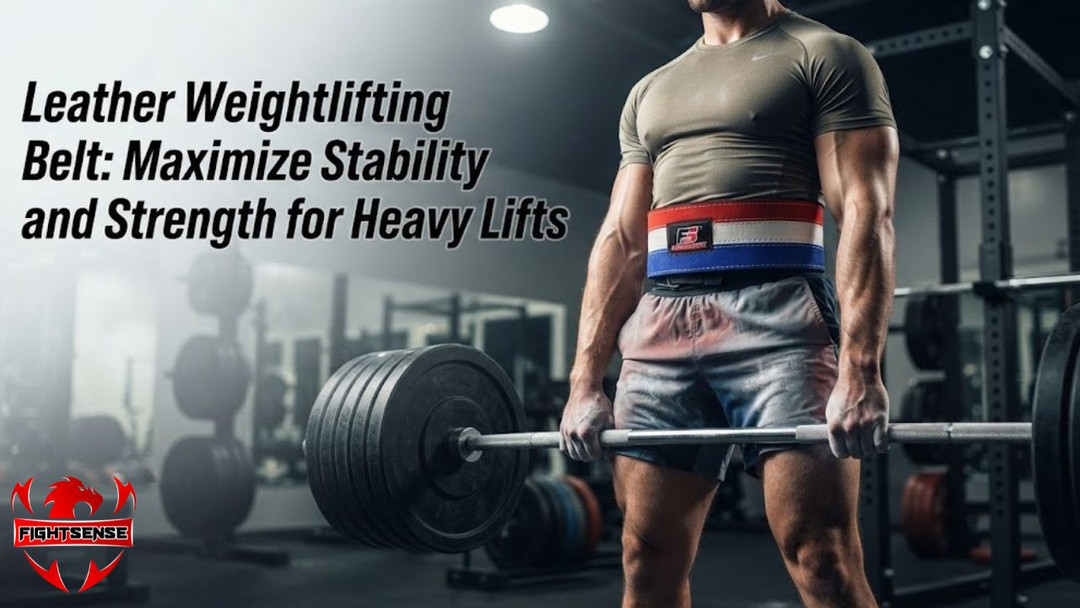
Leather Weightlifting Belt: Maximize Stability and Strength for Heavy Lifts
What if the right leather weightlifting belt could help you lift with more confidence, better stability, and improved control during heavy workouts? Choosing your gear is not just about raw strength—it is about training smarter and safer.
When you load up a barbell for squats or deadlifts, your core needs reliable external support to maintain intra-abdominal pressure. From material quality and thickness to closure types and fit, this comprehensive guide reveals what serious lifters look for, how to choose the right equipment, and why brands like FightSense are becoming a trusted choice for quality weightlifting and lever belts.
What Is a Leather Weightlifting Belt?
A Powerlifting belt is a durable piece of workout gear that provides tight abdominal compression and lower back support during heavy compound motions. Constructed from superior firm leather, it delivers a sturdy backing for your core to push against, allowing you to generate maximum intra-abdominal pressure.
This critical piece of equipment is an external brace for your torso that allows strength athletes to keep perfect spinal alignment, lift with more confidence, and safely and efficiently manage maximal loads.
Why Do Lifters Use a Heavy-duty Lifting Belt?
Lifting attachments are used to provide the necessary core stability and intra-abdominal pressure for big compound lifts. When you brace against a stiff accessory, it provides your midsection something solid to push against, giving you more control and confidence when doing challenging motions.
Serious athletes use these devices to assist bracing, to support correct spinal alignment, and to train safely under maximal loads. It can’t replace the core strength that comes from proper training, but a quality Powerlifting belt is an essential addition to your strength training arsenal when used in conjunction with perfect technique.
What Makes an Effective Strength Training Belt?
Some objective criteria make a product truly successful, but the choice is yours depending on your training goals, comfort preferences, and lifting style:
- Material Quality: Authentic, premium leather is a must. This affects the product’s long-term durability, structural support, and performance under pressure—which is why businesses like FightSense focus on building dependable, heavy-duty leather construction for serious athletes.
- Shape Retention: A good belt will not collapse after heavy exercises, and it will not lose its firmness. It will also progressively conform to your body shape over time.
- Hardware Quality: Hard-duty steel prongs, rollers, or lever mechanisms keep the equipment safely in place during hard-working sessions.
How Thick Should a Heavy Lifting Belt Be?
It’s a typical question for athletes: does a thicker design mean a better one? Your training style will determine the answer:
- 10mm to 13mm Profiles: Most experienced lifters would choose this range for the maximum structural support it provides during heavy-effort lifts. This rigid structure is suitable for powerlifting and maximal strength activities when torso stability is of utmost importance.
- Flexible or Tapered Choices: New exercisers, functional fitness athletes, or people training mixed, dynamic movements might opt for a bit more of a flexible profile that helps the lower back without compromising natural mobility.
The ideal thickness should hold your torso in place without pinching your hips or restricting your motions.
Choosing the Right Gym Training Belt: Lever vs. Buckle
When shopping for a leather weightlifting belt, you will generally choose between a lever closure and a traditional prong buckle. Both have distinct advantages depending on how you train.
|
Feature |
Lever Belt |
Traditional Buckle Belt |
|
Adjustment |
Quick-tightening mechanism with a secure, consistent fit |
Traditional prongs for more flexible, manual adjustments |
|
Best For |
Heavy powerlifting, low-rep max effort sessions |
General strength training and varied bodybuilding workouts |
|
Support |
Firm, uniform 360-degree rigidity |
Reliable and adjustable core support |
|
Convenience |
Fast on-and-off application for repetitive heavy sets |
Classic, time-tested mechanical design |
Lever belts are ideal for lifters who want rapid transitions and a locked-in fit for heavy working sets, while buckle belts are better for athletes who frequently change weights or prefer a traditional aesthetic.
How Does Core Support Improve Performance?
Support attachment doesn’t add plates to your bar overnight, but it does enhance your biomechanics so you’re performing at your best.
- Better Abdominal Bracing: The physical input helps you develop more powerful abdominal pressure.
- Improved Torso Stability: You need full control of heavy weights. The stiff perimeter surrounding your core prevents side-to-side movement and maintains your spine in neutral.
- Psychological Confidence Boost: A heavy barbell becomes a much more approachable proposition if you know your support gear isn’t going to fail you.
Get Yours Now!
Which Exercises Require Extra Lower Back Support?
Beginners sometimes ask whether support should be worn for every single exercise in their practice. Short answer: No. The Squat and deadlift belt is most useful while performing powerful complex exercises that stress the spinal erectors, such as:
- Barbell squat
- Deadlifts and RDLs
- Overhead Presses (a.k.a.)
- BARBELL ROW
Warm-up and lighter accessory sets for many strength athletes are done beltless to enable natural core activation, and their gear is reserved for their hardest-working sets.
Step-by-Step Guide: How to Find the Right Size
Everything is fit. If the option is too loose, there will not be enough intra-abdominal pressure; if it is too tight, diaphragmatic breathing and mobility will be restricted. Follow these steps to get the proper fit:
- Take your waist measurement: Take a soft measuring tape and wrap it around your torso at the level of your navel (not your relaxed pant size, as lifting belts sit higher on the core).
- Check the Brand Chart: Size: size is manufacturer-specific. Sizing is different for every brand; therefore, you just want to compare your measurement directly to the size table the manufacturer provides.
- Test the Fit: Secure the gear. It should feel solid while allowing deep belly breathing and supporting your torso without pressing awkwardly into your ribs or hips.
Pros & Cons of a weight belt for lifting
Pros:
- Super durability for years to come.
- Unrivaled stiffness for maximum power transfer.
- Slowly Adjusts To Your Body Shape
Cons:
- Takes a while to break in and become supple.
- Not as versatile for quick weight changes unless you use a lever design.
Expert Tips for Breaking In Your Gear
New leather accessories are stiff right after you get them. To speed up the break-in period without compromising structural integrity:
- Tighten the belt and roll back and forth to loosen the core fibers.
- Use it for moderate-intensity workouts before getting to your personal bests.
- Store flat or hanging. Not under heavy gym bag equipment.
Common Mistakes to Avoid When Buying a Belt
- Fashion vs Function: Avoid purchasing a cheap, thin fashion belt that does not give adequate support for your spine.
- Ignoring Sizing Charts: Don't guess your size based on your pants. Measure your actual lifting circumference.
- The trap is thinking the support tool replaces core strength training. It just adds to your bracing.
FAQs:
Does a leather weightlifting belt help with heavy singles and PR attempts?
Yes, a hard leather item adds that extra stability and psychological assurance needed when testing your maximum boundaries.
Can a support belt substitute for working the core muscles?
No. It’s an external prop to help with bracing mechanics, but it does not replace the need to develop underlying abdominal and lower back strength.
Can a Weight belt for lifting relieve tension on the lower back?
A belt worn correctly helps with core stability and encourages good lifting posture, which helps to avoid undesired flexion of the spine during heavy lifts.
Does a leather belt break in over time?
Yes. High-quality leather organically breaks in and forms exactly to the shape of your body as you use it, becoming more comfortable and tailored to your body while yet preserving its structural integrity.
How often should I clean my lifting equipment?
After rigorous training sessions, wipe away sweat with a gentle damp cloth and let it air dry in a properly aired location.
Is a lever belt superior to a prong buckle?
Some people like levers because you can quickly adjust the belt with one touch. Some people like buckles because you can modify the size manually if you fluctuate in weight.
Does a beginner need a strong duty belt?
They are available for beginners, but a lot of people urge that you acquire strong core strength before using too much external support.
Can I wear my belt during bench press?
Some powerlifters would employ a belt on bench to get maximum body tension, but most save for standing axial-loaded movements such as the squat and deadlift.
Conclusion:
The best leather weightlifting belt is subject to your training goals, comfort preferences, and lifting style. A great alternative provides the stability and support needed to go through tough sessions, so you can train with full confidence. Today’s athletes expect their training equipment to work flawlessly under great stress. That’s why companies like FightSense develop reliable weightlifting and lever belts that are both strong and long-lasting. Train smarter. Lift safer. Perform at your best.
Disclaimer:
This article is for informational purposes only and does not replace professional fitness advice. Always use proper technique and choose equipment according to your training needs.