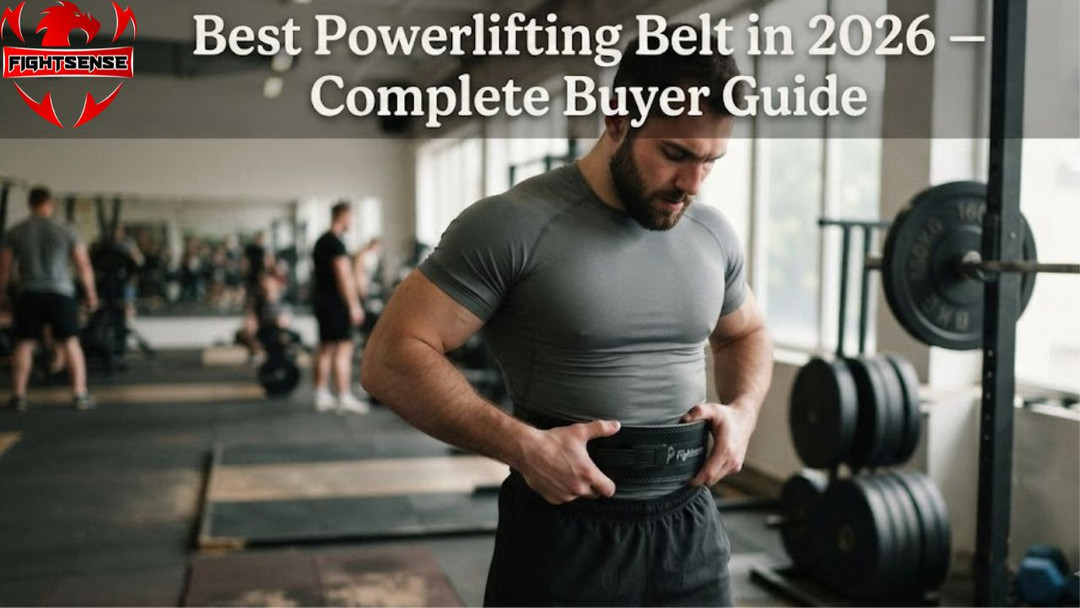
Best Powerlifting Belt in 2026 – Complete Buyer Guide
Best Powerlifting Belt in 2026 is something many lifters only start thinking about when heavy training begins to expose weak core stability and lower back strain. Suddenly, lifts that once felt smooth start feeling unstable and less controlled.
But here’s the real question — is a lifting belt actually necessary, or just gym hype? And if it really works, then what is the best weightlifting belt in 2026 that serious lifters are choosing for safer, stronger lifts? In this guide, we’ll break it down and also explore Fightsense, a rising fitness brand known for durable powerlifting and lever belts.
Key Takeaways:
- Powerlifting belt boosts core stability in heavy lifts
- 10mm is best for beginners, 13mm for advanced lifters
- Lever belts give the strongest and most secure support
- Fightsense offers durable, performance-focused lifting gear
- Belt helps performance only when used with proper bracing
What Is a Powerlifting Belt?
A powerlifting belt is a strength belt used to provide additional support during heavy lifts such as squats, deadlifts, and overhead presses. It helps to enhance intra-abdominal pressure (IAP), enhancing core stability and supporting the spine under heavy loads. Wearing a lifting belt can help you lift more safely and confidently, while reducing pressure on your lower back and increasing stability, when used correctly with proper bracing and technique.
Why Do Strength Athletes Use a Powerlifting Belt—and What Does It Do?
A powerlifting belt isn’t merely gym gear, it’s a performance support device that helps maintain your core when lifting big.
But how does it function in practice?
Wearing a belt and bracing your core correctly raises intra-abdominal pressure (IAP). This pressure is an internal support system for your spine.
This is extremely handy in compound lifts like:
- Squats
- Dead Lifts
- Presses overhead
Rather than your lower back absorbing the majority of the weight, your core pushes out against the belt – generating a strong, sturdy “pressure wall.”
What Makes the Best Powerlifting Belt in 2026?
In modern strength training, lifters don’t just look for “any belt” — they look for performance, durability, and comfort balance.
Here are the key factors:
Material Quality – Why Does It Matters So Much?
- Genuine leather belts → maximum durability & support
- Nylon belts → more flexible but less rigid support
For serious strength training, leather is still the gold standard.
Thickness – 10mm vs 13mm Explained
- 10mm belt → balanced support, easier to use, best for beginners/intermediate lifters
- 13mm belt → maximum stiffness, used for advanced and competition-level lifting
If you're unsure, 10mm is the safest and smartest choice.
Closure System – What Should You Pick?
- Lever belt → fastest, tightest, best for heavy lifts
- Buckle belt → adjustable and versatile
- Velcro belt → light gym workouts only
For powerlifting performance, lever belts dominate.
Comfort vs Stability Balance
A good belt should not just feel tight — it should feel secure, controlled, and breathable under pressure.
Powerlifting vs Weightlifting Belt – What’s the Difference?
|
Feature |
Powerlifting Belt |
Weightlifting Belt |
|
Main Purpose |
Max strength & heavy lifts |
Dynamic Olympic lifts |
|
Support Level |
Very high & rigid |
|
|
Thickness |
Usually 10mm–13mm |
Usually 6mm–10mm |
|
Best For |
Squats, Deadlifts, Bench support |
Cleans, Snatches, overhead movements |
|
Movement Freedom |
Limited (more rigid) |
High (more mobility) |
|
Closure Type |
Lever or heavy buckle |
Buckle or Velcro |
|
Training Style |
Strength & powerlifting |
Explosive & athletic lifting |
Why Are More Lifters Switching to Fightsense Weightlifting Belts ?
In the past several years, Fightsense has been a hot name in the strength training world, offering performance-oriented gear like its powerlifting and lever belts for heavy lifting. It has stitching that is reinforced, a locking system with a sturdy lever and a design that is appropriate for beginners and advanced lifters. It has a more comfortable break-in period than very stiff belts and still gives solid support.
Simply put, Fightsense is a “performance + value” brand, making it a go to for lifters looking for quality without the premium price tag.
What Really Changes When You Start Using a Belt?
There was a guy who trained squats for months without a belt, since he thought that was actual strength. Things went well but he eventually plateaued at the 100kg mark and started to suffer lower back fatigue after heavy exercises.
His training changed when he moved to a Fightsense 10mm lever belt. Within weeks his form was more consistent, he could comfortably add 10–15kg to his squat and his lower back discomfort was substantially reduced. Most of all, he felt he was in more control and confidence, knowing that it’s not about lifting more weight suddenly but lifting better and safer.
Common Mistakes Lifters Make With Belts
Even the nicest belt is of no use if it is worn wrongly.
Avoid these mistakes:
- Too loose belt
- Wearing the belt for every single exercise
- Using the belt as a crutch instead of improving core strength
- Not paying attention to proper breathing and bracing technique
A belt is a tool, not a substitute for the basics.
FAQs:
1. Is a lifting belt necessary for beginners?
No, beginners don’t need a belt in the early stages. It’s better to first learn proper form, breathing, and core bracing. A belt becomes useful later when you start lifting heavier weights consistently.
2. What’s better for strength training: 10mm or 13mm belt?
A 10mm belt is ideal for most lifters because it offers a balance of comfort and support. A 13mm belt is much stiffer and usually preferred by advanced or competitive powerlifters handling very heavy loads.
3. Can I use a belt for every exercise?
No, a belt should only be used for heavy compound lifts like squats, deadlifts, or overhead presses.
4. Does a belt directly increase strength?
Not directly. A belt doesn’t make your muscles stronger, but it improves core stability and pressure control, which allows you to lift heavier weights more safely and efficiently.
5. What is a lever belt and why is it popular?
A lever belt uses a metal locking system that provides maximum tightness and quick adjustment. It’s popular because it gives strong, consistent support during heavy lifting without loosening mid-set.
6. How do I know my belt size?
You should measure your waist in your normal lifting position (not relaxed standing) and then match it with the brand’s sizing chart. Proper fit is important for safe and effective bracing.
Conclusion:
A powerlifting belt is not about lifting weights faster, it is about lifting weights smarter, safer and more efficient. When used correctly it helps you improve lifting form, gain stability under big loads, train with better confidence and progress strength safely over time.
There are also brands like Fightsense that are making excellent lifting gear more accessible for everyday lifters, making it easy to acquire reliable assistance without overspending. At the end of the day, the actual power enhancement isn’t just the belt — it’s how smartly you use it.
Disclaimer:
This article is for informational purposes only. Always consult a qualified fitness professional before starting or changing your training routine.