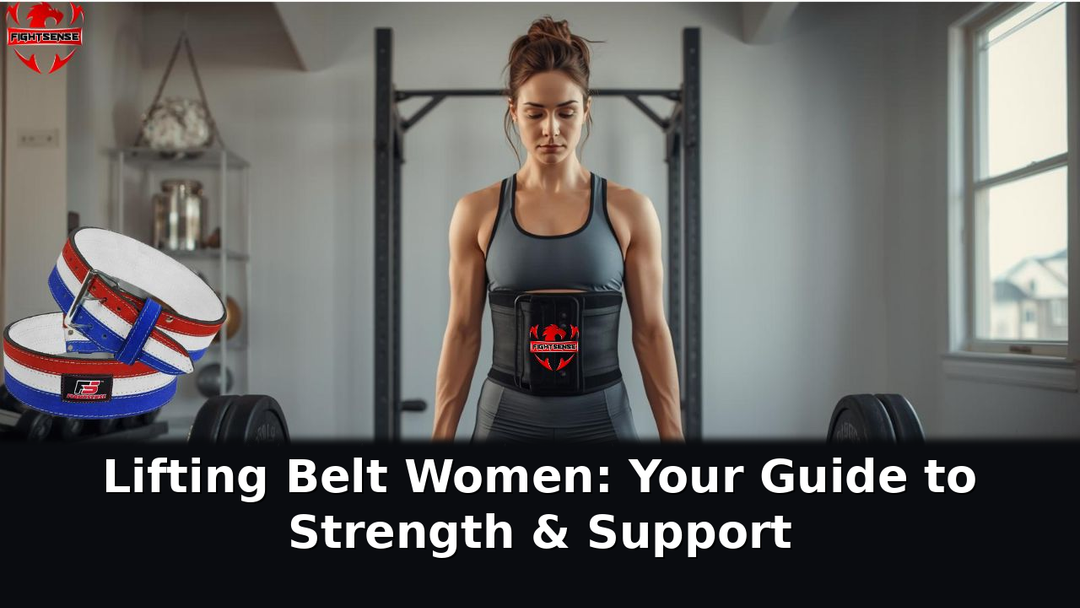
Lifting Belt Women: Your Guide to Strength & Support
If heavy squats, deadlifts or overhead presses leave your lower back doing more work than your legs, a good belt can change how confident you feel under the bar. A lifting belt women can rely on should brace your core, stay comfortable through a full session and fit your waist — not fight it. This guide explains how belts work, how to choose the right type and size, when to wear one and how to care for it, so you can train hard without guessing.
Keynotes
- A belt braces your core by giving your abdomen something to push against; it does not replace core strength.
- Fit matters most: measure around your belly button, not your trouser size.
- Leather and lever belts suit heavy, steady lifts; softer, tapered belts suit Olympic-style lifts.
- Wear a belt only for heavy sets — squats, deadlifts and overhead presses — not for warm-ups or light work.
- Check the buckle, stitching and size range before you buy, and break a stiff leather belt in gradually.
How a Belt Supports Your Core
When you brace for a heavy lift, you take a deep breath and tighten your abdomen. A belt gives that brace something firm to push against, which raises pressure inside your abdomen and helps your trunk stay rigid. That rigidity is what people mean when they say a belt supports the lower back: it helps you hold position, rather than doing the lift for you. In practice, that means choosing a lifting belt women can brace against without it digging in or sliding up.
Belts are used in weightlifting and powerlifting for the same reason, and Wikipedia's overview of weightlifting belts describes how they increase intra-abdominal pressure and can help reduce stress on the lower back, while also giving the lifter feedback on trunk position.
What a Belt Can and Cannot Do
A belt can help you brace more effectively, keep your torso steady and feel more confident at heavy weights. It cannot fix poor technique, replace core training or make an unsafe load safe. Think of it as support for lifts you can already perform with good form, not as a shortcut around learning that form.
Choosing a Lifting Belt Women Can Rely On
Leather belts are stiff and supportive, which suits slow, heavy squats and deadlifts. Nylon belts are lighter and more flexible, which suits Olympic lifts and training where you move between exercises quickly. Buckles matter too: a prong buckle adjusts in small steps, while a lever buckle locks fast but needs a tool to move to a new hole. A prong belt is a lifting belt women can tighten or loosen between sets without tools. For a fuller comparison of heavy-duty options, read this complete powerlifting belt buyer guide.
If you want a straightforward prong option, look at this prong-buckle belt with a 4-inch, 10 mm profile, which comes in sizes S to XL for waist sizes from 22 to 40 inches.
A Lifting Belt Women Can Wear for Squats and Deadlifts
For squats and deadlifts, the belt should sit over your abdomen, between your ribs and hips, and stay in place as you move. It should feel firm when you brace, not loose enough to spin or tight enough to stop you breathing. Placement matters as much as the belt itself, so read this guide on where to position a belt for better support before your next heavy session.
Getting the Size and Fit Right
Start by measuring around your belly button with a soft tape, standing relaxed and breathing normally. Do not use your trouser size: belt sizes follow waist measurements, and FightSense lists its belts by waist size, not by dress size. Whatever style you pick, choose a lifting belt women can wear snugly over a thin top, with room to brace and breathe.
A practical starting point is the reliable belt for core and back support, which is listed for core and back support and comes with an adjustable fit.
Measure Around Your Belly Button, Not Your Jeans
Measure at the level where the belt will sit, usually around your belly button, and check that measurement against the size chart on the product page. On the FightSense belt pages, for example, small fits a 22- to 26-inch waist, medium fits 26 to 30 inches, large fits 30 to 35 inches and extra-large fits 35 to 40 inches.
How Tight Is Tight Enough?
The belt should be snug enough that you can brace against it, and loose enough to take a full breath before the lift. If you cannot breathe in deeply, loosen it one notch. If it slides up or spins as you move, tighten it one notch. A good fit feels the same on your first heavy set as on your last.
When to Wear a Belt — and When to Leave It Off
Save the belt for heavy compound lifts: squats, deadlifts and overhead presses at weights that challenge your brace. A lifting belt women can save for heavy sets will last longer and encourage better bracing habits than one worn for every rep. Leave it off for warm-ups, light sets, isolation work and conditioning, so your core still does its share of the work. For more ideas on matching a belt to your training, see this guide to the best weightlifting belt for women.
Belt or No Belt for Light Training?
For light training, train without a belt. You will build the bracing habit itself, learn what a tight core feels like and keep the belt as a tool for heavy days, rather than a habit for every set.
Materials, Care and Making a Belt Last
Leather belts need the most breaking in: they feel stiff at first, then mould to your shape with use. Nylon belts are ready sooner and dry faster, but they give less rigid support for maximal lifts. With simple care, a lifting belt women can keep using for years is a better buy than a cheap belt that stretches out in a season. Wipe the belt after training, let it air-dry away from direct heat and store it flat or loosely rolled, so the buckle and stitching stay in good shape.
Leather deserves a closer look before you decide: this leather weightlifting belt guide explains how leather belts maximise stability for heavy lifts. Pairing a belt with the right accessories helps too — for example, premium wrist wraps for extra wrist support can steady your wrists on pressing movements.
Breaking In a Stiff Leather Belt
Wear a new leather belt for warm-ups and lighter sets first, then use it for heavy sets once it starts to flex with your torso. Do not force it, soak it or bend it sharply to speed things up: gradual use is what lets it shape to you without cracking or creasing.
Why FightSense Is a Practical Choice for Women Who Lift Heavy in 2026
FightSense sells lifting belts in sizes S to XL, including lever and prong options, with colours such as Camouflage Pink on the lever belt. Prices on the belt pages checked for this guide were $19.99 to $28.99, and orders above $100 ship free. That makes it easy to compare a belt, check its size chart and add matching training gear in one place, instead of guessing from a listing with no measurements.
Ready to Lift Heavier With More Confidence?
Your next heavy set deserves a belt that fits properly — choose yours today and lift with steadier support.
Plus, orders above $100 ship free at FightSense.
Shop the Lever Belt — $28.99Conclusion
The right belt will not lift the weight for you, but it will help you brace, hold position and train with more confidence. Measure carefully, choose a material and buckle that suit your lifts, wear the belt only for heavy sets and look after it — then let your training, not your equipment, do the talking.
FAQs
Do I need a lifting belt for weight training?
Not for every session. A belt is most useful for heavy squats, deadlifts and overhead presses, where a firm brace helps you hold position. For warm-ups and light work, training without one builds core strength.
What size lifting belt should I choose?
Measure around your belly button and match that number to the size chart on the product page. Trouser size is a poor guide, because belt sizes follow waist measurements.
Is a leather belt better than a nylon belt?
Leather is stiffer and gives more rigid support for maximal lifts, while nylon is lighter and more flexible for Olympic lifts and varied training. The better choice depends on how you train.
How tight should my lifting belt be?
Snug enough to brace against, and loose enough to take a full breath before the lift. If you cannot breathe in deeply, loosen it one notch; if it slides or spins, tighten it one notch.
Can I wear a lifting belt for deadlifts?
Yes. Wear it over your abdomen, between your ribs and hips, brace against it before you pull, and keep it for heavy sets rather than every warm-up rep.
Should beginners use a lifting belt?
Beginners should first learn to brace and lift with good form without a belt. Once loads become heavy and form is steady, a belt can be a useful addition for heavy sets.
How do I clean and store a lifting belt?
Wipe it after training, let it air-dry away from direct heat, and store it flat or loosely rolled. Avoid soaking it or forcing a stiff leather belt to bend sharply.
How long does a lifting belt last?
With regular care, a good belt can last for years. Replace it if the stitching fails, the buckle no longer holds, or the material has stretched so much that it no longer braces firmly.