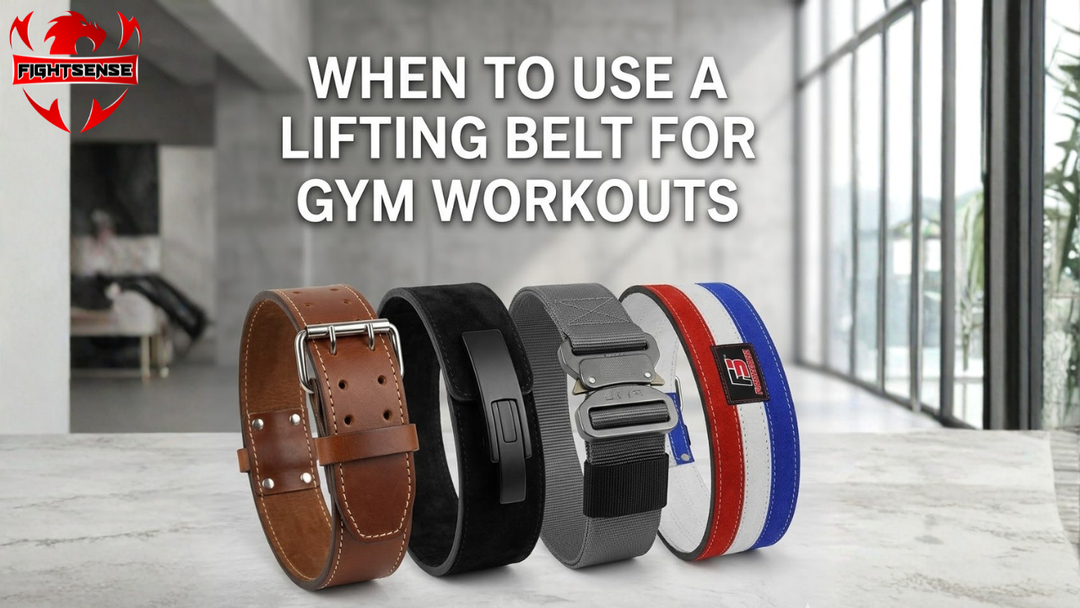
When to Use a Lifting Belt for Safer Gym Workouts
Key Highlights:
- A lifting belt is a support tool, not a substitute for strength or proper form
- Use the belt when loads demand extra core stability, not during every set
- Proper breathing and bracing technique matter more than the belt itself
- Overusing a belt can slow natural core strength development over time
- The real benefit comes when you use the belt at the right time, not all the time
First of All What Does a Lifting Belt Actually Do?
“A lot of people starting out think a belt supports your back directly, but it’s not really like that.
What it truly helps you do is brace your core better. Your body is creating greater intra-abdominal pressure by pushing your stomach into the belt, which basically makes your torso more stable.
That stability is good for you:
- Tighten on big lifts
- Place your spine in a safer position
- Lift heavier, control better
Brands like Fightsense that produce gym gear such as weightlifting belts and lever belts build them specifically for this type of hard training support.
Why do you need a lifting belt in the gym?
Here’s the short answer: a belt doesn’t make you strong, it helps you use your strength better when things grow heavy.
Some real benefits are:
- More stable during hefty lifts
- More control when lifting at your limits
- Increased confidence under load
- More controlled, cleaner reps
But just keep in mind this is not a magic instrument and works best when your form is already established.
Types of Lifting Belts:
Lifting Belt Types (Simple Explanation)
Not all belts are created equal:
Velcro straps
good for beginners and overall gym workout.
Belts - Leather
Stronger, more supporting, good for regular lifters.
Belt Lever
Very snug and supportive--for powerlifting and heavy duty use.
Brands like Fightsense make weightlifting belts and lever belts for lifters who exercise heavy and need something strong and reliable.
When to Use a Lifting Belt for Better Training Results:
This is where most folks get tripped up. No need for a belt on every set. In fact, it is a mistake to use it too much.
When Performing Heavy Compound Movements
When to grab a belt? Here’s when.
- Deep Knee Bends.
- Dead lift
- Overhead press, heavy
Basically any lift where your core and lower back are working hard.
Going Heavy (Near Your Max)
If you're lifting about 80-90% of your max or you're going for a personal record then a belt is a wonderful time to utilise one.
At this stage your body is looking for more stability and a belt might help you stay snug.
On Power Days
A belt might help you stay consistent through tough sets if your training is based around low reps and heavy lifts.
When You Want More Control Under Pressure
Sometimes it's not about max weight. Sometimes it's about feeling more solid and confident during a hard set.
Belt vs Natural Core Strength:
Many lifters are concerned that a belt could weaken their core.
But this is the truth:
- Belt is NOT a replacement for core strength
- It actually teaches you to brace better.
- Your core is still working, just more efficiently under intense pressure.
So the goal is balance, not dependence.
Breath Control with a Belt:
This will change the way we perform.
If using a belt:
- Breathe into your belly
- Press your abs against the belt
- Maintain that pressure over the entire lift
- Release after finishing the rep
This approach is more stable than the belt
How to Wear a Belt the Right Way?
This portion is more important than many assume.
- Wear it about your waist, not too low
- Tighten it so you can take a deep breath
- Brace your abs against the belt before lifting
- Hold tight through the movement
Imagine pushing your belly outward against resistance—not pulling it inward.
Common Mistakes People Make:
A lot of lifters don’t get the full benefit of a belt because of simple mistakes:
Wearing it all the time
Your core stops working properly if you rely on it too much.
Wearing it too loose or too tight
- Too loose = no real support
- Too tight = you can’t breathe properly
Using it to fix bad form
A belt won’t fix bad technique—it only supports good technique.
Closing Thoughts:
A lifting belt isn’t something you need all the time—it’s something you use smartly. Understanding when to use a lifting belt can help you make better decisions in your training and improve safety during heavy lifts.
If you understand when to use a lifting belt for safer gym workouts, you’ll lift more confidently and reduce unnecessary strain when the weight gets heavy.
Used at the right time, and paired with proper training habits, it becomes a helpful tool—not a dependency.
And if you’re using good-quality gym gear like Fightsense weightlifting belts and lever belts, you’ll get that extra stability when it actually matters
Disclaimer:
This content is for general fitness information only. Always use proper technique and consult a qualified trainer before adding new equipment to your workouts.
FAQs:
1. Can a lifting belt actually improve performance?
Yes, it can improve stability and help you stay tighter under heavy loads, which often leads to better control and slightly stronger lifts.
2. Should I wear a belt for every set?
No. It’s best to avoid using it for warm-ups, light sets, or isolation exercises. Save it for heavy working sets only.
3. How tight should a lifting belt be?
It should feel snug and supportive, but you should still be able to take a deep breath and brace your core comfortably.
4. Does a belt make your core weak over time?
Not if used correctly. Your core still activates during lifts—the belt just helps you generate more pressure during heavy movements.
5. When to Use a Lifting Belt in Heavy Workouts?
Use it when lifting near your maximum effort, especially during heavy squats, deadlifts, or overhead presses where core stability becomes critical.