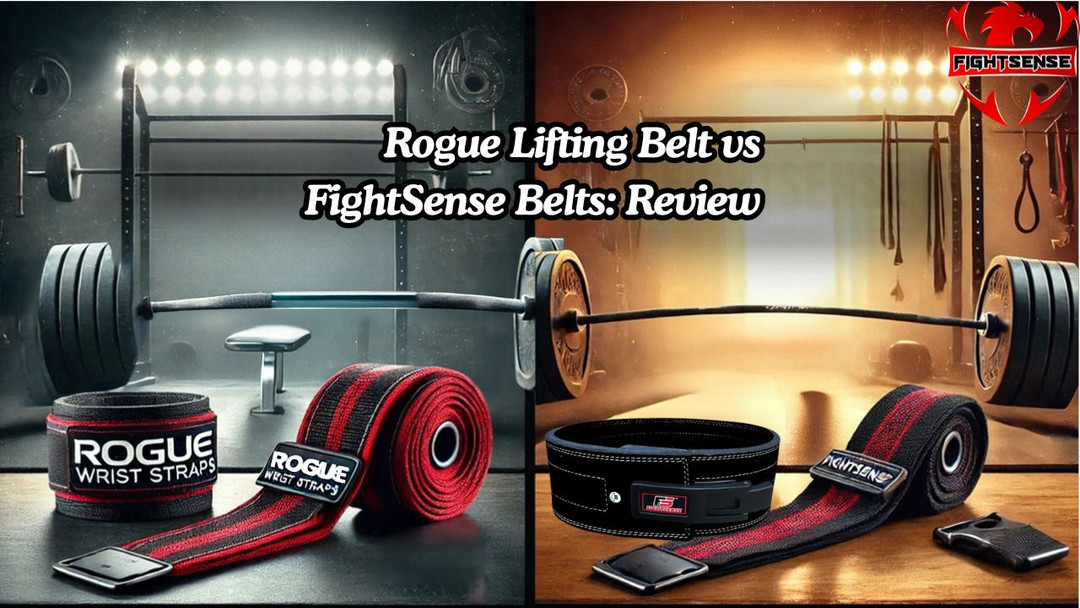
Rogue Lifting Belt vs FightSense Belts: Review
If you are looking to hit a new personal record on your heavy squats or deadlifts, buying the right support is a game-changer. The Rogue Lifting Belt is widely recognized across commercial gyms and powerlifting platforms, but its premium price tag often leaves lifters looking for alternatives. FightSense Belts have entered the market as a heavy-duty, budget-friendly contender promising equal core stability without breaking the bank.
In this comprehensive review, we evaluate the Rogue weightlifting belt side-by-side with FightSense Belts, analyzing material quality, break-in times, locking mechanisms, and overall value for money to help you choose the best belt for your strength goals.
Deep Dive: Rogue Lifting Belt Features & Performance
Rogue Fitness has established itself as an industry powerhouse in strength equipment. Their weightlifting belts are built to meet USAPL standards, using stiff, high-grade leather with vegetable tanning processes.
Build Quality and Durability
The standard Rogue 10mm and 13mm leather belts are built to last a lifetime. Featuring heavy-duty double stitching and nickel-plated steel buckles, these belts do not flex under heavy loads.
Performance Under Load
When braced correctly, a Rogue Lifting Belt creates an immovable wall for your abdomen. This rigid support allows maximum force transfer during heavy compound lifts like deadlifts, squats, and overhead presses.
Disadvantages
The primary drawback of Rogue belts is the break-in period. Out of the box, the leather can feel extremely stiff, often causing temporary bruising around the ribs and hip bones until softened over time.
Deep Dive: FightSense Belts Features & Performance
FightSense Belts are designed specifically for lifters who demand maximum lumbar support and structural durability without paying extra for brand markup.
Materials and Ergonomics
FightSense belts utilize reinforced genuine leather combined with extra interior lumbar padding. This combination delivers the brace required for max lifts while significantly reducing the uncomfortable pinching typical of unpadded leather belts.
Quick Locking Lever & Buckle Options
FightSense offers heavy-duty lever mechanisms engineered from steel alloys. This allows lifters to flick the belt locked in a fraction of a second, securing a tight brace before approaching the barbell.
Value Proposition
While Rogue caters to high-end competitive platforms, FightSense delivers comparable core stabilization at a fraction of the cost, making top-tier equipment accessible to everyday athletes.
Quick Comparison: Rogue vs FightSense Belts
|
Feature |
Rogue weightlifting belt |
FightSense Belts |
|
Primary Material |
Genuine Sole Leather / Heavy Nylon |
Reinforced Cowhide Leather / Heavy Nylon |
|
Thickness Options |
10mm / 13mm |
10mm / Double-Padded Options |
|
Closure Type |
Single/Double Prong, Lever, Velcro |
Heavy-Duty Lever, Stainless Steel Buckle |
|
Break-in Period |
Moderate to Long |
Short to Moderate |
|
Lumbar Padding |
Rigid / Unpadded Interior |
Contoured / Padded Lumbar Support |
|
Best For |
Competitive Powerlifters |
Daily Lifters, Bodybuilders, Budget Lifters |
What to Look for in a Heavy-Duty Powerlifting Belt
Before investing in a leather weightlifting belt, it is crucial to understand what makes a belt effective for intra-abdominal pressure and spinal alignment.
- Material Integrity: Sole leather provides maximum stiffness, whereas nylon or composite leather offers greater flexibility for functional fitness.
- Thickness & Width: Standard competition belts feature a uniform 4-inch width and come in 10mm or 13mm thickness.
- Closure System: Lever belts allow fast tightening between sets, while single-prong buckles offer adjustable sizing options for bulking and cutting cycles.
- Internal Comfort: Raw leather offers maximum rigidity, but contoured padding helps prevent hip pinching and bruising.
Head-to-Head Comparison
1. Comfort & Break-in Time
- Rogue: Requires weeks of rolling, flexing, and usage to soften the stiff leather edges.
- FightSense: Ready out of the box with padded lumbar support that fits comfortably against the lower back immediately.
2. Intra-Abdominal Pressure Support
- Rogue: Exceptional. The stiff, unyielding leather gives maximum pushback for elite-level powerlifting.
- FightSense: Excellent. Holds shape under 500+ lb loads without buckle slipping or seam fraying.
3. Price to Performance Ratio
- Rogue: Premium pricing reflected in high manufacturing standards, but you pay extra for brand recognition.
- FightSense: High ROI. Delivers heavy-duty performance and structural reliability while remaining affordable.
Pros and Cons Breakdown
Rogue leather lifting belt
- Pros:
- USAPL and competition compliant models available.
- Premium vegetable-tanned sole leather construction.
- Unmatched long-term structural durability.
- Cons:
- High initial cost.
- Long break-in period with potential rib pinching.
FightSense Belts
- Pros:
- Extremely cost-effective alternative to high-end brands.
- Built-in lumbar padding enhances comfort under heavy loads.
- Durable steel lever and buckle mechanisms.
- Cons:
- Slightly thicker profile due to added padding.
- Fewer color customizability options.
Expert Tips for Choosing and Using Your Belt
- Measure Across Your Navel: Never base your belt size on your pants waist size. Wrap a tape measure around your belly button to find your true belt fit.
- Brace Outward, Not Upward: Expand your abdominal wall into the belt before descending into a squat. The belt works by giving your muscles something to push against.
- Save It for Heavy Sets: Avoid wearing your belt during warmups. Reserve belt use for sets exceeding 75–80% of your one-rep max to keep your core muscles fully engaged.
Common Weightlifting Belt Mistakes to Avoid
- Wearing the Belt Too Tight: A weightlifting belt should not act like a corset. You need enough space to draw in a full breath and expand your stomach outward.
- Relying on the Belt for Poor Technique: A belt protects against spinal flexion under load, but it cannot fix bad lifting form.
- Choosing the Wrong Belt Type: If you train CrossFit or functional fitness, buy a flexible nylon belt. If you train powerlifting or heavy strength, stick to leather.
Shop Now !
FAQs:
Is a 10mm or 13mm leather lifting belt better?
A 10mm belt offers the ideal balance of flexibility, support, and comfort for most lifters. A 13mm belt is extremely rigid and primarily recommended for advanced or heavy-weight powerlifters.
Does the Rogue Lifting Belt require a long break-in period?
Yes, genuine leather Rogue belts are notoriously stiff at first. It usually takes several weeks of regular training to break in the leather.
How does FightSense compare in build quality to premium brands?
FightSense Belts use heavy-duty stitching, reinforced leather, and solid steel hardware, offering performance comparable to premium brands at a lower price point.
Are lever belts better than prong belts?
Lever belts allow you to clamp the belt tighter with less effort between sets. Single-prong belts take longer to secure, but allow easier adjustability when wearing layers or during weight fluctuations.
Can a weightlifting belt prevent lower back injuries?
A belt supports intra-abdominal pressure and helps stabilize the spine, but it does not guarantee injury prevention if lifting form is incorrect.
Should beginners use a lifting belt?
Beginners should first master proper squat and deadlift mechanics without equipment. Once solid movement patterns are established, introducing a belt helps build maximal strength safely.
Is lumbar padding necessary on a powerlifting belt?
Lumbar padding is not required by powerlifting federation rules, but it provides extra comfort for bodybuilders and general lifters who experience lower back fatigue during heavy sessions.
Final Verdict:
If budget is no barrier and you want an iconic, ultra-rigid piece of equipment made for formal competitions, the Rogue Lifting Belt remains a top-tier investment.
However, if you want maximum core support, comfortable lumbar padding, and durable steel hardware at half the price, FightSense Belts offer the best overall value for your money. They deliver the structural strength required for heavy squats and deadlifts without forcing you to overspend.
Disclaimer:
This article is for informational purposes only. Before purchasing any weightlifting belt, consult a fitness professional to determine the best option.