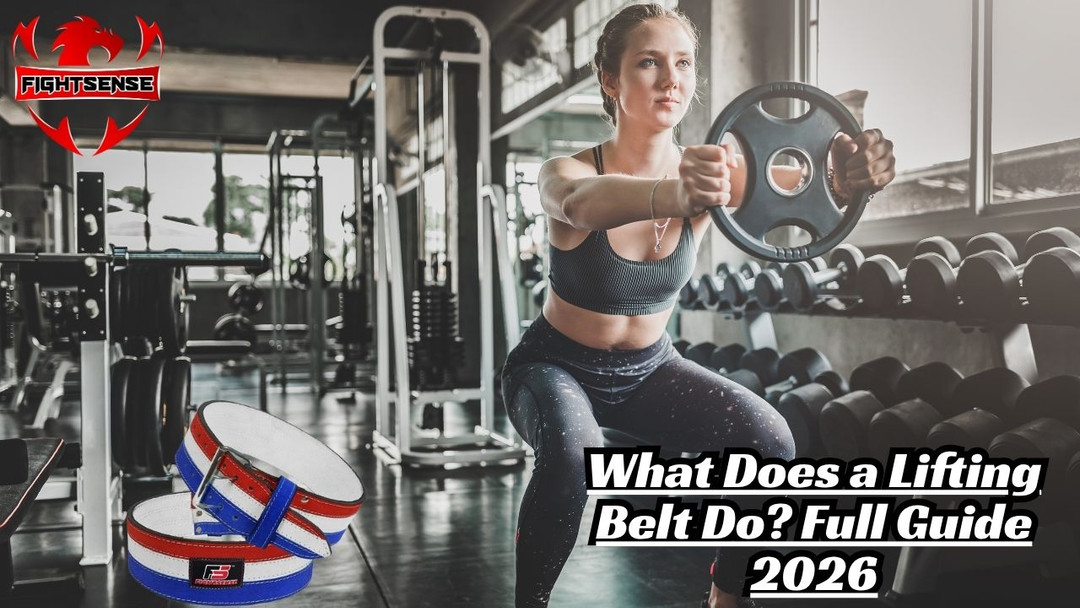
What Does a Lifting Belt Do? Full Guide 2026
What Does a Lifting Belt Do? Many lifters wear one during heavy training, but few understand how it actually helps. Does it make you stronger, protect your back, or simply improve your lifting control? The truth is, a lifting belt supports better bracing, improves stability, and helps you handle challenging lifts with more confidence.
Before adding one to your workout routine, it’s important to know how it works and when it truly makes a difference. In this guide, we’ll break down what Does a lifting Belt Do, its real benefits, and how to choose the right belt for your training.
Key Takeaways:
- A lifting belt does not make you instantly stronger — it helps you create better stability, control, and support during heavy lifts.
- The main purpose of a lifting belt is to improve bracing by helping your core create stronger pressure and maintain proper lifting form.
- A belt is most useful for heavy compound movements like squats, deadlifts, and other strength-focused exercises.
- Choosing the right lifting belt matters — the best option should provide the right balance of support, comfort, and durability for your training style.
Why do heavy lifters wear a belt?
When you are doing large exercises like squats or deadlifts, your body needs to be stable and under control to safely handle the load. A lifting belt helps to support your core, brace correctly and maintain better form during difficult motions.
A belt doesn’t make you stronger overnight. It lets you use the strength you already have more efficiently. Serious training requires the correct amount of support, comfort and durability and a quality belt like Fightsense can deliver just that.
What Does a Lifting Belt Do During Heavy Training?
To know what does a lifting belt do first you have to know about bracing.
Experienced lifters frequently take a deep breath and tense their abdominal muscles before a hard lift. This causes inside the abdomen pressure , called intra abdominal pressure.
This pressure aids:
- Back support
- Better control of your body
- Keep your back straight while you lift
- Less movement during heavy reps
A lifting belt provides something for your core to push against, which makes it simpler to generate and maintain that pressure.
It’s like when athletes employ support equipment in other sports. It’s not about replacing skill, but rather enhancing performance and control.
What Changes When You Lift With a Belt?
A belt can modify the feel of a hefty lift.
Many lifters say a belt makes them feel more secure when getting into heavy weights. This may increase their awareness of maintaining a tight core and correct posture.
Typical modifications are:
- Greater trust in heavier sets
- More steady motion
- Better concentration on technique
- Improved bracing techniques
The belt, however, functions only if supplemented by sufficient training.
If a lifter doesn’t care about technique and just uses a belt, they aren’t going to achieve the best results. The belt should be a support for good behaviors, not a substitute for them.
Can a Lifting Belt Improve Your Performance?
Yes, a lifting belt can help performance, but not by providing you with “extra strength”.
Instead it helps you build a stronger, more controlled stance to lift from.
For example, when you do a hard squat, your legs push the weight up but it’s your core that transmits that power through your body securely. A belt can assist stabilize your stomach and give you more control over the action.
This can assist lifters in training harder and making more consistent development over time with greater stability.
What are the best exercises to do with a lifting belt?
The lifting belt is especially helpful in activities where your core has a big function.
Squats
Squats need your entire body to maintain stability while holding weight. A belt might assist you in maintaining a firm torso position throughout harder sets.
Deadlift
If you are deadlifting weight off the floor you have to brace really hard. A belt can help lifters keep their core tight during the whole action.
Presses Overhead
You need balance and control to stand and press. For higher loads, a belt can give additional support.
Rows of Heavy
Some row modifications might put stress on the lower back and core. A belt can help for improved stability.
Usually, you don’t require a belt for every exercise. The more intense the lift the more effective it is.
Which Lifting Belt Type Fits Your Training Style?
Choosing the right belt depends on your workout goals, experience level, and comfort preference.
|
Belt Type |
Best For |
Main Features |
Training Style |
|
Leather Lifting Belt |
Strong support, durable material, firm structure |
Powerlifting and heavy compound lifts |
|
|
Nylon Lifting Belt |
Everyday gym training |
Lightweight, flexible, comfortable fit |
General fitness and beginners |
|
Velcro Lifting Belt |
Quick adjustments |
Easy to wear and remove, adjustable support |
Functional workouts and mixed training |
|
Powerlifting Belt |
Maximum stability |
Thick design, strong core support |
Serious strength-focused training |
A quality belt should feel supportive without limiting your movement.
Brands like Fighsense focus on creating training gear that helps athletes and gym users stay comfortable while working toward their goals.
Are Lifting Belts Only for Professional Lifters?
Not one bit.
Belts are typically used by powerlifters and competitive athletes, but they're not the only ones who can benefit from them.
A newbie may not need a belt right away. The focus of early training should be:
- Learning correct technique
- Natural muscle building
- Enhance mobility
- Control building core
Once a person starts lifting greater weights and knows how to brace properly a belt might be a valuable addition .
The idea is not to wear a belt just because others do. The secret is to know why you’re utilizing it.
When Is the Right Time to Start Using a Belt?
There is no single rule that fits everyone.
Some lifters begin wearing belts early on in their heavy strength training, while others wait until they have a certain level of experience.
When a belt can be helpful:
- You have good lifting form
- You know how to brace yourself right
- You do a lot of heavy complex exercises regularly.
- Need little additional help during those hard core workouts
An excellent way to train is to use the belt as a tool to help you improve and not rely on it for every session.
How Do You Choose the Right Lifting Belt?
The best lifting belt is the one that matches your training needs.
Before choosing one, consider:
Material
Leather belts are usually preferred for maximum durability and firm support.
Nylon belts are often chosen for flexibility and comfort.
Thickness
Thicker belts generally provide more rigid support, while thinner options may feel easier to move in.
Fit
A belt should be tight enough to support your core but comfortable enough that you can breathe and brace properly.
A poorly fitted belt can distract you instead of helping your performance.
What Makes a Good Lifting Belt Worth Buying?
Good lifting belts should have:
- Sturdy structure
- Comfortable design
- Tight fastening
- Adequate level of help
- Materials that last a long time
The idea is not to find the toughest belt you can find. You want to look for equipment that suits your training style.
A good belt from a manufacturer like Fightsense can be a beneficial training partner because consistency is important while increasing strength.
Real Training Lessons Lifters Learn Over Time
Many lifters have a similar sensation when they first start using a belt. They typically assume it to make large weights feel a lot easier but soon learn that its genuine purpose is increased stability and control.
One lifter discovered that adding a belt to heavy squats and deadlifts didn’t make him stronger; the largest change was feeling more secure, having a firmer core, and maintaining better technique during tough sets.
Over time lifters discover that a belt is not a shortcut to strength. A supportive tool to train with more confidence and use their strength more effectively.
FAQs:
1. Can a lifting belt avoid injuries?
A belt can help with stability but can’t prevent injuries due to bad technique or insufficient training.
2. Does a belt make you weaker without?
No. A belt is a support tool, but your strength still is derived from your muscles and training.
3. When is the right time to start utilizing a lifting belt?
You can think about utilizing one when your form is consistent and you start training with higher weights.
4. How snug should a weightlifting belt be?
It must feel comfortable enough to support your core, but not too tight that it restricts breathing or movement.
5. Does a lifting belt make me a better lifter?
It can allow you to lift with more stability and confidence, especially during tough sets.
Final Thoughts:
A lifting belt helps you become more stable, brace better, and maintain control during heavy lifts. It doesn’t replace proper technique or hard work, but it can help you train with more confidence.
Understanding what does a lifting belt do can help you decide if it fits your goals. When you know what does a lifting belt do and choose the right support, comfort, and durability, a belt can become a valuable addition to your strength training journey. Fightsense offers training gear designed to support lifters during demanding workouts.
Disclaimer:
This content is for informational purposes only and is not a substitute for professional training or medical advice. Always use proper technique and choose equipment that fits your needs.