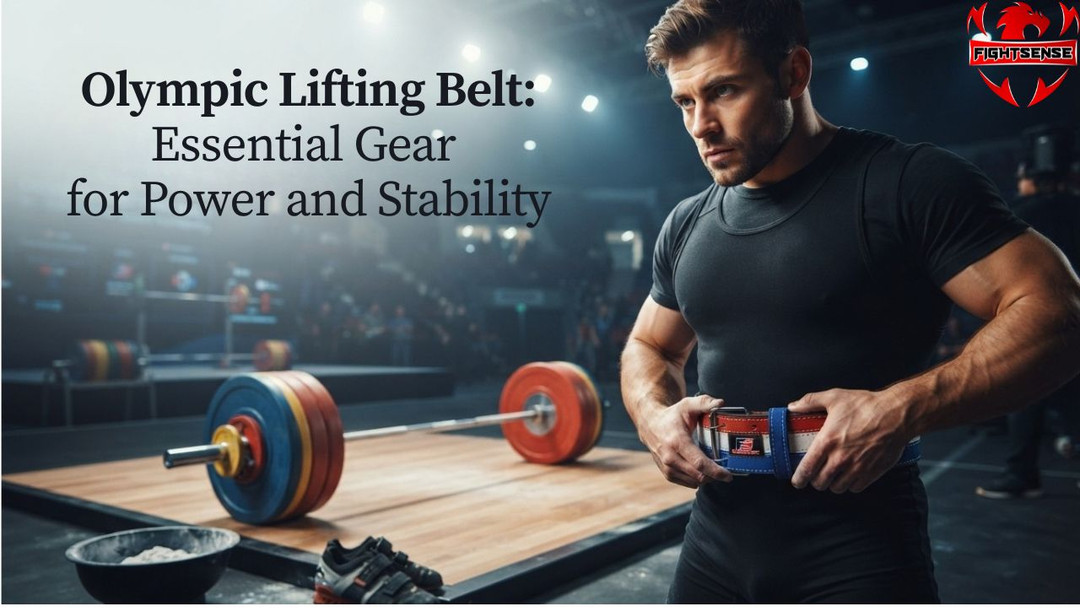
Olympic Lifting Belt: Essential Gear for Power and Stability
When you step onto the lifting platform to execute a heavy snatch or clean and jerk, every single muscle in your body fires at once. Explosive power requires an unyielding foundation, which is why an Olympic lifting belt has become a staple for strength athletes and weightlifters worldwide. Without proper core engagement and spinal support, handling maximal loads safely becomes an uphill battle.
Whether you are chasing a personal record or drilling your movement efficiency, understanding how to select, wear, and leverage this essential piece of equipment can transform your training outcomes.
What Is an Olympic Lifting Belt?
An Olympic lifting belt is a type of sporting equipment used to support the mid-section during high-velocity, multi-joint movements. A good, competition-style weightlifting belt is meant to allow the torso to move freely. This is not the same as thick, uniform belts designed for exclusively low bar squatting or deadlift max attempts.
Many athletes today prefer quality equipment from reputable fitness brands such as FightSense, which produces support equipment that balances durability and functional mobility. These belts give the exact structural input you need as you quickly move from a high pull into a deep, unsupported overhead squat.
How a Competition Weightlifting Belt Works Biomechanically
Not all lifting belts are designed to hold your spine in place physically. Its main purpose is to boost the natural internal stability systems of your body.
When you take a deep diaphragmatic breath and brace your core against a solid FightSense belt, you greatly increase intra-abdominal pressure (IAP). This is similar to a hydraulic column inside you, around your spine, that reduces the compressive and shear forces on your lower lumbar vertebrae.
- Enhanced Proprioception: The physical feedback of the belt provides your abdominal wall something to press against, increasing overall muscle engagement.
- Spinal Decompression: The belt distributes the load evenly across your core so your spine won’t go into unsafe flexion when you’re doing large exercises.
Key Differences: Olympic Belts vs. Powerlifting Belts
All lifting belts are not created equal. The wrong sort of belt for Olympic weightlifting can really mess with how you move.
- Width and Tapering: Traditional powerlifting belts are typically of uniform width (often 10mm to 13mm thick and 4 inches broad all the way around). Olympic lifting belts, however, are generally tapered at the front and sides. This taper keeps the belt from scraping into your ribs or pinching your thighs when you drop into the bottom of a clean.
- Flexibility vs Rigidity: Powerlifting belts emphasize extreme rigidity to move static loads over short distances. Olympic lifting choices require a blend of stiff and dynamic flexibility for fast changes in direction and depth.
Exploring Your Options: Lever vs. Prong Belts
When shopping for an improvement to your gym bag, you'll normally find two basic closing mechanisms that determine how the belt secures onto your waist:
Belts Prong
Traditional single or double-prong buckles with timeless reliability. If your training session contains a blend of conditioning, gymnastics, and weightlifting, this is great as they let you micro-adjust your tightness simply between sets.
Levers Belts
For fast, no-compromise security, a heavy-duty FightSense lever belt incorporates a steel mechanism that rapidly clamps down to your exact pre-measured tightness. Offers instant, firm support to the trunk, which stays locked until you pull the lever open;
Comparison: Core Support Belt vs. Traditional Powerlifting Belts
|
Feature |
Core Support Belt |
Powerlifting Belt |
|
Width Profile |
Often tapered at the front for mobility |
Uniform width all the way around |
|
Primary Movements |
Snatch, Clean & Jerk, Dynamic Squats |
Low-bar Squat, Bench Press, Deadlift |
|
Flexibility |
Balanced for speed and depth |
Rigid for maximum static bracing |
|
IWF Compliance |
Max width 12 cm, meets strict federation rules |
Varies by powerlifting federation rules |
IWF Rules and Conditions for Using an Olympic Lifting Belt in Competitions
If you wish to use your belt on a sanctioned competitive lifting platform, you need to verify it meets the International Weightlifting Federation (IWF) regulations:
- Width Limit: The belt’s entire width shall in no case exceed 12 cm (4.7 inches).
- Proper Placement: Always wear the belt on the outside of your lifting singlet, not tucked below.
- Material Compliance: Made of leather, canvas, or other non-metallic materials, but conventional metal buckles and rivets are permissible.
- No Extra Padding: Competition will not allow artificial padding, bracing attachments, or extra straps affixed to the belt.
Step-by-Step Guide: How to Wear Your Belt Correctly
Wearing a CrossFit Lifting Belt properly allows you to achieve its greatest physiological benefits without hindering your breathing or mobility.
- 1. Find the Right Placement: Place the belt around your waistline, slightly below your lower rib cage and squarely over your hip bones. Do not put it too high on your delicate belly or too low over your hips.
- Initial Fit Check: Tighten the belt so you can easily slip one to two fingers under it with your core fully relaxed.
- Do the Bracing Breath: Don’t lift your chest; breathe deep and 360 degrees into your belly.
- Push Outward – When you’re ready to begin the pull, actively push your abdominal muscles outward against your FightSense gear to lock your core into position.
Pros and Cons of Training with a Lifting Belt
Pros
- Improves core stability drastically at maximal exertion.
- Helps with mental confidence when attempting big or new personal records.
- Lowers general lower back fatigue after exercising.
Cons
- If you use it on every single warm-up set, over-reliance can disguise fundamental core problems.
- If it is the wrong size, it may cause bruising or prevent deep diaphragmatic breathing.
Expert Tips for Maximizing Belt Performance
- Save It For Heavy Working Sets: Warm up with empty bar work and modest percentages without the belt to improve natural core endurance. Only use your FightSense belt while you’re training above 75 to 80 percent of your 1RM.
- Leather break-in kit: Good leather belts need some breaking in. Use yours for low-impact activities or bend it gently to soften the leather in a natural way.
- Keep the Hardware Up: Now and then, check the screws and metal fasteners on your lever or prong buckle to make sure everything is tight and secure.
Common Mistakes Lifters Make with Support Gear
- Wearing It Too Tight: You are defeating the aim of creating internal pressure if you are crushing your waist so tight you cannot take a full breath.
- Ignoring Core Strength: Not developing internal ab and spinal erector strength, depending solely on external support.
- Wrong Positioning: Powerlifting belt (broad and no taper) for dynamic cleans, restricting hip mobility and bruising the ribs.
FAQs:
Do you have to start with a lifting belt?
Beginners should spend the first several weeks mastering movement patterns, balance, and unsupported core stability. However, after baseline mechanics are established, using a belt on heavy working sets is safe and effective.
Can I use an Olympic lifting belt for powerlifting?
Yes, you can use it for squats and overhead presses, but competitive powerlifters prefer a uniform, non-tapered powerlifting belt for deadlifts and low-bar squats.
How tight should I wear my lifting belt?
You want it tight enough that when you push your belly out you get a good push back, but loose enough that you can still take a complete diaphragmatic breath.
Lever Belts vs Tooth Belts: Which Is Better?
Lever belts are quick to put on and take off and provide maximum security, whereas prong belts are more versatile if you are changing waist sizes throughout a workout.
Does a leather belt outperform a belt made from synthetic materials?
Cheap man-made materials wear out faster. Real leather is tougher, holds its shape better and lasts longer.
Olympic belt, protection against injury?
It doesn’t make you indestructible, but it does dramatically increase intra-abdominal pressure, and that helps to stabilize the spine under heavy loads.
Is it okay to wear a belt in CrossFit?
Yes, tapered designs or prongs that can be adjusted work very well for metcons that combine weightlifting with gymnastics.
Conclusion:
To be good at dynamically moving a barbell, you need the right mix of technique, strength, and good equipment. Adding a premium Olympic lifting belt to your training routine gives your core the critical external feedback it needs to lift huge loads with confidence. By purchasing durable gear that is built to function well, like the quality products offered by FightSense, you are investing directly in your long-term lifting safety and progression.
Disclaimer:
This article is for informational purposes only and does not replace professional training advice. Always choose lifting equipment based on your fitness level and training needs.