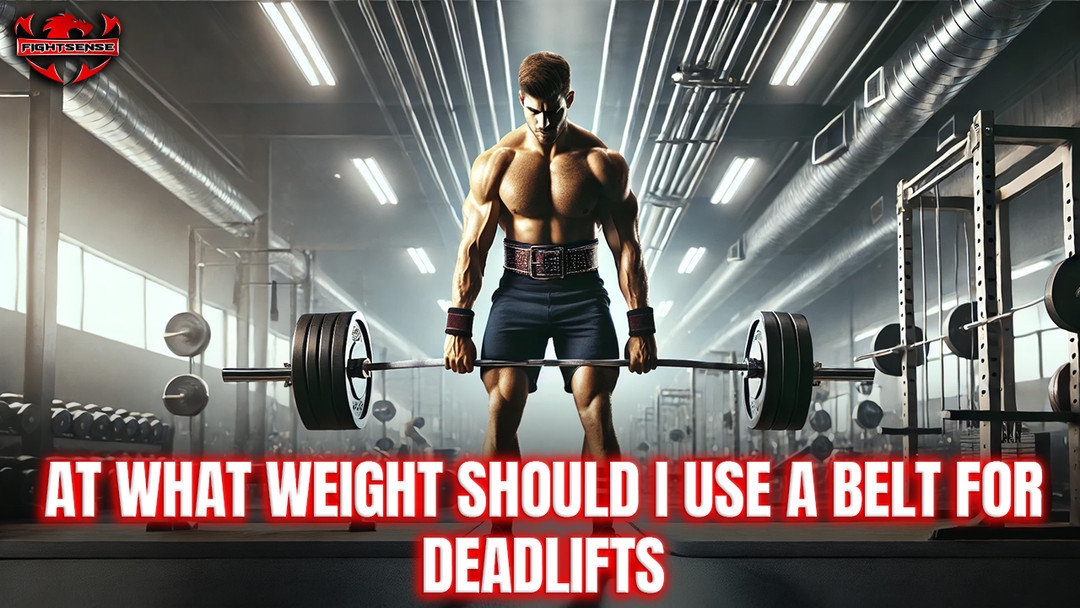
At What Weight Should I Use a Belt for Deadlifts?
A common question among lifters is: At what weight should you use a belt for deadlifts? The answer depends on your experience level and training goals. Beginners can consider using a belt once they're lifting around 1.5 to 2 times their body weight, while advanced lifters often benefit from wearing one at 80–85% of their one-rep max to enhance core stability.
A lifting belt boosts intra-abdominal pressure, helping stabilize the spine and lower injury risk during heavy pulls. Just be careful not to rely on it too soon, as overuse can limit the development of proper natural bracing and core strength.
Key Highlights:
1. Wear a belt when core stability is low or lifting over 80% of 1RM.
2. A belt increases stability and reduces injury risk.
3. It supports the lower back and boosts intra-abdominal pressure.
4. Training without a belt also helps build natural core strength.
5. Make sure the belt is positioned correctly, tight, and used with proper breathing/bracing.
At What Weight Should I Use a Belt for Deadlifts?
There is no strict weight threshold for using a belt. Instead, it depends on personal lifting experience and strength levels. However, general recommendations suggest
-
Beginners (Deadlifting Less Than 1.5x Bodyweight): No belt is necessary. Focus on developing proper technique and core strength.
-
Intermediate Lifters (1.5x to 2.5x Bodyweight): A belt can be beneficial for heavy sets (80%+ of max lift).
-
Advanced Lifters (2.5x+ Bodyweight): A belt plays a significant role in maximizing strength and reducing injury risk.
A common benchmark is using a belt when lifting 80% or more of your one-rep max (1RM). If your core struggles to maintain tension or you experience excessive lower back strain, it might be time to consider a belt.
Why Do Lifters Use a Belt for Deadlifts?
Lifters often wear a belt during deadlifts to improve both performance and safety. A lifting belt provides several benefits:
-
Intra-Abdominal Pressure (IAP): Increases core pressure, stabilizing the spine and reducing the risk of injury.
-
Lumbar Support: Helps maintain a neutral spine position, mitigating strain on the lower back during heavy lifts.
-
Injury Prevention: While a belt can’t compensate for poor form, it provides vital support, lowering the risk of strains or herniated discs.
-
Force Optimization: Enhanced core stability enables greater force production, allowing for more efficient and heavier lifts.
-
Gym Enthusiasts & Athletes: Gym-goers and athletes often rely on high-quality lifting belts and deadlifting belts, such as those from Fightsense, to maximize performance and prevent injury during intense training or competitions.
How Does a Belt Help Deadlift Performance?
A lifting belt enhances deadlift performance by optimizing biomechanics. Here’s how:
-
Enhances Core Engagement: Contrary to the myth that belts weaken the core, they actually help you brace more effectively.
-
Improves Lift Mechanics: Reduces energy loss by stabilizing the torso, allowing better form and efficiency.
-
Maintains Spinal Integrity: Prevents rounding of the lower back, a common cause of deadlift injuries.
-
Boosts Confidence: Many lifters feel more secure with a deadlifting belt, helping them push through heavier lifts.
Should You Use a Belt for Deadlifts?
A belt is useful when lifting 80%+ of your 1RM, during low-rep, high-intensity sets (3-5 reps), or while training for max strength or powerlifting. It provides stability and helps maintain form under heavy loads. However, avoid a belt when lifting below 80% of your 1RM, focusing on core development, doing high-rep sets (10+ reps), or learning technique, as it can mask form issues and limit muscle engagement.
When I Personally Use a Belt for Deadlifts:
From my own training experience, the right time to use a belt for deadlifts depends on your strength level and goals. When I first started lifting, I avoided using a belt until I was pulling around 1.5 to 2 times my body weight, which helped me build strong natural bracing and core control.
As I got more advanced, I noticed that wearing a belt at about 80–85% of my 1RM gave me better stability and confidence on heavy reps. The belt increased my intra-abdominal pressure, kept my spine secure, and reduced lower back strain—especially during max attempts. But I also learned not to rely on it too early; doing lighter sets without a belt really helped improve my core strength and technique.
How to Deadlift Correctly Using a Belt:
If you decide to wear a belt, using it correctly is crucial. Follow these steps:
-
Position It Correctly: The belt should sit over your lower abdomen, just above the hip bones.
-
Tighten It Properly: It should be snug but not overly tight—you should still be able to take a deep breath.
-
Engage Your Core: Before lifting, inhale deeply and brace your abs against the belt.
-
Maintain Proper Form: A belt is a tool, not a substitute for good technique.
Shop Now !
FAQs:
1. When should I use a belt?
Use a belt when lifting 1.5–2× your body weight or around 80–85% of your 1RM for added support.
2. Does a belt increase strength?
It doesn’t directly increase strength but helps with stability, allowing you to lift heavier safely.
3. Will a belt weaken my core?
Overuse can reduce core engagement, so make sure to do some sets without it to strengthen your core.
4. Where do I place the belt?
Position it around your lower abdomen, tight but comfortable, above your hips.
5. Can beginners use a belt?
Yes, but focus on proper technique and bracing first before adding the belt.
Conclusion:
Deciding when to use a belt for deadlifts depends on your strength levels and training goals. Generally, a belt becomes most useful when you're lifting over 80% of your one-rep max (1RM), as it provides extra support and stability during heavy pulls.
Still, avoid relying on it too early—prioritize building core strength and mastering proper technique first. Fightsense offers high-quality lifting belts that can enhance performance and improve safety. Use them wisely to lift heavier, safer, and smarter.
Disclaimer:
Always consult a qualified trainer before using a lifting belt to ensure proper technique and safety.