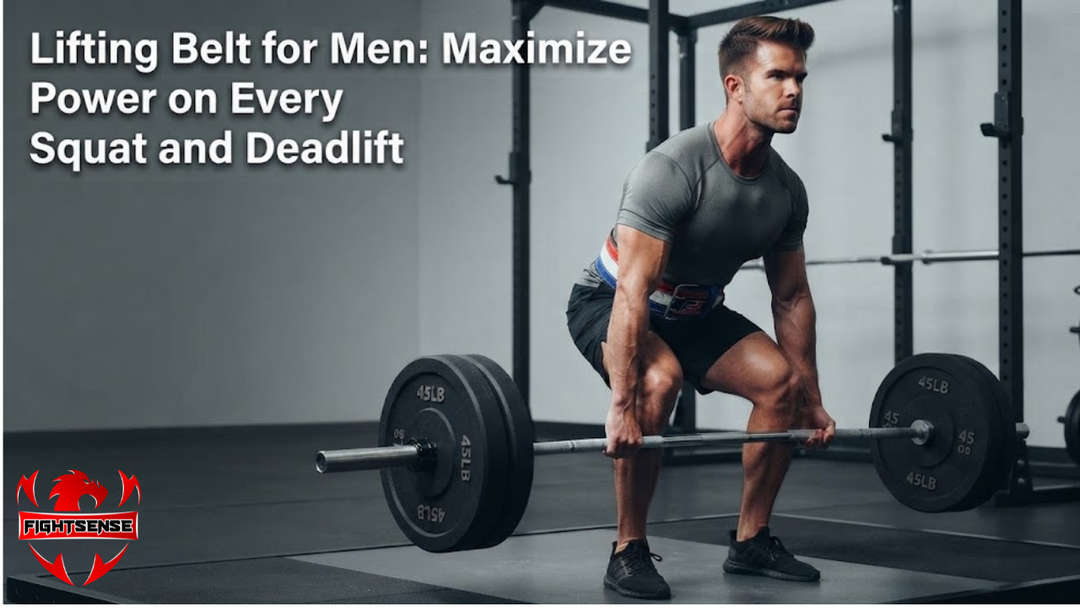
Lifting Belt for Men: Maximize Power on Every Squat and Deadlift
A lifting belt for men is a specialized fitness accessory designed to increase intra-abdominal pressure and safeguard your lower back during heavy resistance training. As a trusted brand specializing in premium accessories, FightSense provides robust Strength training belts and secure lever belts engineered for intense training.
This guide covers everything you need to choose the ideal belt for your training style and strength goals.
What is a Lifting Belt for Men and What Are Its Benefits?
A lifting belt is just a wide band of stiff leather or heavy nylon that fits tightly around your abdomen and lower back. The belt doesn't operate as an artificial spine but as an actual wall for your abdominal muscles to brace against.
The main advantages of adding a quality lever belt to your practice are:
- Increased intra-abdominal pressure: By pushing your core out against the belt, you create a pressurized cylinder of air that helps keep your spine stable.
- Improved Spinal Stability: It greatly minimizes excessive spinal flexion, extension, and rotation during large compound movements under high loads.
- Maximized Strength Output: With a stronger core and improved feedback, many lifters discover they can safely lift heavier weights or perform more reps.
- Lower Back Fatigue Reduction: It assists in preserving your lower back endurance, allowing you to train harder throughout longer sessions.
Why You Need a Core Support Belt
A lot of newcomers think that a lifting belt for men is an external spine. In reality, a core support belt acts as a tactile wall for your core muscles to push against. As you take a deep breath into your diaphragm and push your abs outward, the belt gives you physical input that supercharges your intra-abdominal pressure.
This mechanism stabilizes your lower back, limits the flexibility of the spine under large loads and often allows you to safely carry greater weight. Regardless of whether you are training for powerlifting, bodybuilding, or functional fitness, arm yourself with superior gear from FightSense and change the game of your compound lifts.
Types of Lifting Belts: Leather vs. Nylon
Understanding the primary material categories is the first step in your buying process. Each material serves a distinct purpose in the weight room.
Leather Powerlifting Belts
Genuine or split leather heavy-duty belts are usually uniform in width, generally 4 inches all the way around. They are of the single-prong, double-prong, or quick-release lever buckle kind. Leather is the choice of powerlifters as it gives a solid, no-nonsense support for low-bar squats and big deadlifts. Genuine leather lifting belts for men are preferred by many sportsmen since they can withstand tremendous stress and friction during hard power training. FightSense designs its leather lines and lever belts to endure these brutal training requirements.
Nylon Training Belts
Nylon belts are versatile, lightweight, and secured with a Velcro strap and heavy-duty steel tension roller buckle. They give focused support to the lower back while permitting the dynamic movement needed in CrossFit, Olympic weightlifting belt (snatches and clean-and-jerks), and functional bodybuilding circuits.
How to Choose the Right Width and Thickness
Each exercise and body form has a specific belt that works for it. Keep these sizing & dimension rules in mind:
- Width: A typical 4-inch width works best for most adult men. If you have a shorter torso, a tapered leather belt (wider at the rear, narrower in the front) or a 3-inch nylon belt can stop your lower ribs from hitting the top edge of the belt when you go into deep squats.
- Thickness: 10mm leather belts provide a nice mix of firm support with some give to break them in for overall strength training. 13mm leather belts are quite stiff and preferred by competitive powerlifters, but they require a painful break-in time.
How to Measure and Choose Your Size
Proper fit is essential for safety as well as performance. Don’t use your normal pant or trouser size as a guide to what size of lever belt you should use. Waist measurements around the navel will tend to be bigger.
- Use a stretchy tape measure: Wrap it around your stomach (the belt will actually sit here during heavy lifts) at the level of your belly button.
- Relax your core. Do not suck in your stomach when getting the measurement.
- See the Brand Chart: Match your exact inches or centimeters to the manufacturer’s unique sizing chart. A good belt should fit tightly and allow for a few inches of adjustment as your body shape changes.
The 5 Best Lifting Belts for Men in 2026
|
Brand & Model |
Material |
Best For |
Closure Type |
|
Leather Lever Belt |
Reinforced Leather |
Heavy Lifting & Power Training |
Quick-Release Lever |
|
Weightlifting Belt |
Heavy-Duty Leather |
General Strength & Squats |
Single Prong |
|
Nylon Training Belt |
Reinforced Nylon |
Functional Fitness & CrossFit |
Velcro & Steel Buckle |
|
Power Pro 10mm Belt |
Premium Leather |
Powerlifting & Deadlifts |
Lever Buckle |
|
Flex-Fit Support Belt |
Flexible Nylon |
Olympic Lifting & WODs |
Velcro + Fast Buckle |
Step-by-Step Guide: How to Wear a Lifting Belt Properly
Even the best weight belt will fail if worn wrong. To maximize core stability, do the following:
- Put the belt: Wrap the belt around your stomach, concentrating on your lower back and covering your navel area. It should comfortably sit above your hip bones and under your ribs.
- Check tightness: When your core is relaxed, you should be able to fit two fingers below the belt comfortably. It should be tight, not so tight that you can't expand your stomach.
- Take a breath of the diaphragm: Before you take the bar off the rack, breathe deep into your gut, not just your chest, and push your whole core outward against the inside of the belt.
- Squeeze and lift: Keep this bitchin’ squeeze tight throughout the concentric and eccentric parts of the lift, only breathing out at the top or completion of the rep.
Pros and Cons of Using a Gym belt for men
Pros
- Increased Intra-Abdominal Pressure: Makes the core much stiffer under peak loads.
- Better Proprioception: Gives your nervous system a physical target to push against, resulting in improved movement patterns.
- Less Fatigue: Maintains low back endurance during high-volume exercise sessions.
Cons
- Potential Over-Reliance: Using a belt for 100% of your workout sets can leave your deep transverse abdominis under-conditioned.
- Risk of Bruising: Leather belts that are not properly placed or too stiff may cause slight skin pinching or bruising on the hips.
- Mobility Limitations: A very rigid Gym belt for men can make starting positions in Olympic lifts problematic.
Expert Tips for Maximizing Your Belt Performance
- To naturally break it in: If you acquire a thick leather Gym belt for men, roll it up tightly the other way and keep it unbuckled to soften the leather fibers without hurting the core.
- Reserve it for tough work sets: Don’t use your belt for warm-up sets under 70 to 75% of your 1-rep max. Keep your core working separately for lighter loads.
- Pair with good breathing mechanics: A lifting belt for men enhances your natural bracing technique; it does not replace the Valsalva maneuver.
Common Mistakes to Avoid
- Wearing the belt too low: If you put the belt low, it limits your leg drive and your hip flexion in both squats and pulls.
- Pull up your stomach: You must push your stomach out into the belt to provide pressure; never suck your stomach in before you tighten the buckle.
- Choosing the wrong size because you go by standard pant size: Your belt size is your real waist circumference around the belly button. This is usually a few inches larger than your trouser size. *See the manufacturer's sizing chart for specifics.
Shop Now !
FAQ’s:
What size Deadlift belt do I need?
Using a flexible tape measure, measure the diameter of your waist at the level of your belly button (where the belt will actually sit). Instead of guessing based on your garment size, compare that precise measurement to the brand’s size chart.
Is a leather or a nylon belt better for men?
Leather belts are best for maximum strength, powerlifting and big squats or deadlifts. Nylon belts are better suited for functional fitness, CrossFit, and routines that involve rapid changes between gymnastics, running, and lifting.
Are weighted belts good for new lifters?
Yes, a weighted belt is safe for starters. It’s a tool for learning how to brace the core properly – if they also work unbelted on their core to develop basic strength.
How Tight Should a Squat Belt Be?
It ought to be tight enough to give a good resistance as you expand your midsection, but not so tight that you can’t take a full, deep breath.
Can a fitness belt prevent back injuries?
Fitness belts don’t prevent injuries. They help avoid excessive spinal flexion and improve neuromuscular awareness. This can greatly reduce injury risk while lifting big weights.
Can I use a lifting belt for bench press?
Yes, some powerlifters wear a belt for bench press to help them keep their leg drive and arch stable; however, it is not as frequent for lower-body activities.
How to clean my leather Squat belt?
Wipe leather belts with a damp cloth and mild soap, then let air dry away from direct sunlight. Real leather should never be soaked in water.
Which is preferable: lever belts or prong belts?
A lever belt is a belt that can be placed on and taken off in less than a second while maintaining the same tightness every time. A prong belt allows for additional micro-adjustability if you are fluctuating your body weight a lot.
Conclusion:
A quality lifting belt for men can be a game-changer if you are serious about improving functional strength and safeguarding your lumbar spine. From vintage weighted belts to rigid lever belts, FightSense’s specialized gear provides you with dependable solutions to help you push through each phase of your fitness journey. Choose the one that matches your main training technique. Follow the correct sizing guidelines. Trust your breathing. Brace hard. See your numbers climb safely.
Disclaimer:
This article is for informational purposes only. To ensure optimal performance and safety, consult a fitness professional before using a lifting belt for men.