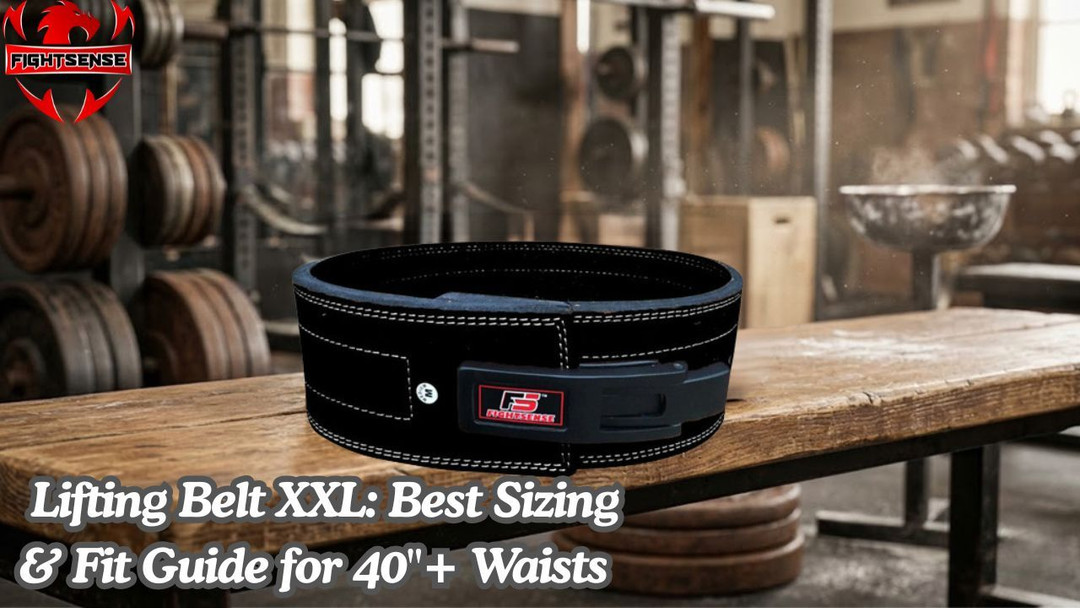
Lifting Belt XXL: Best Sizing & Fit Guide for 40"+ Waists
Finding a high-quality Lifting Belt XXL that provides real intra-abdominal pressure without digging into your ribs can feel like a challenge. If you have a 40-to-48-inch waist, standard store-bought belts often fall short—literally. Whether you are hitting heavy squats, pulling deadlifts, or training for a powerlifting meet, an extra-large weightlifting belt is essential for protecting your lower back and maximizing performance.
In this guide, we break down everything you need to know about XXL lifting belts, from measuring your waist accurately to choosing between lever and prong mechanisms.
What is an XXL Lifting Belt?
An XXL weightlifting belt is an extra-large support belt engineered specifically for lifters with larger waists (typically 40 to 48 inches). Unlike standard belts, a proper 2XL belt maintains uniform width—usually 4 inches—all the way around to support both the lumbar spine and the abdominal wall.
When lifting heavy loads, your core muscles push outward against the belt. This friction creates intra-abdominal pressure (IAP), which stabilizes your spine and prevents excessive spinal flexion under heavy strain.
Who Needs a 2XL Weightlifting Belt?
An extra-large belt isn't just about waist size—it's about frame, structure, and training discipline. You likely need an XXL lifting belt if you are:
- Heavyweight Powerlifters & Strongmen: Athletes who require maximum brace area for 500+ lb squats and deadlifts.
- Large-Frame Bodybuilders: Lifters with thick abdominal walls and heavy waists who need uniform containment.
- Athletes Over 40-Inch Waist: Anyone whose midsection measures between 40 and 48 inches at the belly button level.
Lever Belt vs. Prong Belt for XXL Lifters
Choosing between a lever latch system and a traditional prong buckle comes down to convenience and personal preference.
|
Feature |
XXL Lever Belt |
XXL Single/Double Prong Belt |
|
Ease of Use |
Fast, one-second flick lock/unlock |
Requires pulling tight with leverage |
|
Tightness |
Extremely tight, highly secure |
Adjustable hole-by-hole |
|
Best For |
Powerlifting, heavy sets |
Daily workouts, fluctuating waist size |
|
Adjustment |
Requires a screwdriver to change size |
Instant adjustment per set |
For larger lifters, a lever belt is often preferred because getting a heavy-duty leather belt tight enough with a prong buckle can take significant effort between sets. Brands like FightSense offer heavy-duty steel lever mechanisms on their XXL belts, allowing you to lock in maximum tightness instantly and release it the second your set ends.
Get Yours Now!
Key Features of the Best Lifting Belt XXL
1. 10mm vs. 13mm Thickness
- 10mm Belts: Flexible, faster, comfortable right out of the box, and perfect for general strength training and heavy squats.
- 13mm Belts: Maximum stiffness allowed in federations like the USAPL/IPF. It offers ultimate support but requires a longer break-in period.
2. Leather Quality & Stitching
A true heavy-duty XXL belt should be crafted from genuine suede or top-grain leather with double-reinforced heavy nylon stitching. Avoid cheap foam or imitation leather—they flex too much under heavy loads.
How to Measure Your Waist Correctly
Measuring incorrectly is the #1 reason lifters order the wrong size belt. Your pant size is not your lifting belt size.
Step-by-Step Measurement Guide
- Use a flexible tape measure: Do not use rigid hardware measuring tape.
- Measure at the navel: Wrap the tape around your belly button (midsection), where the belt will actually sit.
- Brace lightly: Stand in a neutral stance and pull the tape snug—do not suck in your stomach or push it out unnaturally.
- Check the brand size chart: Match your exact inch measurement to the brand's XXL range.
Pros & Cons of an XXL Lifting Belt
Pros:
- Provides maximum lumbar and abdominal stabilization during max-effort lifts.
- Eliminates pinching caused by undersized belts stretched to their last hole.
- Durable construction built to handle heavy powerlifting loads.
Cons:
- Requires a break-in period (especially 13mm genuine leather).
- Less flexible for movements requiring deep torso bending (like Olympic snatches).
Common Belt Fitting Mistakes to Avoid
- Relying on Jean/Pant Sizes: Jeans sit on your hips; a lifting belt sits higher on your torso.
- Wearing the Belt Too Low: The belt should cover your lower back and belly button, not sit across your hips.
- Over-Tightening: If you cannot expand your lungs or brace your abs outward, the belt is too tight.
Expert Tips for Maximizing Intra-Abdominal Pressure
- Take a Deep Belly Breath: Breathe into your diaphragm (360-degree breath), pushing your stomach outward into the belt wall.
- Brace Before Moving: Lock your core before initiating the squat drop or deadlift pull.
- Use Reliable Gear: Ensure your lever or buckle is secured tightly. Reputable fitness brands like FightSense design high-density leather belts with reinforced steel hardware to ensure your support never gives out mid-lift.
FAQs:
What waist size is a Lifting Belt XXL?
An XXL lifting belt typically fits a waist circumference between 40 inches and 48 inches (101 cm – 122 cm) measured at the belly button level.
Should Lifters Choose a 10mm or 13mm XXL Lifting Belt?
For lifters new to rigid leather belts, a 10mm thickness offers excellent support with a faster break-in period. Experienced powerlifters moving maximal loads typically benefit more from the maximum stiffness of a 13mm belt.
Is a lever belt better than a prong belt for large waists?
Yes, lever belts are easier to snap shut and release when you have a larger midsection, whereas pulling a thick prong belt tight can be tiring.
How tight should an XXL weightlifting belt be?
It should be tight enough that you feel resistance when bracing your core outward, but not so tight that you cannot take a full breath into your belly.
Can an XXL Lifting Belt Be Worn During Bench Press?
Yes, many powerlifters wear an XXL lifting belt during bench press to maintain upper-back arch tightness, brace the core, and maximize leg drive throughout the lift.
How long does a genuine leather lifting belt last?
A high-quality genuine leather belt from brands like FightSense can easily last 5 to 10+ years with proper care.
Do XXL belts meet powerlifting federation rules?
Most 4-inch wide, 10mm/13mm leather belts meet standard powerlifting equipment guidelines. Always check your specific federation rulebook (IPF, USAPL, USPA).
Conclusion:
A Lifting Belt XXL is an essential tool for any heavyweight lifter serious about safety, core stability, and breaking personal records. By measuring your waist accurately at the navel and choosing a durable 10mm or 13mm leather belt, you set yourself up for years of heavy, injury-free training.
Disclaimer:
This blog is just for informational needs. Before using new equipment in your exercise program, always see a qualified trainer or medical practitioner.