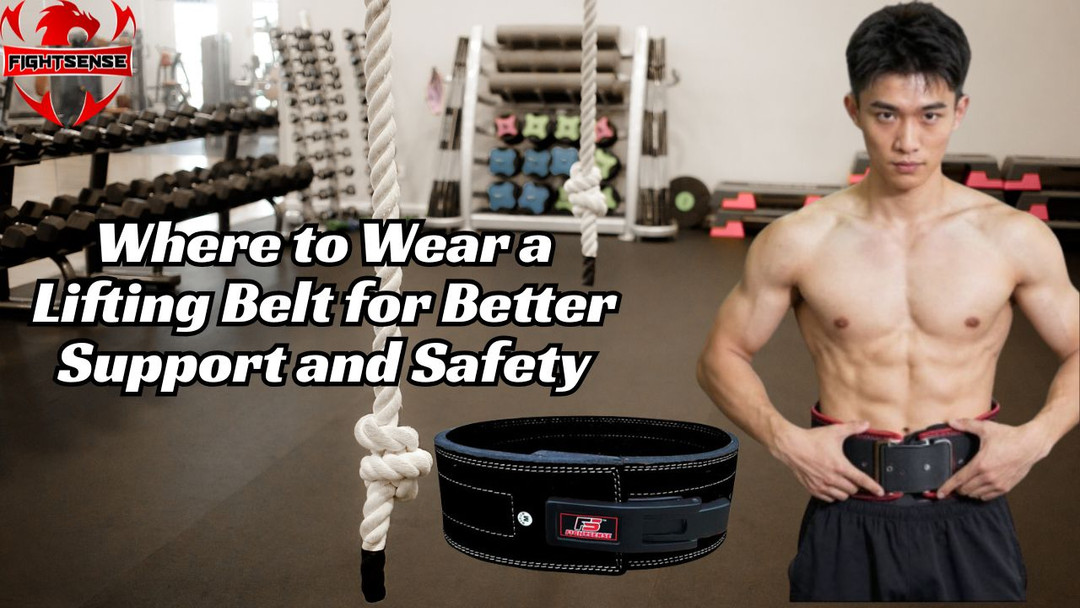
Where to Wear a Lifting Belt for Better Support and Safety
Where to Wear a Lifting Belt is something many lifters get wrong, even after using a belt for months. Did you know that wearing your belt in the wrong position can reduce its effectiveness and make heavy lifts feel uncomfortable? Learning where to wear a lifting belt correctly can help you improve core support, stability, and confidence during exercises like squats and deadlifts.
In this guide, you’ll discover the correct belt placement, how tight it should be, when to wear it, and mistakes that can limit your performance. We’ll also look at why choosing a reliable brand like Fightsense can help you get better support from quality weightlifting and lever belts.
Key Takeaways:
- The right belt position can change your lifting experience — proper placement helps you create stronger core pressure, improve stability, and feel more confident under heavy loads.
- A lifting belt is a performance tool, not a shortcut — when combined with correct breathing and bracing techniques, it supports better lifting mechanics.
- Every lift has a different demand — learning how to adjust your belt position for squats, deadlifts, and presses helps you get the most benefit from your equipment.
- Small belt mistakes can hold back your progress — incorrect placement, poor tightness, or overusing a belt can reduce comfort and effectiveness.
Understanding the Right Placement of a Lifting Belt
Many lifters start wearing a belt for heavier exercise but forget about proper placement. Wearing it in the correct posture can enhance core bracing, stability and support during hard exercises.
Wear the belt across the stomach, between the lower ribs and higher hips. With the right position you can take a deep breath, contract your core muscles and apply pressure to the belt to assist with self control during activities such as deadlifts and squats.
Why Does Lifting Belt Placement Matter During Heavy Training?
"Does the exact placement of a lifting belt actually make a difference in performance?" you might be asking.
Yes it does.
A well fitted belt will make your core muscles operate better. It resists when you brace against the belt and this helps you assume a stronger and more controlled lifting position.
Incorrect placement may cause:
- Pain when performing exercises
- Restricted movement
- Limited support capacity
- Reduced confidence on heavier sets
Your technique should be supported by a belt, not replaced by it or used to remedy bad lifting form
Should a Lifting Belt Sit Above or Below the Belly Button?
A typical query among gym users is the location of the abdominal button.
The answer depends on your physical structure, your method of training, and the exercise you’re doing. Some lifters like to wear the belt around the belly button, some like it a little higher or lower depending on comfort.
For instance:
- Many lifters like a slightly higher position during squatting because it helps to keep the torso erect.
- Some athletes choose a little lower stance in the deadlift to facilitate better hip movement.
- During overhead movements comfort and breathing ability are key.
The optimal spot is where the belt supports you but doesn’t get in the way of your natural movement.
How Tight Should a Lifting Belt Be for Maximum Support?
The mistake many make is thinking that a tighter belt will always give greater results. But it’s important that the belt is tight enough to hold your core in place but free enough to breathe properly.
A basic method to check the fit is:
- Belt it around your midsection.
- Breathe deeply into your stomach.
- Drive your core into the belt.
If you can take the tightness easily, it's typically correct.
The idea is to develop support and stability, not discomfort.
What Are the Benefits of Wearing a Lifting Belt Correctly?
|
Benefit |
How It Helps Your Training |
|
Improved Core Stability |
A lifting belt gives your abdominal muscles something to push against, helping create a more stable torso during heavy lifts. |
|
Greater Confidence With Heavy Loads |
Extra support during challenging sets can help lifters feel more prepared and focused. |
|
Better Bracing Technique |
Proper belt use helps lifters develop stronger core pressure and better control during demanding movements. |
|
Improved Training Performance |
Better stability and support can help lifters perform heavy exercises more efficiently. |
What Should You Look for Before Buying a Lifting Belt?
The choice of a good belt is vital as its comfort and longevity will affect your training experience.
A good lifting belt should provide:
- Tough and sturdy build
- Fits well
- Safety fastening system
- Good thickness
- Long term reliability
Fightsense has weightlifting gear for athletes who are looking for reliable strength equipment such as lever belts for lifters who require constant support throughout strenuous workouts.
It’s a popular choice for strength-focused athletes and a solid lever belt can ensure a snug fit and quick adjustment.
How Do You Know If Your Belt Is in the Correct Position?
If you are still unsure where to wear a lifting belt, check these signs:
Your belt is positioned correctly if:
- You can breathe deeply
- You can brace your core against it
- Your movement feels natural
- It does not cause pain or discomfort
- It stays secure during heavy lifts
If you constantly adjust your belt during training, you may need to change its position or tightness.
How Can Incorrect Belt Placement Affect Your Lifting?
Wearing a lifting belt in the wrong position can reduce the support you expect from it and affect your overall lifting experience. Proper placement is important because the belt needs to work with your body’s natural bracing technique.
- Reduced Core Support — An incorrectly positioned belt may prevent you from creating strong abdominal pressure during heavy lifts.
- Breathing Difficulties — A belt placed too high or tightened incorrectly can make it harder to take deep breaths and brace properly.
- Limited Movement — Wrong placement may restrict your hips or torso movement, especially during exercises like squats and deadlifts.
- Less Comfort During Training — Poor positioning can create unnecessary pressure around your ribs, hips, or stomach area.
- Reduced Lifting Efficiency — When your belt does not support your natural movement, it may affect your confidence and technique during heavy sets.
What Lifting Belt Mistakes Should You Avoid?
- The belt is worn too high. When the belt is worn too high, close to the ribs, it can impede breathing and make movement uncomfortable.
- Wearing the Belt Too Low – If the belt is worn too low it might impact hip movement, especially in squats and deadlifts.
- Belt Too Tight A tighter belt doesn't always mean more support. Don't forget about correct breathing and bracing.
- Belt Not Building Strength – You’ve got a crutch for your technique but not a replacement for perfect form, gradual training and strong principles.
FAQs:
1. Can a lifting belt improve my lifting technique?
A lifting belt can support better bracing and stability, but it works best when combined with proper form and training.
2. Does a thicker lifting belt provide more support?
A thicker belt can provide more rigidity, but the best choice depends on your training style and comfort.
3. How do I know if my lifting belt fits correctly?
A properly fitted belt should feel secure, allow deep breathing, and let you brace your core comfortably.
4. Are lever belts better for strength training?
Lever belts are popular among serious lifters because they offer a consistent fit and quick adjustment.
5. Can beginners start using a lifting belt?
Yes, but beginners should first focus on mastering proper lifting technique and core bracing.
Final Thoughts:
Knowing where to wear a lifting belt will provide superior support and stability from your workout gear. The right position can enable good breathing, strong core bracing and natural movement.
If you’re still asking yourself where to wear a lifting belt, pick a place that feels safe yet doesn’t hinder your movement. Train with more confidence by combining appropriate technique with solid equipment from a reputable company like Fightsense. Remember, a lifting belt is a support tool, not a replacement for effective strength development.
Disclaimer:
A lifting belt is a training support tool, not a replacement for proper technique, strength development, or professional guidance. Use it correctly and train responsibly.