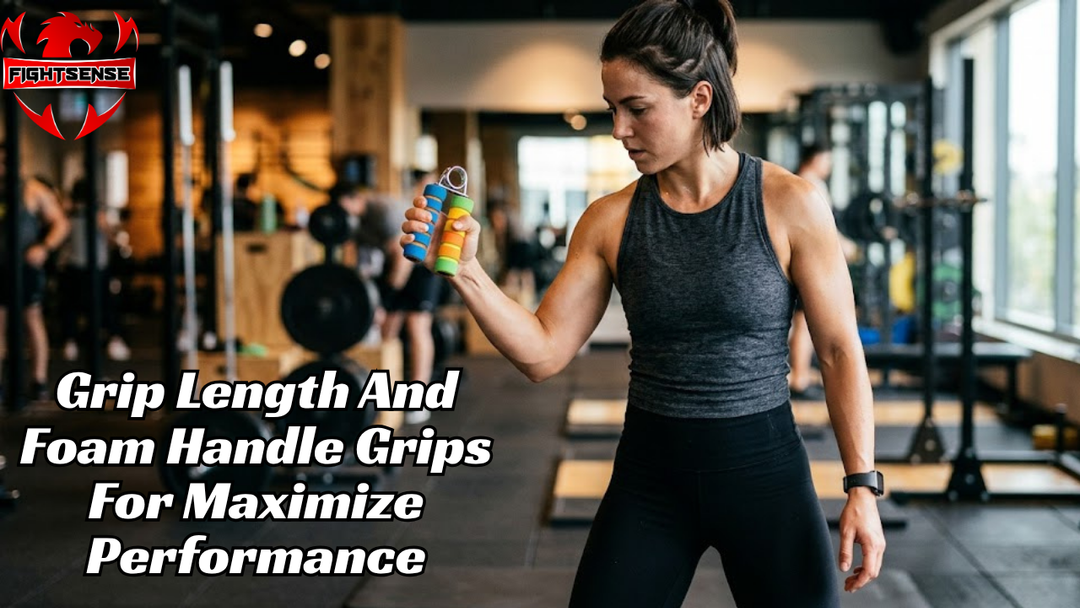
Grip Length And Foam Handle Grips For Maximize Performance
Grip Length and Foam Handle Grips play an important role in modern equipment design and ergonomics, where even small components can significantly impact comfort, safety, and performance. The right combination of foam handle grips and correct grip length selection can greatly enhance user control and help reduce long-term hand fatigue. Whether used in fitness equipment, bicycles, industrial tools, or mobility aids, an optimized grip setup improves handling efficiency and overall user experience.
In 2026, foam handle grips are no longer considered basic accessories—they have become an essential ergonomic upgrade due to growing awareness of injury prevention, comfort, and long-term usability.
Keynotes:
What Are Foam Handle Grips?
Foam handle grips are soft, tubular sleeves made out of EVA foam, EPDM foam or nitrile rubber foam. They are designed to fit over the hard handles, like the metal or plastic bars, and give the user a cushioned, anti-slip surface.
Foam grips aim at improving the interface between human hands and hard surfaces by lowering pressure concentration and vibration transfer.
They are utilised in a wide variety of industries including:
- Sports equipment for fitness and gym use (dumbbells, pull up bars, rowing machines)
- Bicycles (particularly mountain bikes and scooters).
- Hand tool (garden tools, industrial machineries, lawn equipment)
- Medical assistance devices (crutches, walkers, rehabilitation devices)
- Tools for home and DIY
Why Foam Handle Grips Are Important?
Foam grips are a must because they affect comfort and performance when used repeatedly.
Enhanced Hand Comfort
The foam gives a soft padding layer to spread pressure equally over the palm. This alleviates some of the pressure on certain regions of the hand, especially during long workouts or prolonged tool use.
Vibration Damping
When cycling on uneven surfaces or using tools, the vibration is delivered directly to the hands. A foam composition helps to absorb some of this vibration making for easier handling and reduced fatigue over time.
More control and safety
A good grip decreases the likelihood of you sliding, especially if you are sweaty or damp. Modern closed-cell foam retains grip texture when wet.
Heat resistance
Foam is more comfortable to use outdoors all year round than metal or hard plastic, which can get too hot in summer or too chilly in winter.
Lightweight & Affordable Upgrade
Foam grips are a cheap adjustment that can rapidly upgrade the feel of equipment without compromising the structure.
Understanding Grip Length and Why It Matters?
The grip length is the usable length of the foam sleeve that is fitted to a handle. It is important in placement of the hands (correctly) and in ergonomics of the body.
A too-short grip may cause the hand to extend beyond the support region, which can be uncomfortable or create unequal pressure. Excessive length may impede control or movement.
Grip choice should be based on pragmatic reasons and not be slavishly formulaic in the fashion of:
- Hand size and palm breadth
- Type of equipment employed
- Single hand or two hand use
- Balance of control/comfort required
Most conventional foam grips on the market are between 90 mm and 150 mm, which covers most general applications.
Can Grip Length and Foam Handle Grips Be Customized?
The foam grips can be cut to size if you need to make them fit better. Yes. This is especially handy if you have unique tools or a non-standard size handle.
How to cut foam grips correctly:
- Use a utility knife or razor sharp.
- Turn gently for even circular cut
- Never squeeze the foam when cutting.
- Cut once, measure twice to save waste
If trimmed correctly the grip will sit flush against the frame with no gaps or loose edges.
Installation Methods for Foam Handle Grips:
How to Install Foam Grip Handles
Foam grips are relatively easy to install, and there are a number of ways you can do it depending on how tight the grip is and the size of the handle.
Alcohol Method (Most popular)
Some isopropyl alcohol is applied within the handle. It minimises friction for a while so the grip slides smoothly onto the handle. When the alcohol has evaporated, the grip is tightened tightly.
Method of Compression of Air
The foam is slightly expanded with compressed air so that it can be slipped onto the handle without the use of much power. This is the method used in professional installations.
Soap/Water Method
A mild soap solution or water might be used as a temporary lubricant. It dries naturally after installation and helps the grip to stay securely in place.
How well each approach works depends on the density of the foam and the handle diameter, but all of them are designed to give a secure, non-slip fit.
Compatibility and Sizing Considerations:
Compatibility and Sizing Problems
Foam grips are not universal for all handles thus it is vital to check compatibility before purchase.
Important elements are:
- Inner diameter (ID) of grip
- Handlebar or Tool Diameter (typically 22.2 mm for bikes)
- Length of handle
- Shape of the bottom surface
Incorrect sizing can lead to loose fitting, reduced grip performance, or premature wear.
Training Support Gear for Grip Strength & Wrist Stability:
When grip strength begins to impair an athlete's ability to maintain control, stability, and safety during hard training sessions, additional support equipment is often required.
In such instances, Fightsense brand accessories might be quite helpful. Their variety of products include wrist wraps to assist and avoid damage while weight lifting, lifting straps to give you more pulling power and training gloves that have built-in grip support. These items are meant to steady the wrists, decrease the strain and improve the grip power during heavy workouts, especially while lifting higher weights.
Common Mistakes to Avoid:
Many consumers have problems due to simple errors in installation or selection:
- Incorrect grip diameter selection
- Cutting grips without exact measurement
- Cleaning With Harsh Chemicals
- On filthy or oily surfaces mountings
- Foam overstretching on installation
Avoiding these faults improves the product performance and life.
Conclusion:
In summary, the right support equipment is required for safe and successful strength training. Grip strength and wrist stability may prove to be limiting factors in performance, especially with big lifts, making Grip Length And Foam Handle Grips an important part of overall training setup.
Having the correct equipment helps to reduce strain, increase control, and assist improved training form. Brands such as Fightsense are very often utilized by sportsmen to ensure reliable training support and injury prevention.
Disclaimer:
This information is merely meant to be helpful. It's usually a good idea to consult an expert before making any substantial changes to your training schedule or gear.
FAQs:
Q1: What is the ideal grip length for general use?
Most users are comfortable with 100–150 mm grips depending on hand size and application.
Q2: Can foam grips be reused after removal?
They can be reused, but repeated stretching may reduce tightness and fit quality.
Q3: Are foam grips suitable for heavy-duty use?
Yes, high-density foam variants are designed for industrial and outdoor applications.
Q4: Do foam grips fit all handlebars?
No, always check inner diameter compatibility before installation.
Q5: How often should foam grips be replaced?
Replacement depends on usage, but typically when compression or surface wear becomes noticeable.