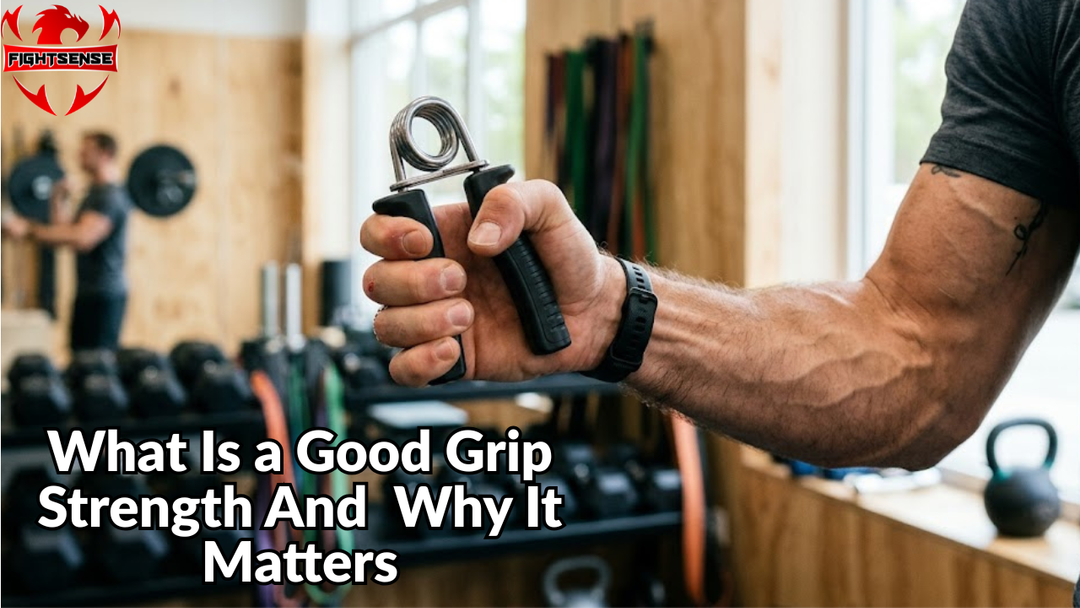
What Is a Good Grip Strength And Why It Matters
What Is a Good Grip Strength? Grip strength is often thought of as a simple measure of how strong your hands are, but modern research shows it is much more than that. It is a powerful indicator of your overall muscular health, functional ability, and even your risk of certain diseases.
In this detailed guide, you will learn what grip strength really is, what counts as “good,” how it is measured, why it matters scientifically, and how you can improve it effectively.
Keynotes:
- Consistent training is more important than intensity alone for long-term strength improvement
- Recovery plays a key role in muscle repair and performance gains
- Proper nutrition supports energy levels and strength development
- Avoiding overtraining helps prevent fatigue and injuries
- Regular practice with correct technique leads to steady and sustainable progress
What Is Grip Strength?
Grip strength is the power your hand and forearm muscles exert when you squeeze, grasp or carry anything.
It is mainly regulated by:
- Flexor muscles of the forearm
- Muscles of hand
- Tendons and nerve function
The grip strength may appear easy, but it is actually a cooperation between the muscles, nerves and even the central nervous system.
What Is a Good Grip Strength and Why It Matters at Every Age:
A “good” grip strength depends on age, gender, and body composition. Below are general reference ranges based on population averages.
Men (Average Good Levels)
- 20–29 years: 45–50 kg
- 30–39 years: 43–48 kg
- 40–49 years: 40–45 kg
- 50–59 years: 35–42 kg
- 60+ years: 30–38 kg
Women (Average Good Levels)
- 20–29 years: 27–32 kg
- 30–39 years: 25–30 kg
- 40–49 years: 23–28 kg
- 50–59 years: 20–25 kg
- 60+ years: 18–22 kg
Important Note: Above average = Strong grip, Average = Normal strength, Below average = Possible weakness.
At this stage, understanding What Is a Good Grip Strength helps you compare your own level with healthy standards. Grip strength varies depending on body size and training background, so these numbers are guidelines, not strict rules.
Types of Grip Strength:
Grip strength has three primary sorts and to understand it, you need to know them:
Grip crush
That’s the force you exert when you grip something tightly, such as shaking hands or gripping a dumbbell.
It is mainly used in heavy lifting and strength-based movements.
Squeeze grip
It’s the ability to grip something between your finger and thumb, like holding a key or raising a plate.
This type is important for fine motor control and daily tasks.
Support grip
This is your ability to hold on to something for a long time, like carrying grocery bags or hanging from a bar.
It plays a key role in endurance and overall hand stability.
Each type plays a different role in life and athletic performance.
How Is Grip Strength Measured?
Grip strength is measured using a device called a hand dynamometer. The user squeezes the device with maximum effort, and it displays the force in:
- Kilograms (kg)
- Pounds (lbs)
Standard Testing Position:
- Standing or sitting upright
- Arm at side (not bent too much)
- Maximum squeeze for 3–5 seconds
- Best of 2–3 trials is recorded
Doctors, physiotherapists, and sports trainers often use this test to assess physical health.
Importance of Grip Strength at Different Stages of Human Life
Grip strength is not just a measure of fitness—it is a significant indicator of physical growth, health quality, and functional capacity throughout life. Grip strength demonstrates how well the body is growing, maintaining muscle function and adjusting to physical demands from youth to old life.
Physical growth and development indicator
Grip strength develops naturally as the body grows. Stronger grip strength in kids and teens indicates healthy growth of muscles and bones, and suitable amounts of physical activity.
Reflection of General Muscle Health
Grip strength reflects overall muscular condition throughout adulthood. A good grip usually suggests you have more muscular mass, coordination and general physical condition throughout your body.
Link to Physical Performance
improved grip strength is associated with improved sports performance, better exercises, better physical work. It assists daily life activities like lifting, carrying, tugging and holding.
4. Functional Independence Measure
As people progress into later phases of life, grip strength becomes a vital metric of independence. Having a good grip helps with everyday activities such as opening jars, transporting things, and keeping up with self-care skills.
How Does Grip Strength Help in Joint Stability and Injury Prevention?
A stronger grip strength is crucial for stability of the joints, particularly in the wrists, elbows and forearms. When these muscles are adequately developed they work as natural support structures that reduce unneeded pressure on your joints during movement.
What is a Good grip strength helps you distribute force uniformly when you lift, carry, or pull anything. This helps reduce the danger of acute strain or overuse injuries that are often seen in people who conduct manual work, gym training or sports activities.
Hand Training and Resistance Devices for Strength Development
Fightsense has developed hand training devices for general fitness and strength-building. These types of equipment are often used by those who seek to enhance hand endurance, finger control, and forearm conditioning through basic exercises based on resistance.
The equipment is usually available in both adjustable and fixed resistance forms, so users can train at varying intensities based on their comfort level and fitness program. Such gadgets are regularly included into home workouts, sports conditioning, and rehabilitation routines. But outcomes are not about one product, they are about good technique and exercise habits.
Conclusion:
Understanding what is a good grip strength helps you set realistic expectations for your fitness level and track your progress more effectively. Strength improvement is a slow process and it depends on smart training, not just rigorous training.
Avoiding typical pitfalls such as overtraining, poor recovery, and inconsistency can have a major impact on your long-term growth. It is much easier to achieve consistent long-term improvements when you follow the right technique, support your body with proper nutrition, and maintain regular practice.
Disclaimer:
If you have health problems, it's a good idea to talk to a doctor before starting a new workout routine.