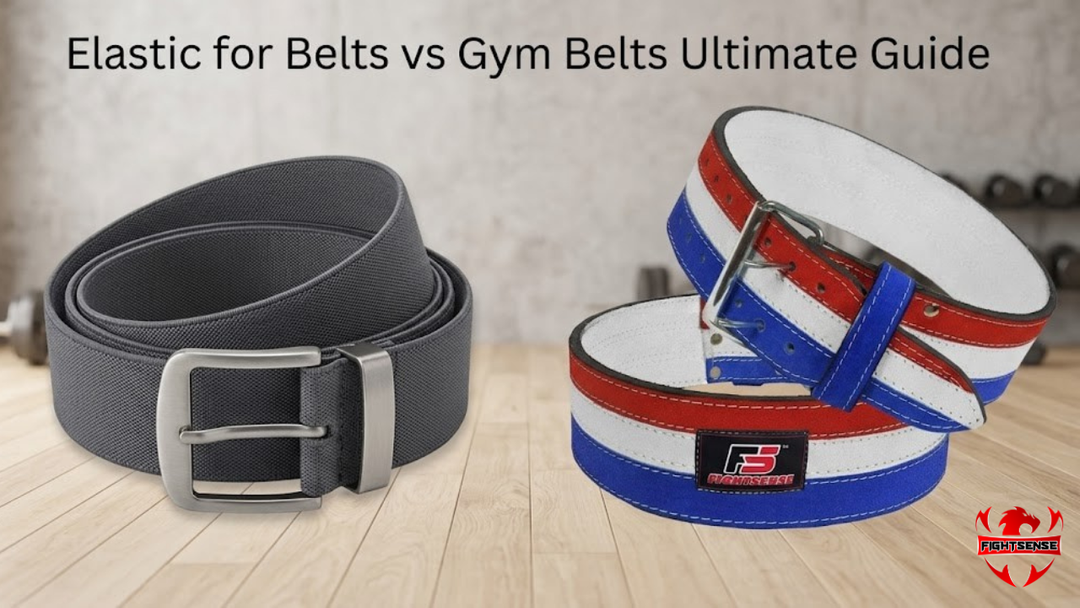
Elastic for Belts vs Gym Belts Ultimate Guide
Elastic for belts today are no longer just fashion items. They have evolved into practical accessories that provide comfort, support, and performance benefits. Two of the most commonly used types are elastic belts (Elastic for belts) and gym belts (weightlifting belts). Although both serve the body, their purpose is completely different.
This guide explains everything in detail, including a review of Fightsense gym belts, so you can choose the right belt according to your needs.
Key Takeaways:
- Elastic belts prioritize everyday comfort and adaptive flexibility, making them ideal for routine wear.
- Gym belts deliver structured spinal stability, essential for safe and powerful lifting performance.
- Material innovation has significantly improved durability, breathability, and ergonomic support in both belt types.
- Choosing the right belt depends on activity-specific requirements, not general preference.
- Brands like Fightsense are redefining gym support gear with performance-focused engineering and long-lasting design.
What is Elastic for Belts?
Elastic for belts are belts constructed of stretchy materials such as elastic fabric, rubber fibres or mixed stretch fabrics. Created for maximum comfort and flexibility, these belts guarantee the perfect fit.
Elastic belts don’t restrict your body, they move with it, which makes them great for everyday use.
Common Applications of Elastic Belts:
- Daily officewear
- Style laid back
- Stylist, Fashion
- Light support at the waist
- Suitable for lengthy periods of usage
Key Features:
- Flexible and Bending Material
- Light design weight
- Easy to put on and off
- Comfortable for full day wear.
- Adjustable fit for various waist sizes
Elastic belts are especially popular with persons who prefer comfort to rigorous support.
What is a Gym Belt ?
A gym belt, or weightlifting belt, is a piece of equipment used primarily for strength training and heavy lifting. Gym belts are not like elastic belts. They are hard and structured and meant for support, not flexibility.
They are meant to help stabilize the lower back and core during heavy training.
Common Exercises In Which Gym Belts Are Used:
- Squats.
- Deadlift
- Overhead press (Heavy)
- Power lifting programs
Key Features:
- Good support for low back and core
- Decreases risk of harm
- Increases lifting stability
- Better posture when you train hard
- Builds strength via increasing intra-abdominal pressure
Gym belts are a must for dedicated gym-goers and sportsmen who lift large weights on a daily basis.
Elastic Belts vs Gym Belts: Key Differences:
|
Feature |
Elastic Belt |
Gym Belt |
|
Material |
Stretchable elastic fabric |
Leather / reinforced nylon |
|
Purpose |
Fashion & daily comfort |
Strength training |
|
Flexibility |
High |
Low |
|
Comfort |
Very high |
Moderate |
|
Support Level |
Light support |
Strong support |
|
Usage |
Casual, office, daily wear |
Gym and heavy lifting only |
This comparison shows clearly that both belts serve completely different needs and should not be used interchangeably.
Advantages and Disadvantages:
Elastic Belts
Advantages:
- Extremely comfortable for daily wear
- Lightweight and breathable
- Flexible and easy to adjust
- Stylish and suitable for outfits
Disadvantages:
- Not suitable for heavy lifting
- Limited support for workouts
- Not designed for injury prevention
Gym Belts
Advantages:
- Strong support for lower back
- Reduces risk of injury during heavy lifting
- Improves posture and stability
- Enhances lifting performance
Disadvantages:
- Less comfortable for long daily use
- Can feel rigid for beginners
- Not suitable for fashion or casual wear
How Modern Materials Improve Belt Quality?
Modern belt manufacturing has improved significantly due to advanced material technology.
- Elastic for belts use breathable stretch fabrics that reduce sweating and improve comfort.
- The elastic material easily adjusts with body movement, providing better flexibility.
- Gym belts use reinforced stitching to handle the pressure of heavy lifting.
- Many gym belts include foam padding for extra lower back support and comfort.
- Heavy-duty materials like nylon and leather make gym belts strong and long-lasting.
- These modern innovations have made both elastic and gym belts more efficient in their own categories.
How Belts Support Posture and Body Alignment?
- Elastic belts provide light support that helps maintain normal body alignment during daily movement.
- They are suitable for casual use where heavy support is not required.
- Gym belts increase core pressure stability, which helps keep the spine aligned during heavy lifting.
- This stability reduces strain on the lower back during intense exercises.
- Because of this, gym belts are more effective for injury prevention in weight training.
- Elastic belts are better suited for everyday comfort and mild posture support
Which One Should You Choose?
Your choice depends entirely on your lifestyle and goals:
- If you need comfort, flexibility, and daily use → Elastic belts are the best option
- If you are into gym training, powerlifting, or heavy lifting → Fightsense Gym belts are essential
- Many fitness enthusiasts use both depending on activity type
Common Mistakes People Make:
Many beginners make avoidable mistakes when choosing belts:
- Using elastic belts for gym workouts
- Wearing gym belts too tightly
- Choosing incorrect belt size
- Relying on belts instead of proper lifting technique
- Using belts for all exercises (not necessary for every lift)
Proper usage is important for both safety and performance.
Summary:
Both elastic for belts and gym belts have vital but diverse responsibilities. Elastic for belts is perfect for everyday comfort, fashion, and flexibility, while gym belts are tailored for serious strength training and injury prevention.
For instance, Fightsense offers high-quality gym belts for performance and safety during intense workouts.
Ultimately, the greatest belt is one that suits your lifestyle, exercise objectives and how you want to use it.
FAQs:
1. Do elastic belts affect breathing during long wear?
No, elastic belts are designed with stretchable material that adapts to body movement and does not restrict normal breathing when worn correctly.
2. Can a gym belt replace core strength training?
No, a gym belt only provides support and stability. It should not replace core exercises, as natural muscle strength development is still necessary.
3. Are all gym belts suitable for beginners?
Not always. Beginners should choose medium-support belts first, as very rigid belts may feel uncomfortable during initial training stages.
4. How often should a gym belt be replaced?
It depends on usage, but high-quality belts can last several years if maintained properly and not overused.