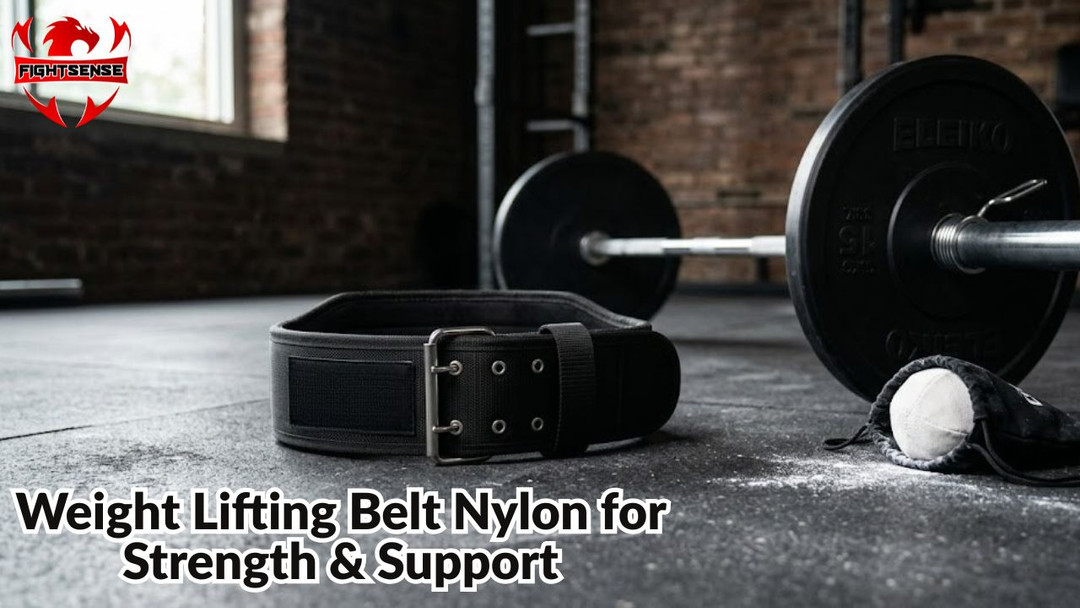
Weight Lifting Belt Nylon for Strength & Support
Weight Lifting Belt Nylon for Strength & Support has become an important part of modern strength training as athletes move from simple lifting to performance-based training. Today, gym-goers focus more on safety, posture, and long-term progression.
This is why modern support gear is gaining attention in gyms. It provides stability without limiting natural movement, which is especially important for functional training styles.
Key Takeaways:
- A lifting belt is a support tool, not a strength replacement, designed to enhance stability during heavy lifts.
- Proper use improves core bracing, posture, and control under high training loads.
- It should be used selectively in heavy compound movements, not during every exercise.
- Over-reliance or incorrect usage can limit natural core development and training efficiency.
Choosing the right belt depends on your style—flexible nylon for dynamic training, rigid leather for maximal strength work.
What is a Weight Lifting Belt & How Does it Really Work?
Weight lifting belts are training support accessories that are intended to help stabilize the core during big lifts. It is usually utilized for strength training activities, where the lower back is under high pressure.
By bracing the core against the belt it increases the intra-abdominal pressure . The extra pressure helps to enhance spinal stability, and gives better control during large lifts.
It also takes the tension off your lower back when doing compound activities like squats and deadlifts. This doesn’t mean it replaces core strength, but rather supplements it. Proper muscle engagement and a safer lifting technique.
Why Use a Weight Lifting Belt During Your Workout?
A weight lifting belt nylon can increase lifting performance by helping maintain appropriate posture during heavy sets. It gives more stability to the core which allows lifters to have more control when training close to their maximal strength.
It is also useful for beginners, to teach them the correct bracing technique. Used consistently during heavy lifting it slowly develops a better awareness of core activation and safer lifting mechanics over time.
Who benefits the most from using a Weight Lifting Belt?
- Introductory: Can utilize proper posture, spinal alignment, and correct bracing technique while performing basic compound lifts.
- Mid-lifters: Benefit during progressive overload stages as exercise intensity and weights begin to increase dramatically.
- Experienced lifters: Employ selectively at near max or heavy working sets to increase stability and control under high loads.
- Functional training athletes: Its flexibility and swift support make it suitable for high-intensity activities such as CrossFit, HIIT, and circuit training.
- Powerlifters: Use it during heavy squat, deadlift and bench variations to help maximise core stability and lifting performance.
Is Leather Better Than Nylon For Lifting Support?
Both materials have different uses in strength training and neither is better than the other.
Nylon is lighter, more flexible and ideal for dynamic activities such as CrossFit, circuit training and functional fitness. It allows for more flexibility but yet gives you core support during lifts.
Leather is more rigid and ideal for stability for big strength exercises like powerlifting. It is firm, yet restricts movement more than nylon.
When to Wear a Weight Lifting Belt For Your Workouts?
You should only wear a weight lifting belt nylon for large compound actions that put a lot of stress on your lower back, such as squats, deadlifts, and overhead presses.
It’s better to train without external support during warm-ups, mobility work, and lighter sets. This means your body learns core strength, stability and correct lifting mechanics over time.
Why is fightsense becoming so popular among athletes?
Today’s athletes are turning to practical, performance orientated training equipment and this is where fightsense is making inroads in the fitness market. The brand is known for producing gear that performs in real training conditions, not just looks nice in theory.
Its products are designed to allow natural mobility while offering stability during hard exercise. So this mix between flexibility and support makes it suited for modern training approaches.
Many sportsmen use fightsense as it is much more functional than the inflexible designs of the past and caters to the contemporary needs of fitness.
How to Care for a Weight Lifting Belt Nylon for Long Term Use?
- Finally, after a workout, the belt should be carefully air-dried to remove sweat and moisture that can accumulate and damage the material over time. This simple habit contributes to both hygiene and durability.
- A light wash with mild soap and water is all that is needed to keep it fresh and in good condition. Avoid harsh chemicals that can break down the fabric or stitching.
- Proper storage is also part of the key steps. Keep it in a dry area away from direct sunlight to keep its shape and greatly lengthen its total lifespan.
What not to do when using a weight lifting belt?
- Too tight a belt might impede breathing and reduce adequate bracing
- Using it for every workout and not just large compound lifts
- Over-reliance on it can decrease natural core activation over time
- Poor positioning around the waist makes it less supportive and effective
- It is not necessary to wear it during warm ups or light sets.
- rely exclusively on belt and ignore adequate core engagement
The Bottom line:
Using a weight lifting belt nylon can be a valuable training tool when utilised with good understanding and technique. It’s not designed to replace core strength, but to complement it during large lifts for stability. Safety becomes critical.
When used appropriately it helps to enhance posture, lifting control and confidence when under load. But too much dependence or wrong utilisation can impede the natural core development and limit the long-term growth.
The trick is balance, train your core, focus on technique and only use the belt when the intensity of the training really calls for some extra support.
Disclaimer
This page serves only for informative needs. To make sure a weight lifting belt nylon is appropriate for your training requirements, always see a fitness specialist.
FAQs:
1. Can a weight lifting belt nylon increase strength?
It does not directly increase muscle strength but can improve lifting performance by enhancing stability and bracing efficiency.
2. Should beginners use a lifting belt from day one?
Beginners should first focus on learning proper form. A belt can be introduced later during heavier compound lifts.
3. Does wearing a belt weaken core muscles?
Not if used correctly. Overuse can reduce natural core engagement, but proper use during heavy sets does not harm core development.
4. How tight should a lifting belt be?
It should be snug enough for support but still allow you to brace and breathe properly.
5. Can you use a belt for all exercises?
No, it is only recommended for heavy compound lifts, not isolation or light movements.