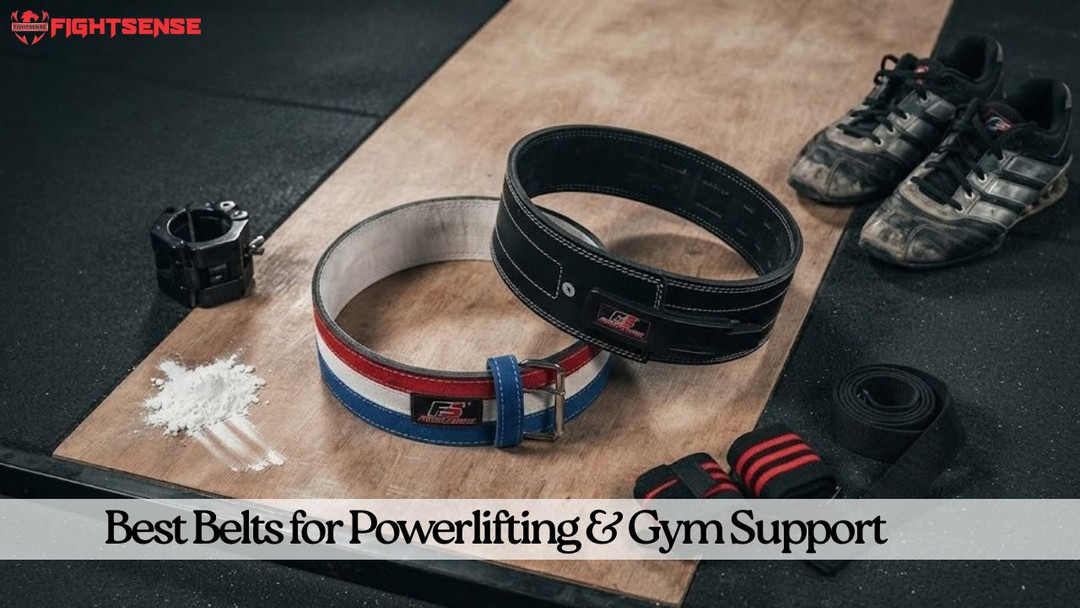
Best Belts for Powerlifting & Gym Support
When you step onto the platform or load up the barbell for a heavy set of squats, your entire body goes under intense pressure. Choosing the right equipment can make or break your training session, which is why finding the best belts for your specific routine is essential for every serious lifter.
Without proper midsection support, maintaining a neutral spine during maximal loads becomes a risky gamble. In this comprehensive guide, we will break down everything you need to know about selecting, wearing, and benefiting from top-tier core support tools to safely shatter your personal records.
Why You Need a Support Belt for Heavy Lifting
Many newcomers incorrectly think that a support tool will perform the work for them. In fact, it gives your abdominal muscles a tangible wall to press against.
When you breathe deep into the diaphragm and brace your core activation goes through the roof. The best belts will give you stiff input on your midsection, locking down your lumbar spine and massively minimizing your chance of injury on major compound lifts like deadlifts and squats.
The Science of Intra-Abdominal Pressure
How your body stabilizes under large loads is a matter of fluid mechanics and physics. When you breathe deeply into a stiff wall you generate a pressure cylinder in your torso.
The best belts facilitate this natural physiological mechanism, by providing your transverse abdominis with a physical surface to press out against, thereby redirecting a large percentage of shear stress away from your vulnerable lumbar vertebrae.
The FightSense Advantage: Beyond Just Belts
FightSense is the choice of adult athletes when performance, safety and durability matter. FightSense is built for the serious training environment with professional grade construction that will hold up to the most rigorous of gym sessions.
But elite training demands a whole ecosystem of gear. FightSense not only offers some of the greatest belts on the market, but also has a solid portfolio of high duty weight lifting straps, dip belts, and head harnesses for sports. All of our products are designed to improve your grip, improve your upper body isolation exercise and protect your neck, all while guaranteeing that your complete workout routine is backed by unsurpassed quality.
Types of Lifting Belts: Prong vs. Lever
Not all support systems are the same. Knowing the technical differences allows you to pick the correct alternative for your goals:
- Single & Double Prong Best Belts: Classic, sturdy and very adaptable. Great for athletes that swing in weight or move between different lifting styles.
- Lever Belts: The gold standard for powerlifters. One flip, and a stiff steel mechanism locks instantaneously, around the core, ultra-tight.
How to Choose the Right Support Equipment
Choosing the right clothing is very much a matter of your exercise style, your waist size and structural preferences. Think about these factors:
- Width Consistency: Keeping the same width (a common width is 4 inches) can help to evenly support your lower back and lower ribs.
- Material Quality: Real leather or strengthened plastics provide the requisite stiffness for large loads.
- Thickness alternatives: 10mm alternatives provide a good balance of support and mobility, while 13mm variants are designed for elite powerlifters pushing absolute maxes.
The Psychological Confidence Boost
In addition to providing physical steadiness, lifting belts have a huge mental influence in training performance. When you get to a barbell for a max effort set, there can be some hesitancy.
The best belts in the world lock you in and give you a sense of security and readiness, fooling your nervous system into releasing unneeded fear so you’re able to fully commit to the lift.
Comparison Table: Finding Your Fit
|
Feature / Type |
Leather Prong Belt |
Lever Powerlifting Belt |
Nylon Training Belt |
|
Best For |
General lifting & CrossFit |
Heavy Powerlifting / Max PRs |
Functional fitness & WODs |
|
Support Level |
High (Rigid) |
Maximum (Ultra-Rigid) |
Moderate (Flexible) |
|
Adjustment Speed |
Moderate (Buckle pin) |
Fast (Flip lever mechanism) |
Instant (Velcro strap) |
|
Durability |
Years of heavy use |
Lifetime structural integrity |
Moderate lifespan |
Step-by-Step Guide to Bracing Properly
If you have bad respiratory mechanics, your technique is going to be off. You can have the best belts in the world, but they are not going to pull you out of that. Here’s how to make the most of your core setup:
- Gear Placement: Wrap the item around your middle, slightly above your hips and below your ribs.
- Tightness of set: Tighten it up so that you can get one or two fingers under it comfortably when you are relaxed.
- Breathe a 360 Degree Breath: Take a big inhale through your nose and fill your stomach, sides and lower back outwards into the cloth.
- Perform the Lift: Hold that strong intra-abdominal pressure through the concentric and eccentric portions of the action.
Expert Tips for Maximum Longevity
- Store Properly: Don’t leave your gear under heavy equipment in a hot automobile; store flat or lightly coiled in a dry place.
- Wipe Down Regularly: Sweat and chalk buildup on the buckle or leather surface should be removed to ensure a stable grip and prevent premature material degradation.
How to Break In Your Gear Correctly
New leather support equipment can frequently seem stiff and unyielding straight out of the box. Roll the material back and forth in both directions to soften them (but not crush the structural strands).
One of the weightlifting belt techniques is to wear your gear during moderate-intensity accessory work, which helps the leather naturally adapt to the particular curves of your body.
Common Mistakes Lifters Make
- Too Loose to Wear: If the gear doesn't resist you pushing against it, it provides no intra-abdominal advantage.
- It For All Exercise: Reserve your support equipment for big compound lifts (at or above 80% of your max) rather than isolated workouts like bicep curls.
- Neglecting Core Strength: Over-dependence on external equipment without cultivating internal core stability impedes sustained athletic development.
Maintenance & Care Secrets
Proper maintenance will provide your investment years of hard training. Do not soak leather products in water or use heavy chemical detergents on them. Instead, wipe any surface dirt away with a moist cloth and use a specialty leather conditioner every six months to keep the material supple and crack-resistant.
Shop Now!
FAQs:
Can the best belts completely prevent back injuries?
They help to greatly minimize stress on the spine by increasing intra-abdominal pressure . But the most important thing is to use correct form and technique .
Which one should I pick, 10mm or 13mm thick?
10mm thickness is good for most intermediate lifters and functional athletes, 13mm is for expert powerlifters who load up extremely heavy.
Beginner's heavy duty support gear?
Yes . But for the untrained , the focus should be on learning unweighted body mechanics , not over-reliance on external support systems .
How tight should my equipment be adjusted?
You should be able to pull your abs out, feeling snug and supported, without pinching your skin or cutting off your respiration.
Are the lever options superior to the prong alternatives?
Lever choices enable quicker transitions and ultra-tight security, while prong variants allow more flexibility if your weight changes.
Do these instruments make your natural core muscles weaker?
Studies have demonstrated that correctly using support gear can increase core activation with large loads.
What equipment goes well with heavy lifting gear?
Some good additions include lifting straps to help with the grip, knee sleeves to keep the joints warm, and dip belts for weighted calisthenics.
Conclusion
Investing is all about excellent training equipment, and great training accessories make all the difference. Choose the best belts, mix them with reliable gear from FightSense, and remove all needless dangers to give your body the structural support it needs.
Disclaimer:
This content is only useful for educational purposes. Always see a specialist before making a purchase to be sure a lumbar support, gym, or CrossFit belt meets your specific demand.