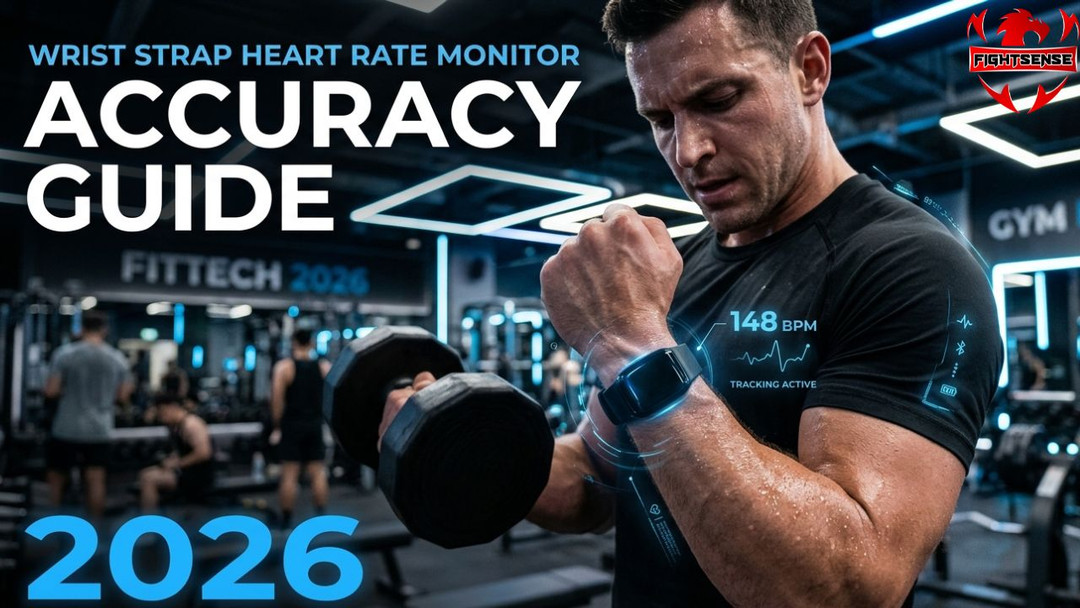
Wrist strap heart rate monitor Accuracy Fix 2026
A wrist strap heart rate monitor has become a popular fitness tool for gym users, athletes, and beginners who want to track performance and fat burn.
However, many users experience one major issue:
The data is often inaccurate or inconsistent
Common problems include:
- Sudden spikes in heart rate readings
- Incorrect calorie burn estimates
- Delayed BPM response
- Random drops during workouts
The truth is, the issue is not always the device itself. In most cases, it is related to usage, training form, and movement stability.
In this guide, you’ll learn why your wrist strap heart rate monitor is inaccurate, how to fix it, and how smarter training habits can improve your results in 2026.
What Is a Wrist Strap Heart Rate Monitor?
A wrist strap heart rate monitor is a wearable fitness device that uses optical sensors to measure blood flow under your skin and convert it into heart rate (BPM).
It is commonly used for:
- Cardio tracking
- Fat-burning zones
- HIIT workouts
- General fitness monitoring
However, unlike chest straps, wrist-based monitors depend heavily on skin contact and movement stability, which can affect accuracy.
Why Your Wrist Strap Heart Rate Monitor Is Not Accurate
1. Loose or Incorrect Fit
If the device is not properly fitted:
- Sensors lose consistent skin contact
- Light interference increases
- Readings become unstable
This is the #1 cause of inaccurate data
2. Excessive Wrist Movement
Exercises like:
- Deadlifts
- Boxing
- Battle ropes
create heavy wrist motion, which disrupts tracking accuracy.
3. Sweat Interference
Sweat can:
- Block optical sensors
- Cause signal distortion
- Delay real-time readings
4. Poor Training Form
Unstable or incorrect movement patterns can:
- Increase heart rate spikes
- Create false readings
- Mislead workout intensity data
5. Wrong Placement on Wrist
Wearing it too close to the wrist bone reduces sensor accuracy significantly.
How to Fix Wrist Strap Heart Rate Monitor Accuracy
Fix 1: Wear It Properly
- Place 1–2 inches above wrist bone
- Ensure tight but comfortable fit
- Avoid movement during exercise
Fix 2: Improve Workout Stability
Controlled movement = better data accuracy.
See our guide on grip and training control
Fix 3: Clean Sensor Regularly
- Wipe sweat after each workout
- Keep skin dry before wearing
- Avoid dust buildup
Fix 4: Focus on Form Over Numbers
Instead of chasing BPM spikes, focus on:
- Controlled reps
- Stable posture
- Proper breathing technique
Read: Workout performance improvement tips
Why Tracking Alone Is Not Enough
Many users assume:
Better device = better fitness results
But the reality is:
Better training = better data accuracy
A wrist strap heart rate monitor only reflects what your body is doing. If your training is unstable, your data will also be unstable.
How FightSense Helps Improve Training Accuracy
At FightSense, the focus is not on tracking devices—but on performance-driven training systems.
Even though FightSense does not sell heart rate monitors, it helps improve the conditions that affect tracking accuracy.
1. Better Grip Stability Improves Tracking
Weak grip leads to:
- Wrist shaking
- Sensor disruption
- Inconsistent readings
Explore: Grip strength training tools
2. Controlled Movement Improves Data Quality
FightSense promotes structured training methods that help:
- Reduce unnecessary motion
- Improve exercise control
- Stabilize heart rate tracking conditions
3. Performance Over Numbers Approach
Instead of focusing only on metrics like BPM, FightSense encourages:
- Strength improvement
- Endurance building
- Real athletic performance
Read: Performance training systems
Wrist Strap vs Chest Strap Heart Rate Monitor
|
Feature |
Wrist Strap |
Chest Strap |
|
Comfort |
High |
Medium |
|
Accuracy |
Medium |
High |
|
Movement Impact |
High |
Low |
|
Best For |
Casual fitness |
Serious training |
If you want accuracy → chest strap is better
If you want convenience → wrist strap works with proper usage
Common Mistakes to Avoid
- Wearing device too loose
- Ignoring workout form
- Using during high-motion exercises
- Not cleaning sensors
- Over-relying on data
Security & Accuracy Tips
- Keep firmware updated
- Avoid cheap unverified devices
- Sync data properly after workouts
- Cross-check readings occasionally
Get Yours Now!
FAQs
Is a wrist strap heart rate monitor accurate?
Yes, but only under stable movement and proper fit conditions.
Why does my heart rate monitor show wrong readings?
Most commonly due to movement, sweat, or incorrect placement.
Is a chest strap better than a wrist strap?
Yes, chest straps are generally more accurate for intense training.
Can workout form affect accuracy?
Yes, poor form leads to unstable heart rate readings.
Should I rely only on heart rate monitors?
No, they should be used as guidance—not absolute truth.
Quick Recap
- Wrist strap monitors are convenient but sensitive
- Movement and fit affect accuracy
- Training form is a major factor
- FightSense focuses on improving performance conditions
- Better training = better tracking results
Conclusion
A wrist strap heart rate monitor can be a useful fitness tool—but only when used correctly.
Instead of focusing only on device accuracy, focus on improving:
- Training stability
- Movement control
- Workout consistency
Because in 2026, fitness success is not about tracking more data—
it’s about building better performance habits.
And that is exactly where FightSense fits into your fitness journey.