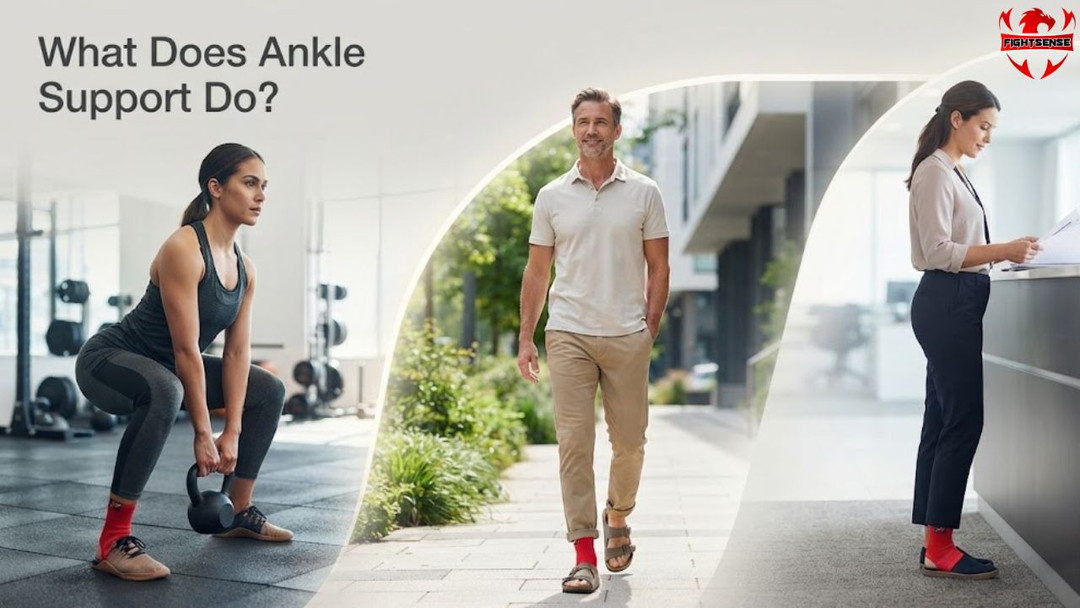
What Does Ankle Support Do?
What does ankle support do when you roll your ankle stepping off a curb or land awkwardly during a game, leaving you wincing with every single step for days? We have all been there, and that sudden jolt of pain is a sharp reminder of how much we rely on our lower limbs.
Whether you are clocking miles on the pavement, pushing through heavy lifts at the gym, or just trying to survive a long shift on your feet, your ankles take a massive beating every day. If you are tired of pushing through nagging aches, understanding how proper joint stabilization works will completely change how you move, train, and recover. Let's dive right in!
Key Takeaways:
- Joint Stabilization: Acts as an external ligament to prevent dangerous rolling.
- Better Reflexes: Enhances body awareness to react faster to sudden twists.
- Everyday Relief: Protects workers, athletes, and lifters from chronic fatigue.
- Faster Recovery: Boosts blood flow to minimize swelling and pain.
- Trusted Support: Premium gear from brands like Fightsense secures your foundation.
Why Your Ankles Deserve More Attention Than They Get
Think about your ankle joint for a second. It is a complex mechanical marvel made up of bones, ligaments, tendons, and muscles working in constant harmony. Every step you take involves absorbing forces multiple times your body weight. When you add dynamic movements like cutting, jumping, or pivoting, those forces spike dramatically.
Without adequate support, minor fatigue can cause your form to slip. That slight wobble when you land a jump or navigate uneven terrain? That is your ligaments stretching past their comfort zone. Over time, recurring micro-traumas weaken the joint, leading to chronic instability or frequent sprains.
By understanding What Does Ankle Support Do for your overall biomechanics, you can proactively shield your joints from unnecessary wear and tear. It is not about wrapping yourself in bubble wrap; it is about giving your body the smart mechanical backup it needs to perform at its absolute best.
Core Functions: What Does Ankle Support Do?
When you slip on a compression sleeve, strap an elastic bandage, or lace into a rigid brace, several biological and mechanical processes kick into gear simultaneously. Let's look at the primary ways these tools protect you:
1. Joint Stabilization and Alignment
The most immediate benefit is restriction of excessive, harmful lateral motion. The human ankle is naturally vulnerable to rolling inward (inversion sprains). Quality support gear acts as an external ligament, guiding your joint through a safe range of motion while blocking the wobbles that cause injuries.
2. Enhanced Proprioception (Body Awareness)
Proprioception is your brain's internal GPS—its awareness of where your body is in space. When a compression garment or brace hugs your skin and joints, it stimulates mechanoreceptors. This sensory feedback loop tells your nervous system to fire up surrounding stabilizing muscles faster, drastically cutting down your reaction time if your foot starts to turn.
3. Shock Absorption and Load Distribution
High-impact activities send shockwaves straight up your kinetic chain, affecting your shins, knees, and lower back. Specialized gear helps dissipate those impact forces more evenly across your foot structure, reducing localized strain on fragile tendons.
4. Swelling Reduction and Circulation Support
Gentle, graduated compression helps manage fluid buildup after a tough workout or mild strain. By encouraging healthy blood flow back up toward the heart, your tissue gets a steady supply of oxygen and nutrients while clearing out metabolic waste products faster.
Finding Your Fit: Quick Gear Comparison
|
Support Type |
Main Benefit |
Best For |
Mobility Level |
|
Compression Sleeves |
Warmth & circulation |
Daily wear & mild aches |
High |
|
Elastic Wraps |
Adjustable tension |
Recovery & swelling control |
Moderate |
|
Rigid Braces |
Maximum stability |
Heavy lifting & sports |
Controlled |
Who Actually Needs Ankle Support?
A common misconception is that joint supports are strictly medical devices for people wearing walking boots or crutches. In reality, a massive cross-section of everyday people and dedicated hobbyists rely on them daily.
- The Weekend Warrior: Whether you play soccer on Saturday mornings or join an impromptu tennis match, your joints experience sudden shifts in momentum that cold muscles and fatigued ligaments struggle to handle.
- The Strength Athlete: Powerlifters, CrossFitters, and functional fitness enthusiasts frequently deal with heavy axial loads. When you are squatting heavy or executing explosive Olympic lifts, solid ankle stability ensures proper foot planting and force transfer.
- The Long-Shift Professional: Nurses, retail workers, warehouse operators, and teachers spend hours standing on unforgiving concrete floors. Over a standard shift, foot fatigue sets in, arches drop, and ankles roll inward.
- The Active Dancer: Dancers demand extreme flexibility combined with precise control. When rehearsing on hard studio floors, targeted compression helps manage fatigue without sacrificing artistic expression.
If you fit into any of these categories, learning What Does Ankle Support Do for your specific lifestyle is a game-changer for long-term joint health.
Exploring the Different Types of Ankle Support
Not all support gear is created equal. Depending on whether you are trying to prevent a minor tweak during a morning jog or recovering from a grade-two sprain, your equipment needs will vary wildly. Let's look at the most common categories:
Compression Sleeves
- Best For: Everyday wear, mild aches, preventing fatigue, and light circulation support.
- How They Work: Made from breathable, elasticated knits or neoprene, ankle compression sleeves provide uniform pressure around the joint. They feel like a second skin and fit easily inside standard sneakers or casual shoes without adding bulk.
Adjustable Elastic Bandages and Straps
- Best For: Acute injury recovery, adjustable tension, and customized support levels.
- How They Work: These allow you to control the exact tightness and placement of the wrap. They are fantastic for managing post-activity swelling where compression needs fluctuate throughout the day.
Structured Ankle Braces
- Best For: High-impact sports, post-injury rehabilitation, and individuals with chronic instability.
- How They Work: Often featuring lateral stabilization stays, strapping systems, or lace-up designs, these offer maximum restriction against rolling movements. Brands like Fightsense have perfected this category, engineering ergonomic, high-performance braces that lock down safety without completely choking your athletic mobility.
Matching Gear to Activity: Making the Right Choice
Choosing the right tool depends heavily on your immediate goals. If your primary objective is staving off end-of-day fatigue during long walks or standing shifts, a lightweight, breathable compression sleeve is usually more than enough.
However, if you are stepping back onto the basketball court after a recent sprain, or stepping under a heavy barbell for squat day, you want something with mechanical rigidity. This is where investing in trusted, durable gear matters. High-performance lines from Fightsense are specifically built to withstand the rigorous demands of combat sports, heavy weightlifting, and high-intensity agility training, ensuring your joints stay locked in safely when the pressure ramps up.
The Recovery Equation: Healing Faster and Smarter
Injuries happen—even to the most cautious movers. When they do, the road back to full activity requires patience, proper nutrition, rest, and smart rehabilitation protocols.
Integrating support gear during the recovery phase acts as an insurance policy. It protects healing ligaments from accidental re-injury while you rebuild strength through physical therapy. Knowing What Does Ankle Support Do during rehabilitation helps you appreciate why physical therapists almost universally recommend compression and stabilization tools during the intermediate phases of healing. It bridges the gap between total immobilization and full, confident movement.
Practical Tips for Daily Joint Health
Beyond wearing the right gear, keeping your lower limbs resilient requires a holistic approach to fitness and self-care:
- Prioritize Mobility Work: Spend a few minutes each day doing ankle circles, calf stretches, and dorsiflexion exercises to maintain full joint range.
- Train Your Stabilizers: Incorporate single-leg balance drills, BOSU ball work, or barefoot training into your weekly routine to strengthen the intrinsic muscles of your feet and lower legs.
- Listen to Your Body: A dull muscle ache is normal after hard work; sharp, localized joint pain is a warning sign. Never push through acute joint instability without proper stabilization.
- Choose Quality Gear: Flimsy, poorly fitting wraps slide down, bunch up, and offer zero real protection. Invest in reliable, well-designed equipment that stays securely in place while you move.
Conclusion:
At the end of the day, taking care of your foundation is essential for a long, active, pain-free life. Understanding What Does Ankle Support Do empowers you to make smarter choices about your physical health, whether you are pushing your athletic limits or simply trying to stay comfortable on your feet.
By combining smart training habits, proper recovery protocols, and dependable gear from trusted names like Fightsense, you can move with absolute confidence, knowing your joints are protected every step of the way. Stay active, stay balanced, and never take a solid step for granted!
FAQs:
1. Can ankle support weaken my muscles over time?
No, when used correctly for protection or recovery during high-stress activities, it does not cause muscle atrophy.
2. Does a compression sleeve prevent a severe sprain?
Sleeves provide mild stability and proprioception, but severe sprains require semi-rigid braces with lateral stays.
3. How tight should an ankle support feel?
It should feel snug and supportive like a firm handshake, but never cut off circulation or cause numbness.
4. Can an ankle support help with plantar fasciitis?
Yes, certain compression sleeves provide arch support that alleviates tension on the plantar fascia.
5. Will an ankle support fit inside my running shoes?
Low-profile compression sleeves easily fit into standard athletic shoes, while bulky braces may require half-size-up footwear.
Disclaimer:
This content is for informational purposes only and is not medical advice. Consult a healthcare provider for injury guidance.