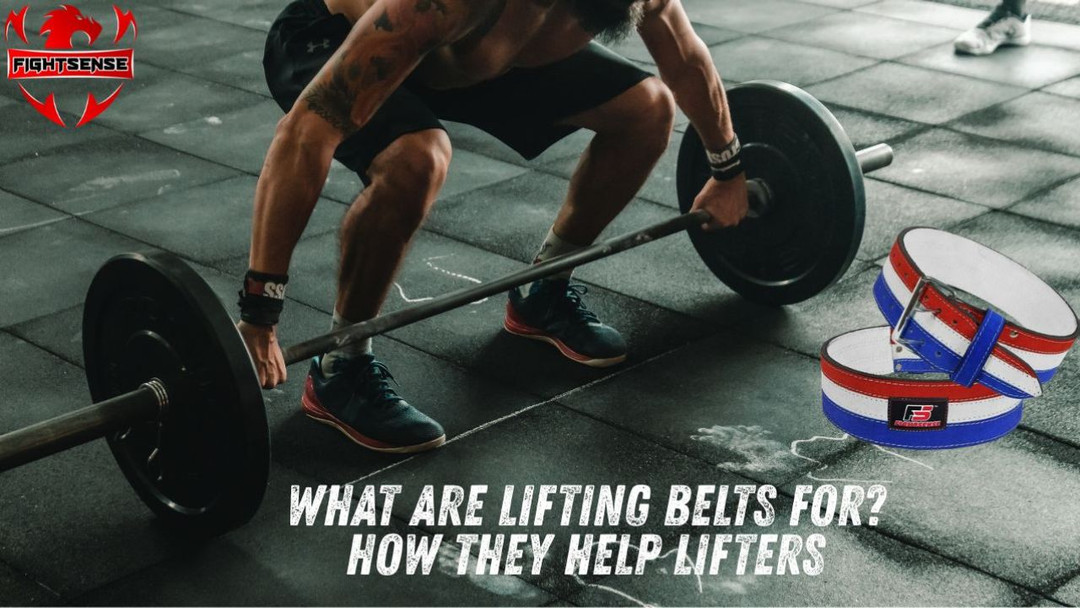
What Are Lifting Belts For? How They Help Lifters
What are lifting belts for? Are they just a gym accessory, or can they actually help you lift heavier and stay safer? Many lifters wear a belt during heavy squats and deadlifts, but few understand how much of a difference it can make.
In this guide, you'll discover what are lifting belts for, how they work, when to use them, and how to choose the right one for your strength training goals.
Key Takeaways:
- Lifting belts improve core stability and support during heavy lifts.
- They help lifters brace better and maintain control.
- Belts are most useful for squats, deadlifts, and heavy training.
- A belt supports technique but does not replace it.
- The right belt depends on your goals and training style.
What Are Lifting Belts For and Why Do Lifters Use Them?
A lifting belt is a fitness accessory that is worn around the waist during strength training to increase core stability and support large lifts. It helps lifters brace the muscles, stay in control, and be more steady under tough weights.
A weightlifting belt is bigger and stronger than a normal belt. Common uses are:
- Squats
- Deadlift
- Shoulder presses
- Heavy compound lifts
A lifting belt aids lifters in lifting higher loads with greater steadiness and confidence.
How to Get a Weightlifting Belt to Feel Like It Makes You Stronger
Do lifting belts make you stronger? It’s a question many new lifters have. It doesn't directly increase muscle strength but helps build a stronger platform for heavy lifting.
A lifting belt will assist you in stabilizing your core and refining the bracing technique so that you are more steady, have more control, and feel more confident lifting tough weights.
What Happens When You Wear a Lifting Belt During Heavy Training?
During heavy lifting, your body has to handle a lot of force. If your torso loses position, the movement becomes harder to control.
A lifting belt may help by:
|
Benefit |
How It Helps |
|
Core support |
Helps you create stronger abdominal pressure |
|
Stability |
Keeps your upper body more controlled |
|
Better bracing |
Allows your core to work efficiently |
|
Confidence |
Helps you approach heavy sets with more security |
|
Performance support |
Improves control during challenging lifts |
This is why many experienced lifters consider belts a useful training tool rather than a shortcut.
Does a Lifting Belt Protect Your Back?
One of the main reasons individuals search for "What Are Lifting Belts For" is to find out whether lifting belts help protect the back.
A lifting belt can give support, but it should not replace appropriate technique.
You still have to:
- Correct forms
- Proper weight selection.
- Recovery.
- Mobility
- Training experience
A belt is most useful when you already know how to lift appropriately.
Using a belt does not make an exercise safe if the technique is bad.
Are Lifting Belts Only for Advanced Lifters?
No, not at all.
Many believe lifting belts are only for professional athletes, this is not true.
Beginners, intermediate lifters, and experienced athletes can employ belts depending on their goals.
But beginners should concentrate on:
- Learning of movement patterns
- Core strength building
- Practicing good breathing
- Learning to brace
A belt is a training tool, and you should not have to rely on it for every movement.
When Should You Avoid Wearing a Lifting Belt?
Not all exercises require you to use a belt.
You may not need one in:
- Warm up sets
- Mild exercise
- Isolation drills
- Practice Technique
Training without a belt also allows you to strengthen your natural core control.
You need to know when a belt is useful and when you may workout without one.
Which Lifting Belt Should You Choose for Your Training Style?
Choosing the right belt depends on your workout goals.
|
Belt Type |
Best For |
Main Advantage |
|
Leather Belt |
Heavy strength training |
Maximum support and durability |
|
Nylon Belt |
General gym workouts |
Flexible and comfortable |
|
Powerlifting Belt |
Competitive lifting |
Strong stability during heavy loads |
A good lifting belt should feel supportive without restricting your breathing.
Fitness brands like Fightsense provide weightlifting belts and training equipment designed for gym users who want reliable support during strength workouts.
Are You Making These Common Lifting Belt Mistakes?
A good quality lifting belt won’t assist if you’re using it wrong. Steer clear of these typical mistakes:
- Wearing the belt excessively tight and making it unpleasant to breathe on
- Using a belt before you have learned how to lift properly
- Wear it for every exercise, but not when it is needed
- Instead of fixing your form, depending on the belt
- Taking the lifting belt as a shortcut and not as a training assistance item
Can A Lifting Belt Make You Stronger?
It depends on how you use it.
A belt can help you:
- Feel more safe
- Keep greater control
- Train with heavier loads
- Raise confidence
But the real power lies in:
- Regular exercise
- Gradual overload
- Good nourishment. Restoration.
The belt helps you do, not make, power.