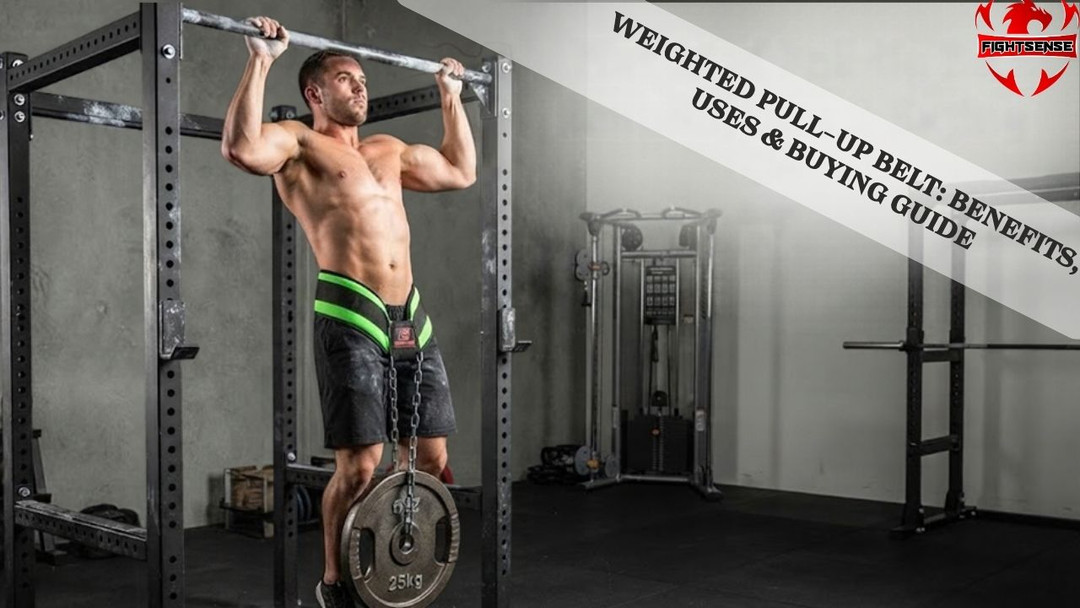
Weighted Pull-Up Belt: Benefits, Uses & Buying Guide
A weighted pull-up belt becomes relevant when something unexpected happens—pull-ups that once pushed you to your limit suddenly start feeling too easy. You’re doing more reps, but the challenge isn’t the same anymore, and that raises a question: why does progress feel like it’s slowing down even though you’re working harder?
That’s exactly where things change. Instead of increasing reps again, you add weight to the same movement. It looks like a small adjustment, but it completely shifts the difficulty and forces your muscles to adapt all over again.
Key Takeaways:
- A weighted pull-up belt helps you break the “easy pull-up” phase where progress usually slows down.
- Adding weight is more effective than increasing reps because it forces true progressive overload.
- Small weight increments can completely reset workout difficulty and restart muscle growth stimulus.
- Strength gains don’t come from doing more reps forever, but from making the same movement harder over time.
- The right belt turns basic pull-ups into an advanced strength-building exercise without changing your routine
What’s a Weighted Pull-up Belt?
Weighted pull-up belts are strength training accessories that are used to give extra resistance to your bodyweight activities. It is worn around the waist and has a robust chain or strap system to connect weight plates, dumbbells, or other items when doing pull-ups, chin-ups, and dips.
A Weighted Dip Belt allows you to add extra weight to your regular activities , making them more difficult. This helps you grow more strength , size , and pulling power through progressive overload .
Why Does a Weighted Dip Belt Change Your Workout So Much?
Weighted pull up belt - This is a strength training device you wear around your waist to attach extra weight to you when doing exercises like pull-ups.
It employs a chain or strap system with weight plates or dumbbells that may be added.
You add external force --> your body works harder --> muscular tension rises --> strength increases
It's one of the easiest methods to grow without altering the movement in your workout. A Weighted Dip Belt is a strength training accessory worn around your waist that allows you to attach extra weight while performing exercises like pull-ups.
It uses a chain or strap system where weight plates or dumbbells can be added.
When Should You Start Using a Weighted Pull-Up Belt?
|
Training Level |
Who It’s For |
How to Use the Belt |
Main Goal |
|
Beginner (Not Ready) |
Can’t do 8+ strict pull-ups |
Avoid adding weight and build basic strength first |
Improve form and endurance |
|
Intermediate |
Can perform 8–12 clean pull-ups |
Start with light weight (2.5–5 kg) |
Build strength |
|
Advanced |
Can perform 12+ pull-ups easily |
Gradually increase load over time |
Increase muscle overload |
|
Athlete Level |
High-strength athletes |
Perform heavy weighted sets with lower reps |
Develop maximum power |
Why Do Serious Lifters Use Pull-Up Weight Belts ?
When bodyweight pull-ups are easy, more reps is not always the answer.
Serious lifters convert over to weighted training because:
- It raises training intensity
- It develops momentum faster
- It increases muscular thickening
- It breaks strength plateaus
Athletes will rather take 5-8 hard, weighted reps that cause more muscle stress, rather than 15-20 easy reps.
What Changes When You Start Using Extra Weight?
The first moment you put weight on it, it affects the whole way you move.
Now your body has to:
- Drag heavier resistance each rep
- Suck in your abs tighter
- Recruit additional muscle fibers.
- Move control without momentum
You will see:
- Faster engagement of the back
- More powerful grip development
- Better bodily control
- More intense training, less reps.
This is when actual strength building occurs.
What are the advantages of a Pull-Up Weight Belt?
A best weighted pull-up belt is not just a matter of making your workout harder, but about improving your entire performance by forcing your body outside of its regular limitations.
Builds a Bigger & Stronger Back
It really works your lats hard, helping you build a thicker, more strong and nicely formed back over time.
Builds Arm Strength
Your biceps and forearms are carrying some extra weight, meaning huge gains in pulling power and muscle control.
Boosts Your Grip Strength
The simplest workouts will eventually feel easier due to having a little extra weight to make your hold last longer.
Improves Core Stability
Your core muscles need to work constantly to keep your body stable, which helps to improve your balance and overall control.
Facilitates Progressive Overload
You can increase resistance week by week, so the strength and muscular gain never stops, without changing your routine.
How Should You Use a Weighted Training Belt Safely?
Proper technique matters more than heavy weight.
Step-by-step:
- Start with 2.5–5 kg
- Secure belt tightly around waist
- Attach weight properly using chain
- Engage core before pulling
- Perform controlled reps
Important rule:
If your form breaks → weight is too heavy.
Key tips:
- Avoid swinging
- Control lowering phase
- Focus on clean reps
Who Should Use a Weighted Training Belt ?
This tool is not for complete beginners.
You are ready if:
- You can do 8–12 strict pull-ups
- Your form is stable
- Bodyweight feels easy
If not ready:
Focus on:
- Assisted pull-ups
- Negative reps
- Strength foundation first
What Should You Look for Before Buying One?
Selecting the proper belt is critical for safety and performance.
- Is the cushioning comfortable? Good cushioning helps to keep pressure off your hips when you’re lifting big.
- Is the chain strong enough? Steel chains and robust carabiners for security.
- Does it fit well? A solid fit enhances balance and control.
- Is it built to last? Quality fabrics hold up better under heavy training.
Dip Belt vs Weighted Training Belt – Are They Same?
Yes, in most cases they are the same product.
A dip belt can be used for:
- Pull-ups
- Dips
- Belt squats
This makes it a versatile tool for overall strength training.
How Often Should You Train With It?
More weight does not mean faster results.
Ideal frequency:
- 1–2 times per week
- With proper recovery days
Recovery is critical because weighted training stresses muscles and joints more than bodyweight exercises.
Why Does Equipment Quality Matter?
As training intensity increases, equipment becomes more important.
Cheap gear can:
- Reduce safety
- Affect performance
- Break under heavy load
That’s why many lifters prefer reliable brands like Fightsense, which provides:
- Weightlifting belts for weighted bodyweight training
- lever belts for heavy compound lifts
Good equipment supports performance, safety, and long-term consistency.
FAQs:
What weight should beginners start with?
Start light (2.5–5 kg) so your body can adapt safely and maintain good form.
Can I use it for other exercises?
Yes, it is commonly used for dips, chin-ups, and even belt squats.
Why does my form break with added weight?
Usually because the weight is too heavy or your core stability is not strong enough yet.
Should I train to failure with added weight?
Not always—controlled reps are safer and more effective for strength gains.
How fast should I increase weight?
Increase gradually only when your current weight feels fully controlled and stable.
Can it replace regular pull-ups completely?
No, it should be used as a progression after mastering bodyweight pull-ups.
Conclusion:
Weighted pull-up belts are one of the most effective tools to develop beyond basic bodyweight training. They help you apply progressive loading, increase strength faster and improve your overall upper-body performance. But the results rely on how you do it – start with a moderate weight, keep your form strict and build gradually.
With proper training and the right equipment like Fightsense fitness gear you can develop safer, more powerful, and more successful routines for long-term success.
Disclaimer:
This content is for informational purposes only and is not a substitute for professional fitness advice. Use training equipment safely and consult a fitness expert if needed.