Vest Belt vs Weightlifting Belt – Best Gym Support Guide 2026
Vest belt vs weightlifting belt is one of the most common confusions in the gym world. If you spend time training, you’ve probably noticed different types of belts — some look soft and flexible like clothing while others are thick, rigid, and heavy-duty (weightlifting belts and lever belts).
The problem is that most beginners don’t really know which one they actually need for their workout goals.
This guide breaks everything down in a simple and practical way so you can clearly understand the difference and decide whether a vest or weightlifting belt is right for your training style.
Key Takeaways:
- Your training goal defines the belt —Fitness support belt suit light fitness work, while weightlifting belts are built for serious strength training.
- Flexibility vs. firm support — vest belts prioritize comfort and posture, whereas lifting belts offer rigid core stability.
- Heavy lifts require protection — weightlifting belts help control pressure during squats, deadlifts, and compound lifts.
- Right equipment improves performance — using the correct belt supports safer and more efficient workouts.
- Progress-driven choice matters most — choose gear based on your current strength level, not gym appearance or trends.
What is a belt vest?
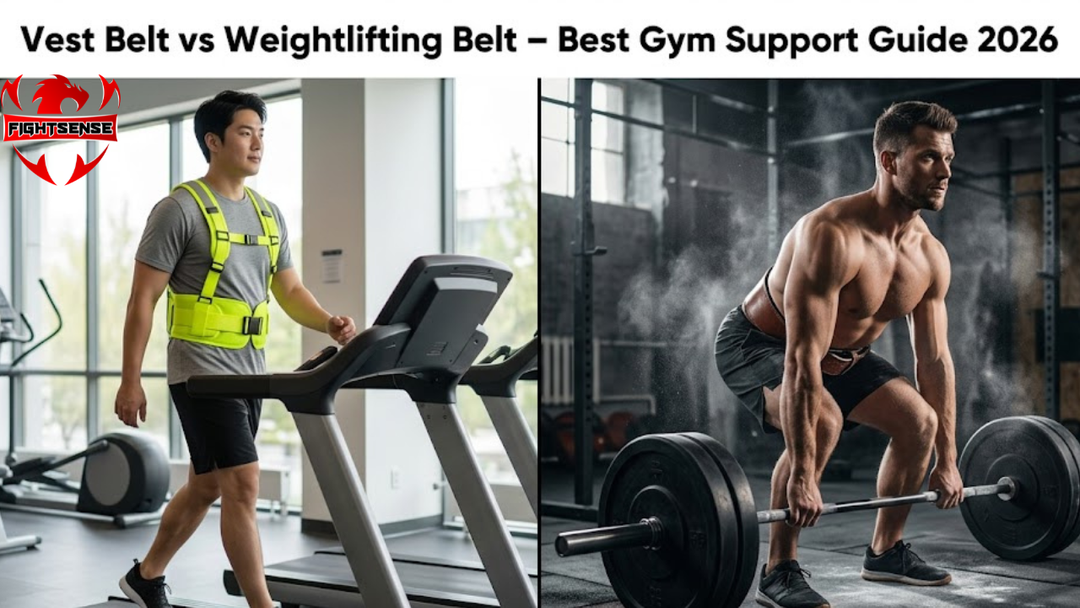
A vest belt is a lightweight fitness support belt that is primarily designed for comfort, posture support and for use during beginner workouts.
It does not work like a heavy lifting belt. It softly supports your lower back and assists you to keep better posture during modest activities.
Main Features:
- Light and breathable
- Versatile Design
- Light lumbar support
- Comfortable for long time use
- Gym accessory for beginners
Best For:
- Gym Newbies
- Walking, treadmill exercises
- Light home exercises
- Posture correction.
In other words: It’s more of a comfort support belt, not a strength belt.
What is a Powerlifting Belt?
The Fightsense weightlifting belt is a serious strength training device meant to help stabilize your core when lifting hard.
Heavy weightlifting can put pressure on your spine and lower back. The belt helps to keep your core stable and lower the chance of injury.
Main Features:
- Thick, sturdy material (leather or nylon)
- High core compression
- Strong lumbar support
- Built for the heavy lift
- Used in powerlifting & strength training
Best For:
- Squat
- Deadlifts
- Overhead press
- Barbell training heavy
This is not a comfort item – it’s a performance implementation.
Vest vs Weightlifting Belt (Quick Comparison)
|
Feature |
Vest Belt |
Weightlifting Belt |
|
Purpose |
Light support |
Heavy lifting stability |
|
Comfort |
Very high |
Moderate |
|
Flexibility |
High |
Low |
|
Use Case |
Beginners / light workouts |
Strength training |
|
Injury protection |
Basic |
High under load |
Specialized Gear in Strength and Power Training:
There are various fitness brands that cater to strength equipment.
Fightsense is known for weightlifting belts and lever belts meant for serious lifters who want strength, stability and performance.
They’re not about casual exercise gear, but heavy-duty lifting assistance equipment utilised in:
- Power lifting
- Body building
- Advanced strength training
Top 5 Uses for a & Weightlifting Belt:
Select Vest Belt if:
- You are new to training in the gym
- You do light workouts or cardio.
- You need help with your posture You're not lifting heavy weights
Weightlifting Belt: Selected if:
- You often lift heavy You do compound workouts
- You want improved lifting performance.
- You train for strength or muscle growth
Safety Tip:
One common rookie mistake is to wear too many belts.
A belt is NOT a substitute for core strength.
Use belts only if:
- Lifting heavy
- Compound Movements
- You need more support for your spine
Overusing a belt might result in a natural weakening of the core over time.
Conclusion:
Whether you should choose a vest belt or a weightlifting belt depends on your physical level and your goals in training. If you are a novice who prefers light workouts, cardio and posture support (without lifting heavy), then a Fitness waist belt is a better option. It provides comfort and basic stability for everyday exercise.
On the flip side, a weightlifting belt is for those folks who actually train hard with compound movements like squats and deadlifts. It gives you great core support, more stability and helps you increase your lifting performance while lowering the danger of injury.
FAQs:
1. What is the difference between a Fitness support belt and weightlifting belt?
A Fitness support belt provides light support and is used for beginner workouts, while a weightlifting belt is designed for heavy lifting and core stabilization during strength training.
2. Is a vest belt good for gym beginners?
Yes, vest belts are suitable for beginners who focus on light workouts, cardio, or posture improvement.
3. When should I use a weightlifting belt?
You should use a weightlifting belt during heavy compound exercises like squats, deadlifts, and overhead presses.
4. Can I wear a belt all the time in the gym?
No. Belts should only be used during heavy sets. Overuse can weaken natural core strength.
5. What is a lever belt used for?
A lever belt is used in advanced strength training and powerlifting. It provides maximum tightness and stability for heavy lifts.