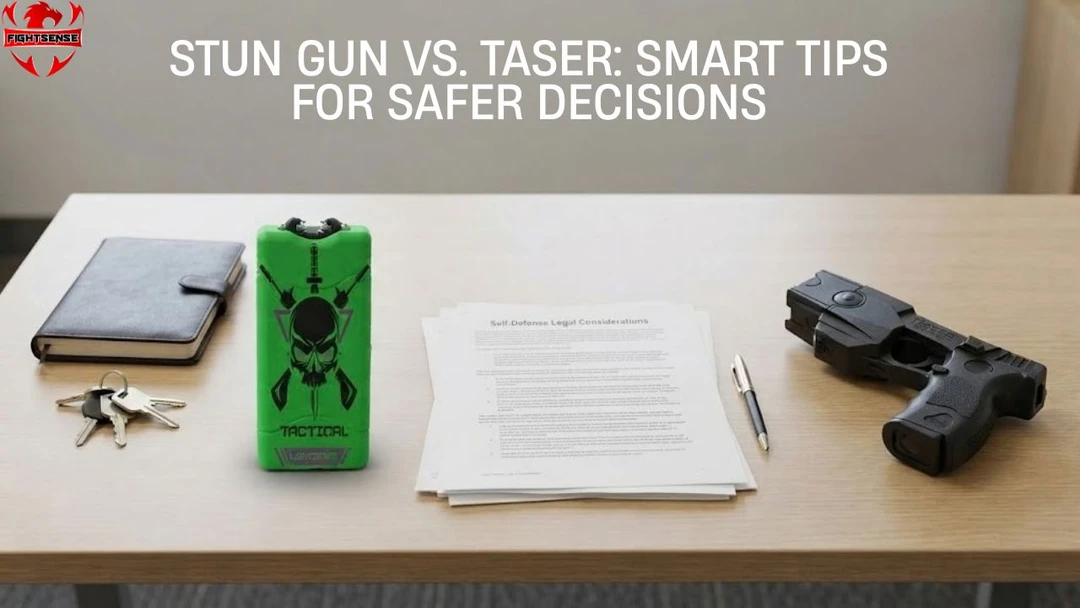
Stun gun vs. taser: Smart Tips for Safer Decisions
When personal safety becomes a top priority, choosing the right self-defense tool is crucial. Many buyers often search for stun gun vs. taser comparisons, assuming both terms describe the exact same device. However, understanding how these tools function can completely change your safety strategy.
What Is the Core Difference?
The question of stun gun vs. taser typically boils down to contact vs. distance. Both gadgets use electrical currents to temporarily disable an attacker, but their physics, target audiences and legal regulations are vastly different.
The traditional taser is a ranged weapon that shoots barbed probes connected to insulated wires, stopping threats at a distance. Conversely, classic contact devices demand direct physical contact. This knowledge will assist consumers choose a bike that is right for their lifestyle, their level of training and the laws of their area.
Understanding How Each Device Works
You need to look at their inner workings if you want to make an intelligent decision in any stun gun vs. taser comparison.
Ranged Projectile Devices (Tasers)
- Operation: Fires two tiny darts 15 or 25 feet distant.
- Mechanism: Disrupts central nervous system and causes involuntary muscle contractions by sending electricity through wires.
- Primary Users: Due to the intricacy and increased cost, these are primarily suited for police enforcement officers and security staff.
Direct Contact Devices (Stun Guns)
- Operation: Requires direct physical touch with an attacker’s body.
- Mechanism: Delivers a high voltage, low amp shock that produces extreme agony, disorientation and loss of balance disrupting an attacker’s focus.
- Main Users: Great for the average civilian, student, or night-time traveler who wants simple, reliable protection.
Stun Gun vs. Taser: Side-by-Side Comparison
|
Feature |
Stun Gun |
Taser |
|
Engagement Range |
Direct contact (0 feet) |
Ranged (15–25 feet) |
|
Primary Target Market |
Everyday civilians |
Law enforcement & professionals |
|
Size & Portability |
Highly compact, pocket/purse friendly |
Bulky, holster-dependent |
|
Reloading |
Reusable indefinitely on battery charge |
Requires replacing single-use cartridges |
|
Cost |
Budget-friendly and accessible |
High cost for device and replacement cartridges |
Legal Considerations: What You Need to Know Before Carrying
You need to be attentive and understand the rules of self-defense items. When comparing a stun gun and taser, keep in mind the laws are very different from one place to another. Contact units are broadly allowed for civilian self-defense in many locales, whereas device-based projectiles generally face more stringent background check processes, or outright concealed carry bans for civilian non-law enforcement personnel.
Always check local state and municipal legislation to ensure that you are in compliance when carrying any protective gear on a daily basis.
Ergonomics and Portability: Which Tool Fits Your Daily Routine?
If it’s physically comfortable, you’ll actually carry your safety equipment. Bulk holstered equipment can get in the way when you are running or commuting late at night. A lightweight contact model can simply slip into a jacket pocket or be attached to a keychain without attracting unwanted attention when evaluating options. Seamless daily integration means your protection is always within arm’s reach when unexpected events happen.
Key Factors to Consider Before Buying
Before buying personal safety equipment, consider a number of practical considerations to ensure the instrument is appropriate to your daily activity.
- Mobility: When you need a gadget that simply slides into a pocket or keychain, an exploration of a stun gun vs. taser breakdown quickly finds that compact contact units win on mobility.
- Ease of Use: Simplicity is needed in high stress conditions. With contact devices, there is no need to aim or refill cartridges, just touch and press.
- Maintenance & Cost: Ranged devices used by professionals are costly to maintain as the cartridges have to be replaced after every usage. Personal contact devices include internal batteries that can be recharged.
Why Everyday Users Prefer Compact Contact Devices
The typical citizen can’t exactly lug around hefty tactical gear. With regards to stun gun vs taser, the average user prefers the contact variety as it requires no specific training at all. And you don't have to worry about missing a long-range shot or fumbling with wire cartridges in a pinch.
Furthermore, tiny variants are a perfect fit for contemporary daily activities. If you’re strolling to your car at night by yourself, or running through a neighborhood, having a discreet, reliable tool can give you unparalleled peace of mind.
The FightSense Advantage for Civilian Safety
If you are seeking for reputable personal defense products, brand image counts. And that’s where FightSense separates itself from the pack. FightSense is not in the business of building complex, police enforcement grade projectile systems. It is only dedicated to creating effective, user-friendly, and very portable contact protection.
- Portable: FightSense products are designed to fit easily inside purses, pockets or keychains.
- Dependable power: High voltage construction for maximum stopping force through heavy clothing.
- Smart Features: Many FightSense versions include safety switches to avoid accidental firing, non-slip rubberized handles, and built-in LED lighting for low light conditions.
Psychological Impact: How Sudden Deterrence Stops Threats
Aside from the physical contact, psychological deterrence is a big part of personal safety. The loud crackling sound and blazing electrical arc of a high voltage unit are frequently enough to make an angry person think twice before physical conflict even starts. The shock of it all will give you precious seconds to move to safety.
Cost vs. Value: Evaluating Long-Term Ownership Expenses
The budget planning doesn't stop with the initial purchase price. Professional projectile systems usually need the purchase of costly single-use replacement cartridges for each firing or test. In contrast, a choice of a reliable contact unit is a decision of investing in a rechargeable device that delivers long-term financial value with no hidden cartridge replacement fees.
Common Mistakes People Make When Choosing Self-Defense Tools
- Assuming All Electric Devices Work the Same Not researching a stun gun vs. taser can lead to buying equipment that’s excessively big or is illegal in your location.
- If you forget to check or recharge lithium-ion batteries regularly, any protection device is ineffective.
- Disregarding Local Laws: State and regional laws on self-defense tools differ. Always check local ordinances before carrying any gadget.
Expert Safety Tips for Carrying Personal Protection
- Keep It Accessible: Store your protection item in an accessible pocket or side bag, not buried deep in a backpack.
- Grip and Activation Practice: Familiarize yourself with the safety switch and trigger action in a safe setting so you can operate it instinctively.
- Combine with Situational Awareness: No tool beats awareness. Always be alert of your surroundings, particularly in dimly lit settings.
FAQs:
What is the difference between a taser and stun gun?
The main difference is distance. A taser shoots probes that zap an adversary from a distance, whereas a stun gun needs direct physical contact.
Are regular folks allowed to own tasers?
Tasers are lawful for people in many places, however they generally require background checks, permits or particular governmental clearance.
Do stun guns need refill cartridges?
No. Contact models, unlike projectile devices, can be used multiple times on a single battery charge and do not require replacement parts.
Why do people pick FightSense for self-defense?
FightSense is all about small, reliable, user-friendly touch devices that blend into your regular carry flow without any complicated setup.
Does a stun gun penetrate thick clothes?
Yes, quality high voltage devices are designed to deliver an effective shock through even heavier layers of fabric.
Are Stun Guns Difficult to Use in an Emergency?
Not in the least. They have simple switches and ergonomic grips for quick and intuitive activation in high-stress situations.
How often do I have to test or recharge my personal defense unit?
Check the battery indication regularly, and recharge your gadget every few months to make sure it holds a full charge.
Closing Thoughts:
Choosing between a stun gun vs. taser depends on your lifestyle, legal context, and comfort level. Professional gear that is ranging is great for law enforcement, but the best protection for the everyday civilian is basic, portable and reliable protection. Opting for something reliable and modest like FightSense makes your personal safety practical, accessible and firmly in your hands
Disclaimer:
This content is for educational and safety-awareness purposes only.