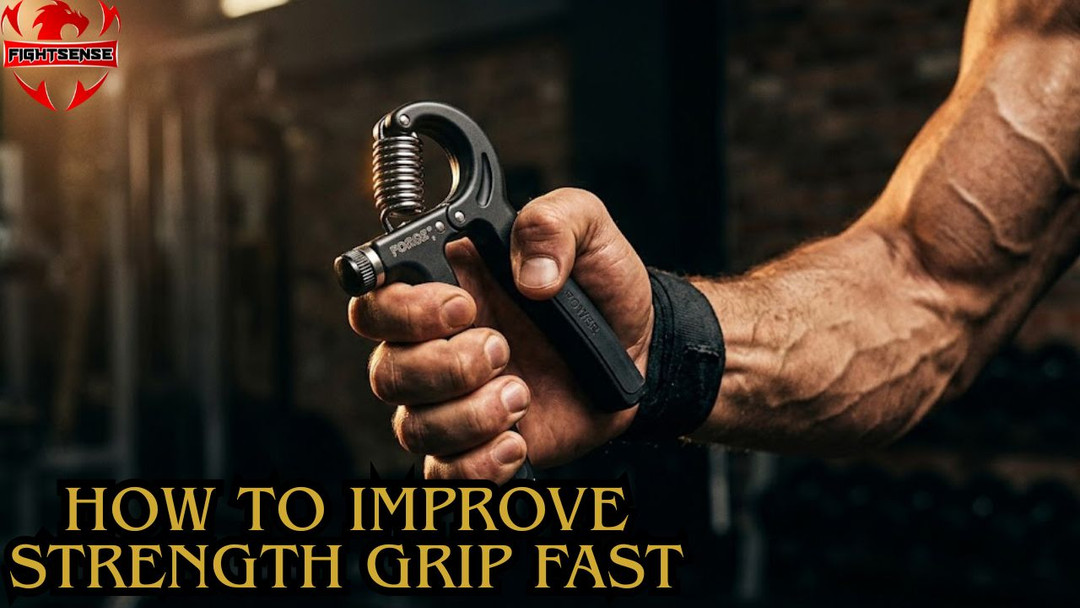
How to Improve Strength Grip Fast
Strength Grip is one of the most underrated aspects of physical fitness, yet it has a major impact on both gym performance and daily activities. Whether you're lifting weights, carrying heavy bags, or performing manual tasks, your grip determines how well you control and handle resistance.
Many people ignore grip training and focus only on big muscle groups. However, weak hands can limit your overall strength. The good news is that with the right approach, you can improve your grip quickly and effectively.
Keynotes:
- Consistent training is the most important factor in improving Grip strength.
- Bodyweight exercises like hangs and carries can build grip without heavy equipment.
- Grip often fails first because forearm muscles fatigue faster than larger muscles.
- Rest and recovery are essential for steady strength development.
- Gradual progression in time and resistance leads to faster grip endurance gains.
What Exactly Is Strength Grip and Why Does It Matter?
Strength Grip is the capacity of your hands, fingers and forearms to generate and maintain force when grasping, squeezing or controlling items. It’s not only about hand power, but a mix of muscle strength, endurance and stability to help you perform better in fitness training and daily tasks. A good grip means better control when lifting, better athletic performance, and better total upper-body strength.
Understanding How Grip Strength Works?
Grip strength is not only your hands, it’s your fingers, wrists and forearms working in conjunction. These muscles operate in concert to provide force and stability.
There are three basic types of grips:
- Crush grip (squeezing) -
- Pinch grip (fingers and thumb)
- Support grip (hold on time)
A balanced Grip strength needs training in all three types to prevent weakness in any area.
Why Most People Struggle to Improve Grip Strength?
One of the greatest reasons people don’t develop strong hands is the lack of direct training. Lifters rely too much on straps or machinery, taking away from natural grip engagement. This actually weakens the forearms over time, rather than strengthening them.
Inconsistency is another typical problem. Grip muscles heal fast but require repeated stimulation. Training only sometimes is not a pressure enough to adapt to. The selection of exercises is important too. Doing only one sort of movement can limit your total development.
The Impact of Grip Strength on Whole Body Performance:
In many workouts it is usually your grip strength that holds you back. Big muscles don’t mean anything if your grip breaks down, you will lose performance.
A strong Strength Grip helps you:
- More Weight
- Better control during exercise
- decrease injury risk
- Be better in sports and daily life
Many upper body movements are founded on this.
How to Measure Your Grip Strength Progress?
Tracking progress is important to keep you motivated, so you can see progress. Simple ways to measure grip strength include:
- Time how long you can hang from bar
- Farmer’s Carries - Increase weight
- Hand Gripper Reps
- Measure plate pinch hold time
These outcomes are documented weekly and demonstrate steady growth. Any little gains are a sign that your muscles are responding and becoming stronger.
Best Exercises To Quickly Build Grip Strength:
If you want to improve grip strength rapidly, you need specialised exercises:
- Dead hangs for stamina
- Farmers for strength functional
- Power Hand Grippers - Mighty
- Plate pinches – finger strength
- Wrist Curls for the Forearms
Regular practice of techniques will gradually increase your Grip strength.
Training Frequency: How Often Should You Train Grip?
Grip muscles recover faster than larger muscle groups, which means you can train them more frequently. However, balance is still important.
- Beginners: 2–3 times per week
- Intermediate: 3–4 times per week
- Advanced: 4–5 times per week (with variation)
Avoid training to complete failure every session. Instead, mix intensity and volume to allow steady progress without overuse injuries. Consistent scheduling is essential for improving your Strength Grip efficiently.
Advanced Techniques for Faster Results:
Once you’ve built a foundation, advanced methods can help you progress faster:
- Fat bar or thick grip training
- Towel-based exercises
- Heavy static holds
- Drop sets for added intensity
These techniques push your limits and significantly boost your Grip strength development.
Common Mistakes That Slow Progress:
Many people fail to improve because of simple errors:
- Ignoring grip training
- Overusing lifting straps
- Overtraining without rest
- Not increasing difficulty
Avoiding these mistakes will help your Strength Grip improve more efficiently.
Nutrition and Recovery for Better Results
Training alone is not enough. Your body needs proper support to grow stronger.
Focus on:
- High-protein foods
- Proper hydration
- Quality sleep
- Forearm stretching
Recovery plays a major role in building a powerful Grip strength.
How Fightsense Equipment Can Support Grip Training?
Using general fitness tools you can increase your performance and develop Strength Grip. Brands like Fightsense provide accessories that could help you train your hands, wrists and forearm muscles throughout your workout.
Although these equipment may not be designed primarily for grip strength, they can be helpful when used with dead hangs, carries and bodyweight holds. Your priority should always be consistent exercise and appropriate technique, and equipment should be a supportive part of your program.
Conclusion:
You don’t build a strong Strength Grip over night, it takes consistency, patience and training the right way. If you’re a beginner or physically active already then working on your grip can make a huge difference to your overall performance, control and endurance in your exercises and in life.
The trick is to practise consistently, apply the right skills, and slowly raise the challenge as you go. Even small gains in grip strength will make a major difference in the way you lift, hold and perform. Be consistent and the results will follow naturally.
Disclaimer:
Before starting any new workout regimen, it's very important to talk to a doctor, especially if you already have health problems or worries.
FAQs:
1. Can grip strength improve without heavy weights?
Yes. Bodyweight exercises like dead hangs, carries, and static holds can effectively build grip strength if done consistently.
2. Why does my grip fail before other muscles?
Because forearm muscles fatigue faster than larger muscles like back or legs, especially if grip is not trained separately.
3. Is uneven grip strength normal?
Yes, slight imbalance is common due to daily hand usage. It improves with single-hand exercises over time.
4. Can grip training help prevent injuries?
Yes, stronger forearms and wrists improve stability and reduce strain during lifting.