
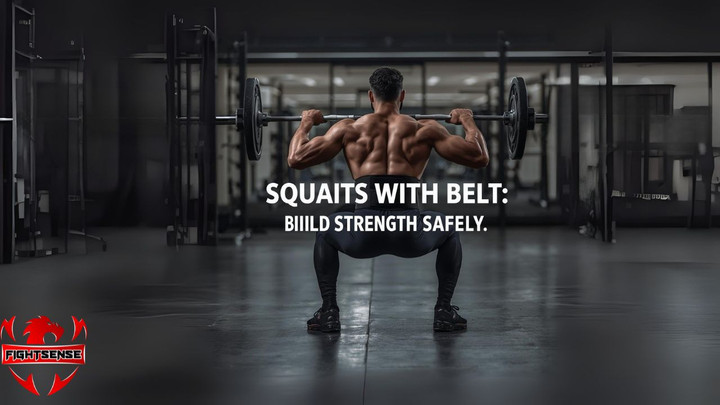
Squats with Belt: Build Strength Safely
28th Aug 2025
If you want to make your leg day harder and protect your lower back, doing squats with belt might be the next wise thing to do.
The appropriate belt may make a big difference in both performance and safety, whether you're just starting out or lifting a lot of weight. Let's talk about how a squat weight belt works, when to use it, and what not to do
keynotes
- Enhances core stability and back support.
- Best for heavy squats and max lifts.
- Not needed for light or warm-up sets.
- Must be worn snugly above the hips.
- Available quality options at fightsense.com.
What Are Squats with Belt and Why Use One?
To put it simply, squats with a belt mean putting a lifting belt, usually made of leather or nylon, around your waist to help keep your core stable while you lift heavy weights. The belt helps raise the pressure inside your abdomen, which protects your spine and lowers your chance of damage when you lift heavy things.
When the weight gets high enough to test their core strength, most lifters start to think about using a belt for squats. It's not just about lifting more; it's about lifting in a sensible way.
Benefits of Squatting with a Belt
Here are the benefits of doing squats with weight belt in your workouts:
- Better stability in the core: The belt works like a brace to keep your core tight and strong during each rep.
- More Power to Lift: A lot of lifters report that squatting with a belt makes them stronger straight away since it helps them control their bodies and handle pressure better.
- When you do heavy sets or volume training, a squat belt can assist protect your spine and lower back by putting less stress on them.
- More aware of your form: Wearing a belt makes you more aware of your posture and helps you stay straight.
When Should You Use a Squat Weight Belt?
- Max Lifts or PR Attempts: A belt might assist you keep your form when you lift near to your max.
- Heavy Compound Sets: Do these with 80% or more of your one-rep max for sets of 3 to 5 reps.
- Recovering from an injury: A belt helps your back while you get stronger and more confident.
- Don't use a belt during warm-ups or accessory work; your core needs to get stronger on its own.
Choosing the Right Belt for Squatting
Not all belts are the same. When looking for the best belt for squats remember this:
- Material: Leather belts are the strongest and last the longest; nylon belts are more flexible and pleasant.
- Most serious lifters use powerlifting belts that are 4 inches wide and 10mm or 13mm thick.
- Choose a closure system that you feel is the safest and easiest to change, like a prong, lever, or Velcro.
Want a belt that does everything? Check out the best-rated lifting gear at fightsense.com and get the right one for your needs.
find the perfect fit for your goals.
How to Use a Squat Weight Belt Correctly
- It's important to wear the belt correctly. Put it around your core, slightly above your hip bones, not too high or low.
- Tighten it until it fits snugly, but not so tight that you can't breathe or brace yourself well.
- Before you start each rep, take a deep breath and tighten your core.
- Don't use it too much; the belt is a tool, not a crutch..
Final Thoughts: Should You Do Squats with Belt Support?
If your goal is to lift heavier, protect your lower back, and train with confidence, then squats with belt use can be a game-changer. Just remember, it’s not a magic fix—it’s part of a well-rounded strength training plan.
Pair proper technique with smart gear choices—like doing squats with a weight belt—and you’ll be squatting stronger, safer, and more efficiently in no time.
FAQs
- When do I need to wear a squat belt?
Use it when you're lifting a lot of weight (80% or more of your 1RM), when you're trying to lift the most weight possible, or when your core needs extra support.
- Does wearing a belt help you lift more?
Yes, it makes your core more stable and allows you to brace harder, which helps you lift heavier weights with better form.
- Where should I put the belt?
Not too high or low, yet snug around your core and just over your hip bones.
- Do I need to wear a belt for every set?
No, don't do it for warm-ups or lighter sets. Let your core work on its own.
- What kind of lifting belt is best?
Leather belts are the strongest, but nylon belts are more comfortable. Pick a closing that fits your style, like a prong, lever, or Velcro.