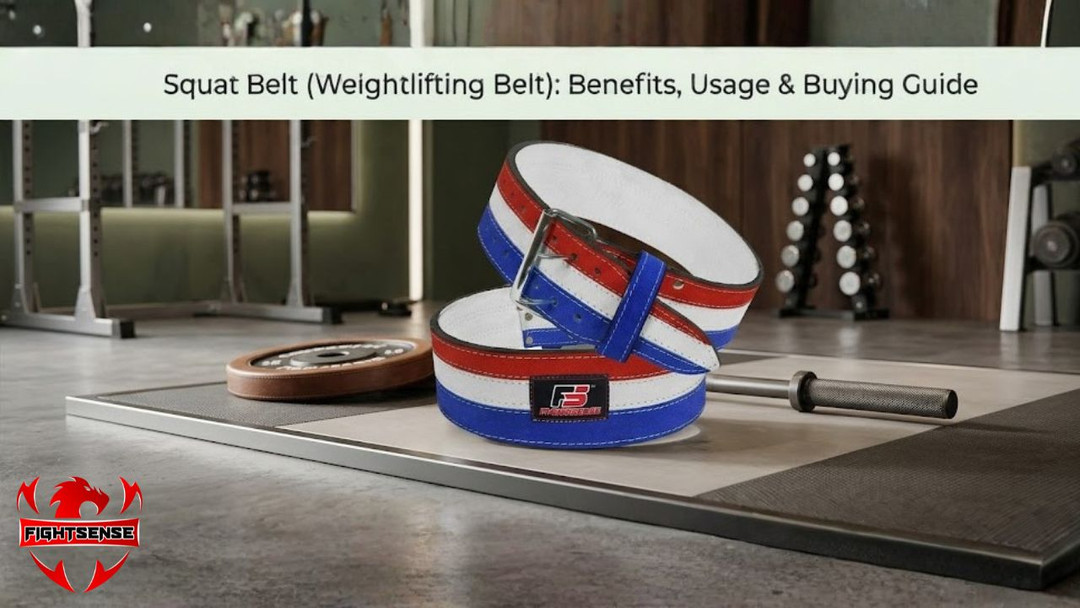
Squat Belt (Weightlifting Belt): Benefits, Usage & Buying Guide
Squat belt (weightlifting belt) is something you’ll often notice in the gym when lifters tighten a thick belt before heavy squats.
It may look simple, but it plays an important role in improving stability, core bracing, and overall lifting performance when used correctly.
Let’s break it down in a clear, practical, and beginner-friendly way
Key Highlights:
- A squat belt enhances bracing and stability under heavy loads, not direct strength.
- It is best used for heavy compound lifts like squats, deadlifts, and presses.
- Correct usage depends on proper breathing and technique, not just wearing it.
- It should support, not replace, core training and good form.
- Use it strategically for progressive overload and performance gains.
What is a Squat Belt?
A squat belt or weightlifting belt is worn around the waist during heavy compound movements such as squats, deadlifts, and overhead presses.
It is not meant to replace your core strength, but to assist you generate intra-abdominal pressure (IAP)—which enhances spinal stability during heavy lifts.
Simply stated:
It helps you brace better so you can lift heavier with better control.
How Does a Training belt Work?
When you breathe deeply into your stomach and push outward against the belt, your core becomes more stable and rigid.
This creates:
- Stronger spinal support
- Better force transfer during lifts
- Improved control under heavy loads
In strength training, this bracing technique is widely used by experienced lifters and coaches to improve lifting efficiency and safety under load.
Benefits of Using a Squat Belt:
Better Core Stability
For hard squats and other compound movements a belt keeps your bracing consistent .
Increased Power Output
Many lifters see their performance increase on near-maximal lifts due to being more stable and having better control.
Less fatigue under heavy loads
You don’t have to depend on your core alone to stabilize, especially during high intensity sets.
Improved Awareness of Lifting Form
A belt helps lifters be more attentive of posture, bracing and bar route during the lift.
Types of Squat (Weightlifting) Belts
1. Leather Belt
- Highly durable and rigid
- Best for heavy strength training
- Common in powerlifting environments
2. Nylon Belt
- Lightweight and flexible
- Easier to adjust quickly
- Good for general fitness and functional training
3. Lever Belt
- Quick locking mechanism
- Very secure and consistent tightness
- Popular among advanced lifters
Supporting Your Workout with Reliable Gym Equipment:
Good equipment in strength training will help keep you consistent and confident when lifting heavy.
Fightsense is a fitness equipment brand is one of the gym gear brands that provide weightlifting and lever belts for strength training conditions.
Good equipment can’t substitute good technique or training expertise, but it can assist lifters stay stable and focused during large compound lifts.” The goal is always the same: more control, more form, more consistency over time.
Experience of Real Strength Training Practice
The guide is built on strength training ideas that are generally accepted and used in gym training and coaching. Concepts such as bracing, progressive overload and belt wearing are used all the time in real gyms.
Core Bracing & IAP Technical Knowledge
Strength and conditioning is built on core bracing techniques and intra-abdominal pressure (IAP). They are well taught and practiced in organised programmes of resistance training.
Authoritative Use in Strength and Power Training
These techniques are often employed in powerlifting and professional strength training situations, and so represent a trustworthy aspect of modern lifting practice.
Practical, Reliable & Safety-Conscious Advice
The information is concerned with safe and practical use, not with extravagant promises about how good gym equipment is. The idea is to assist lifters use the belt properly and effectively.
Selecting the Appropriate Weightlifting Belt:
Things to consider when picking a weightlifting belt:
- Thickness (10mm-13mm is normal for strength training)
- Width (most popular 4 inch belts)
- Material (leather for heavy duty, nylon for flexibility)
- Closure type (e.g., buckle or lever mechanism)
- Fit and comfort according to your exercise style
A good belt should feel supporting – not tight. It should enhance – not hinder – your movement.
Correct Use of a Weightlifting Belt:
The belt works only when used properly:
- Wrap the belt around your midsection (not too high, not too low)
- Tighten it tight but still allow controlled breathing
- Deep breath into your belly
- Push forward against belt to provide 360° bracing
- Keep strain on the lift all the way up
This is a major principle in strength training coaching and is often emphasised in powerlifting foundations.
Conclusion:
A squat belt (weightlifting belt) is a helpful training aid, not a shortcut. When used appropriately it can allow you to stabilize, brace your core and perform better on hard exercises. The true gains in strength training come from consistency, good technique, smart programming, and progressive overload, though.
Ultimately, a belt doesn’t make you stronger, it just allows you to demonstrate the strength you already have more effectively when it matters.
FAQs:
1. Do I need a squat belt as a beginner?
Not necessarily. Beginners should first focus on building core strength and mastering proper squat technique before relying on a belt.
2. Will a weightlifting belt make me stronger instantly?
No. A belt doesn’t increase strength directly—it improves stability and bracing so you can lift more efficiently.
3. Can I use a belt for every exercise?
No. It’s best used only for heavy compound lifts like squats, deadlifts, and overhead presses.
4. What’s the difference between a lever belt and a buckle belt?
A lever belt locks in a fixed tightness for consistency, while a buckle belt allows more adjustable fit.
5. Is belt training safe for the lower back?
Yes, when used correctly. It improves spinal stability, but poor technique can still cause injury.