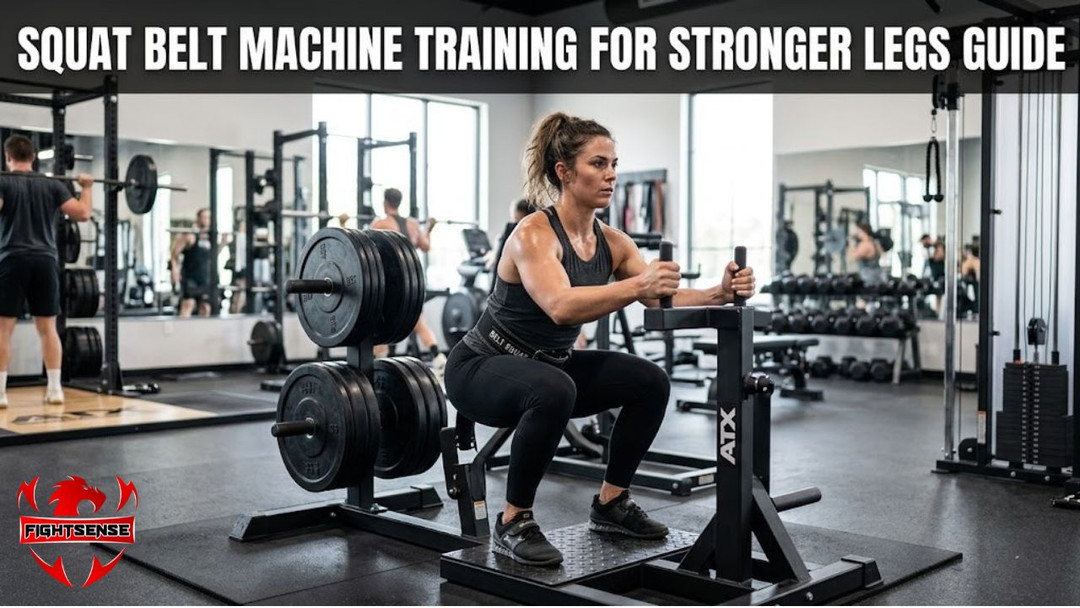
Squat Belt Machine Training for Stronger Legs Guide
Squat Belt Machine training is becoming increasingly popular in modern strength and bodybuilding programs due to its ability to make heavy leg workouts safer and more controlled. This type of leg training plays a crucial role in building lower body strength, improving athletic performance, and supporting overall muscle growth. While traditional barbell squats are highly effective, they often come with challenges related to balance, spinal load, and technique.
To address these limitations, this machine provides a more joint-friendly alternative that allows users to perform heavy squats with reduced stress on the back while still maintaining strong lower body muscle activation.
In this guide, we will explore what it is, how it works, its benefits, who should use it, and how it compares to traditional squats.
Key Takeaways:
- Spine-Friendly Strength Building: Train heavy legs without compressing your lower back like traditional squats.
- Quad-Dominant Power Focus: Shifts resistance directly to your quads for deeper muscle activation and growth.
- High-Volume, Low-Fatigue Training: Push more reps and sets without upper-body fatigue limiting performance.
- Performance + Recovery Balance: Ideal for athletes who need strength gains without overloading recovery systems.
- Versatile Programming Tool: Works equally well for strength, hypertrophy, or conditioning phases.
What Is Squat Belt Machine Training?
Squat Belt Machine Training This is a unique configuration where a weight belt is coupled to a loading system (plates or cable) instead of placing the load on your shoulders like a barbell squat.
The upshot? You're still squatting, but the resistance is through your hips and waist, not your back.
This minor tweak makes a significant difference. That puts emphasis on the lower body, while taking the load off the back and shoulders.
Why Are Lifters Switching to Belt Squat Machines?
Decreased Spinal Loading
The primary benefit is obvious—one, your spine gets a rest. This makes belt squat machines a great tool for lower back fatigue or injury recovery for lifters.
Improved Quad Engagement
Most lifters report greater quad activation due to the load being lower on your body than a standard squat.
Less Fatigue, More Volume
Your legs can do more work without your upper body getting in the way. That means higher quality reps and a better hypertrophic stimulus.
Good for Long-Term Training
Belt squats are a sustainable solution for athletes who are squatting hard year-round to keep growing without continuously pounding up the lower back.
How to Use the Squat Belt Machine Correctly?
Good technique counts, but it appears simple.
First, tie the belt around your hips tightly. Step on the platform so the weight is distributed evenly. As you drop into the squat, concentrate about sitting back “between your heels” rather than leaning forward.
A few crucial clues:
- Keep your upper body straight
- Let your hips move naturally down and back
- Drive through mid-foot and heels
- No bounce at bottom
The movement should be controlled, not rushed.
How to Program Belt Squat Training?
You can use squat belt machine training in several ways depending on your goal:
For strength
- 4–6 sets of 4–6 reps
- Longer rest periods
- Focus on controlled tempo
For hypertrophy
- 3–5 sets of 8–15 reps
- Moderate rest (60–90 seconds)
- Emphasize muscle contraction
For conditioning or finishers
- Higher reps (15–25)
- Short rest intervals
- Superset with lunges or leg press
It also works great as a primary squat movement on lower back recovery days.
Supportive Gym Gear for Belt Squat Training:
The belt squat machine itself bears the strain but the correct gym gear can help you exercise more comfortably and consistently.
Fightsense focuses on supporting strength training equipment like weightlifting belts and lever belts, popular for barbell training sessions. These belts are meant to aid enhance core bracing and stability when performing heavy movements such as squats and deadlifts.
Remember that this equipment is there to assist you with your training; it is not a substitute for the belt squat machine and does not alter the way the machine works. But instead it supports your total strength practice as you alternate between different styles of lower-body training.
Common Mistakes to Avoid
Even experienced lifters mess these up:
- Going too heavy too soon
The belt squat machine often feels easier than barbell squats, so people overload it and lose form.
- Not using full range of motion
Half reps reduce the effectiveness. Aim for depth that allows full quad engagement.
- Poor belt placement
If the belt sits too high on the waist, it can feel unstable and uncomfortable.
Closing Remarks:
One of the best methods to create strong, powerful legs while protecting your joints and spine from exhaustion is to train on a squat belt machine. Whether you’re an athlete, someone who spends a lot of time in the gym hunting for that sweet hypertrophy or just someone looking for a safer squat variant, it merits a spot in your program.
And when combined with intelligent programming and equipment choices, such as high quality lifting belts from Fightsense allows you to exercise more effectively, more often, over time, without excess wear and tear.
If you're looking for bigger legs but wiser recovery, the belt squat machine can be your new best equipment friend in the gym.
FAQs:
1: Is a belt squat machine better than a barbell squat?
It depends on your goal. Belt squat reduces spinal load while barbell squat builds more total-body strength.
2: Can beginners use a squat belt machine?
Yes, it’s beginner-friendly because it’s easier on the lower back and improves squat mechanics.
3: Does belt squats improve athletic performance?
Yes, it strengthens quads and hips without heavy spinal fatigue, useful for sprinting and jumping.
4: How heavy should I go on the belt squat machine?
Start moderate. Many lifters can handle more load than barbell squats, but form comes first.
5: Can I replace squats with belt squats completely?
Not ideally. It’s best used as a complement, not a full replacement.