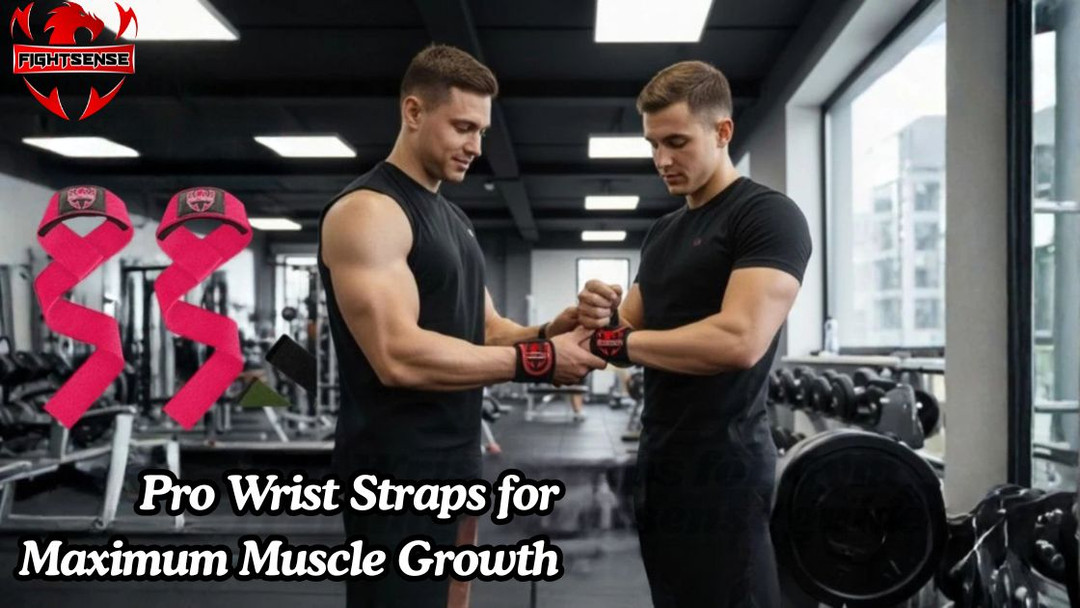
Pro Wrist Straps for Maximum Muscle Growth
When you are aiming for a new personal record on deadlifts or heavy barbell rows, your grip should never be the limiting factor. Yet, many lifters hit a stubborn training plateau simply because their forearm strength gives out long before their primary muscles fatigue.
That is where pro wrist straps become an indispensable part of your workout arsenal.
Whether you are building maximum muscle hypertrophy or breaking powerlifting records, using professional-grade lifting support bridges the gap between grip strength and total muscular output. Leading fitness brands like FightSense—known for premium weightlifting gear including wrist straps, lifting hooks, and support wraps—engineer these specialized tools to secure your hold on the bar so you can focus entirely on driving muscle growth safely.
Understanding Pro Wrist Straps
Pro wrist straps are specialized heavy-duty accessories designed to anchor your hands directly to weightlifting bars, dumbbells, or cable attachments.
When lifting heavy loads, small forearm muscles tire faster than larger muscle groups like your lats, traps, or glutes. Straps transfer tension directly from the bar to your wrists, bypassing grip limitations and isolating target muscles.
Types of Lifting Support Gear
Choosing the right lifting accessory depends on your specific training goals, lift selection, and preferred grip feel.
1. Lasso Straps (Single Loop)
The most versatile design features a single loop that cinches around the wrist while the remaining tail wraps around the barbell. Ideal for general bodybuilding and strength conditioning.
2. Figure-8 Straps
Designed for maximal strength lifting like heavy deadlifts and rack pulls. You slip your hand through one loop, pass the strap beneath the bar, and place your hand through the second loop for an unshakeable connection.
3. Weightlifting Hooks
For lifters struggling with finger dexterity or severe joint strain, metal weightlifting hooks provide an instantaneous mechanical hold without requiring manual wrapping.
4. Wrist Wraps vs. Wrist Straps
While wrist wraps offer heavy compression around the wrist joint for pressing exercises, wrist straps are pull-oriented gear meant to reinforce grip strength on heavy pulls.
Benefits of Using Professional Wrist Straps
- Eliminate Grip Failure: Train back and posterior chain muscles to absolute failure without the bar slipping.
- Optimize Muscle Hypertrophy: Maintain constant tension on target muscles rather than diverting neural drive into holding the bar.
- Protect Wrist Tendons: Reduce acute strain on forearm flexors and tendon insertion points.
- Overcome Sticking Points: Lift heavier loads for higher reps to trigger mechanical overload and strength adaptations.
FightSense Wrist Straps vs. Generic Gear
When choosing lifting accessories, build quality directly impacts safety and comfort. High-performance brands like FightSense construct their weightlifting gear with heavy-duty materials designed to withstand extreme tension without sacrificing ergonomic comfort.
|
Feature |
FightSense Wrist Straps |
Generic / Basic Gym Straps |
|
Material Construction |
High-density reinforced cotton blend |
Thin polyester or cheap cotton |
|
Inner Wrist Padding |
Thick neoprene cushion |
Minimal or no padding |
|
Stitching Integrity |
Reinforced industrial cross-stitching |
Single-line basic thread |
|
Grip Traction |
Woven anti-slip texture |
Smooth fabric prone to friction burns |
|
Weight Capacity |
Rated for 500+ lbs heavy pulls |
Risk of fraying under moderate loads |
How to Use Wrist Straps Step-by-Step
1.Thread the Strap: Form the initial anchor loop.
Pass the loose tail of the strap through the loop end to create a clean circle. Slide your hand through so the loop sits flat around your wrist.
2.Align the Tail: Position for proper rotation.
Ensure the long tail runs along the palm of your hand, pointing directly toward the space between your thumb and index finger.
3.Wrap Beneath the Bar: Counter-wrap against finger direction.
Bring the tail underneath the bar and wrap it around once or twice in the direction opposite to how your fingers close.
4.Cinch and Lock: Eliminate all slack.
Rotate the bar toward you like motorcycle throttles until the strap cinches snugly against your wrist and the barbell.
Common Lifting Strap Mistakes to Avoid
- Using Straps for Every Exercise: Relying on straps for warm-up sets or lighter weights prevents natural grip strength development.
- Using Straps on Pressing Movements: Never use pulling straps for bench presses or overhead presses, as the weight must rest on your palms rather than hanging from your wrists.
- Wrapping Above the Bar: Wrapping the tail over the top of the bar instead of underneath prevents the tension-lock mechanism from holding securely.
- Ignoring Gear Wear and Tear: Regularly inspect your straps or weightlifting hooks for frayed stitching or worn neoprene to ensure workout safety.
Expert Training Tips for Maximum Performance
- Save Straps for Working Sets: Execute your warm-up sets with a raw grip to build forearm endurance, then bring out pro wrist straps for your heavy top sets.
- Pair with Liquid Chalk: Combine your wrist straps with chalk to eliminate moisture and prevent internal slippage inside the loop.
- Rotate Your Gear: For heavy deadlifting days, alternate between heavy-duty lasso straps and weightlifting hooks depending on fatigue levels.
FAQs:
Are lifting straps allowed in official powerlifting competitions?
Raw powerlifting federations generally prohibit lifting straps on competitive deadlift attempts. However, they are permitted in Strongman competitions and widely used across all federations during heavy off-season training cycles.
Will using heavy-duty gym straps weaken natural grip strength?
No, provided they are used strategically. Athletes should perform warm-up sets and dedicated forearm exercises without accessories to build raw grip strength, reserving supportive gear only for heavy working sets where grip limits overall muscle output.
What is the main difference between traditional lifting straps and weightlifting hooks?
Traditional lifting straps feature flexible fabric tails that wrap around the bar to create friction, requiring an active grip. Weightlifting hooks utilize rubber-coated steel hooks that anchor directly underneath the bar, eliminating hand strain completely.
What is the typical lifespan of high-quality lifting accessories?
Premium lifting gear made from reinforced cotton, heavy nylon, or strong leather typically lasts between 2 to 5 years, depending on training frequency and load intensity.
Is neoprene padding necessary on lifting support straps?
Padded straps featuring neoprene cushions inside the wrist loop offer significantly greater comfort during heavy pulling movements, preventing skin pinching, bruising, and friction burns under maximum loads.
What is the ideal length for heavy-duty wrist straps?
Standard lifting straps typically range between 20 to 24 inches in length. This size provides enough material to wrap around standard Olympic barbells, dumbbells, or thick axle bars twice for a secure hold.
Can lifting straps be used safely during Olympic weightlifting?
Standard long lasso straps are unsafe for cleans because quick bar release is difficult if a lift fails. However, Olympic lifters often use specialized, short single-loop straps for snatches that disengage instantly during a dropped bar.
Conclusion:
Overcoming strength plateaus requires the right combination of programming, recovery, and training gear. By incorporating pro wrist straps into your pulling workouts, you eliminate grip fatigue, protect your wrist joints, and allow your primary muscles to reach full structural stimulation.
Disclaimer:
This content is for general fitness and educational purposes only. Always use proper form and consult a qualified trainer if needed.