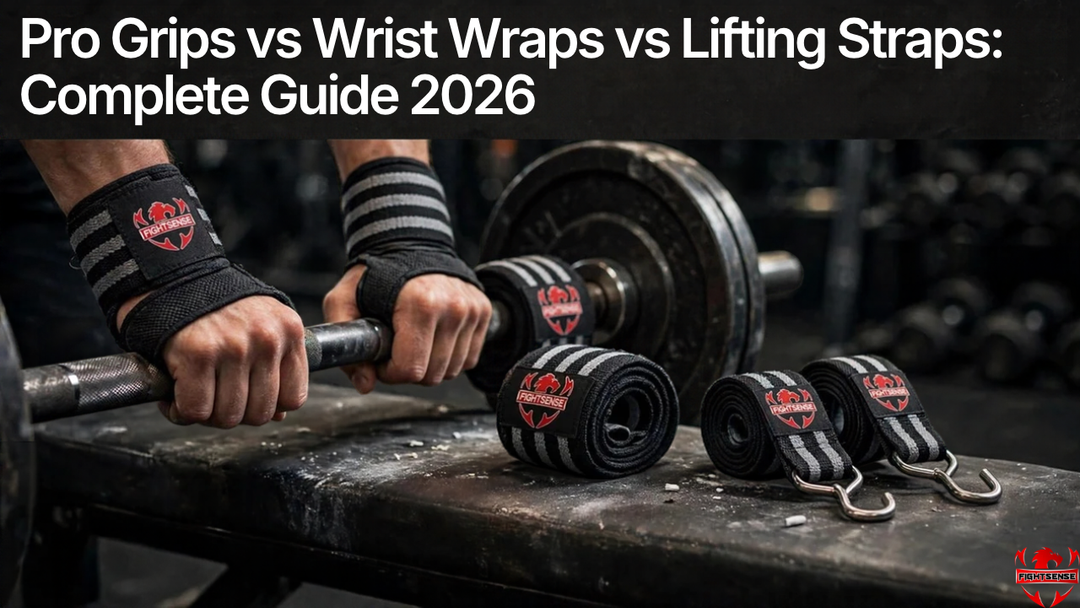
Pro Grip vs Wrist Wraps vs Lifting Straps: Complete Guide 2026
Introduction
A pro grip is one of the first things a lifter notices when the bar starts slipping from tired hands. It adds friction and padding where a bare hand loses its hold, so you can finish the set instead of dropping the bar. Each of these tools serves a different purpose, and using the wrong accessory — or using it at the wrong time — can actually slow down your strength progress instead of improving it. This complete guide explains everything in detail so you can choose the right equipment based on your training style and fitness goals.
Quick Answer: Which Tool for Which Job?
In short, a pro grip adds friction and padding to help your hands hold the bar through moderate pulling work. Wrist wraps stabilise the wrist joint on heavy presses. Lifting straps lock the bar to your hands for the heaviest pulls. Use pull grips for balanced grip development, wraps for pressing, and straps for maximal deadlifts and rows — and train your bare hands on lighter sets so none of them becomes a crutch.
What Is a Pro Grip?
Pull grips are a modern gym accessory built to boost your hold during training. They help lifters hold the bar through deadlifts, rows and pull-ups by adding support to the hands, and their secure design sits comfortably over the fingers and palms so you can keep the bar steady even during hard sets.
That support matters because hand power often fails before the bigger pulling muscles do. Pull grips give you supported help rather than locking your hold to the bar the way lifting straps do. They let you train your hand muscles while still giving your hands helpful support through each lift, so you keep gaining from the exercise over time. For the full technique walkthrough, read the guide on how to use weight lifting straps to see how straps differ from grips in practice.
Advantages of Pull Grips
The main advantage of a pro grip is balance: it supports your hold without locking it to the bar, so your hands still do real work. That means balanced development — you train your hands instead of relying entirely on straps — plus less hand fatigue, longer and more productive sets, and better muscle activation during back work, because you can feel the target muscles working instead of fighting to keep the bar in your hands.
Pull grips fit into many pulling and back workouts: chin-ups and pull-ups, lat pulldowns, barbell rows, cable machine work and back functional training. A stronger base hold underneath the gear helps too — the grip training guide covers the home exercises that build real hand power.
Restrictions of Pull Grips
A pro grip is not the tool for maximal deadlifts. It does not offer as much support as lifting straps, so on very heavy pulls the bar can still slip. Quality also depends on the brand: cheap grips stretch out and lose traction quickly, while well-made ones hold their shape and grip. This makes pull grips a balanced performance tool, not a support system for maximal strength. For the heaviest lift of all, the deadlift strap guide explains when straps are the right call, and the back training straps guide covers lifting straps for back work more generally.
What Are Lifting Straps?
Lifting straps are built to help lifters who experience hand failure on hard pulling exercises. When you are pulling a heavy deadlift or doing a barbell row, your hands are often the first thing to fail. A pro grip helps on moderate pulls, but straps go further by locking the bar to your hands. That is why many lifters look for straps when a deadlift stalls because of hold, not leg or back strength. The main purpose of straps is a firm hold on heavy weights, eliminating hand fatigue and maximum lift performance. Typical exercises are deadlifts, heavy barbell rows, shrugs and rack pulls.
The advantages are clear: straps help you lift more weight without tearing your palms, improve training of the back and posterior chain, and break through strength plateaus. The limitation is also clear: overusing them can diminish your natural hand strength, and they are not for pressing.
What Are Wrist Wraps?
Wrist wraps built for weightlifting are designed to stabilise your wrist joints during strong pressing actions. They do not assist with your hold: a pro grip remains the better choice when the bar slips from your fingers, while wraps are the better choice when the wrist itself needs support. They save your wrists from bending under a high load, so learn how to put on wrist wraps before your heavy sets and you will see the benefit of steady, supported wrists.
Because wraps and chalk serve different purposes, they can be used together. It is important to wrap them neither too tight nor too loose, as both can reduce their effect. Typical exercises are bench pressing, overhead press and machine pressing. Benefits are improved wrist stability, lower injury risk, more confidence on heavy lifts and better form. Restrictions: no hold support, not helpful for pulling exercises, and they can feel constricting. If your palms tear before your hands tire, the gym glove guide covers padded palms for heavy pulling days, and the pull-up grip guide explains how hand position changes a pull.
Comparison Table
| Feature | Pull grips | Lifting straps | Wrist wraps |
|---|---|---|---|
| Main purpose | Friction and padding for the hold | Lock the bar to the hands | Stabilise the wrist joint |
| Best for | Moderate pulls, back work | Heavy deadlifts and rows | Heavy pressing |
| Hold support | Moderate | Maximum | None |
| Hand training | Still trains the hands | Bypasses the hands | Not relevant |
| Risk | Not enough for maximal lifts | Weakens natural hold if overused | Can feel constricting |
How to Choose the Right Tool
Choose by the job, not by the brand. If the bar slips on moderate sets and you want to keep training your hands, choose pull grips. If the bar slips on maximal deadlifts and rows, choose straps — and keep training your bare hands on warm-ups and lighter work so your natural hold keeps improving.
If your wrists bend or hurt on heavy presses, choose wraps. Many lifters own all three and rotate them: grips for volume back days, straps for heavy pull days, wraps for press days. The pull-down grips guide covers handle options that train the same pulling muscles on cable work.
FAQs
When should I choose a pro grip over straps?
Choose pull grips when the weight is moderate and you want your hands to keep training. Choose straps when the load is maximal and your hands are the only thing stopping the lift.
Do pull grips weaken my hands?
No. Unlike straps, they support the hold without locking it, so your hands still do real work and keep getting stronger.
Can I use wraps and grips together?
Yes. Wraps support the wrist on presses, grips support the hold on pulls — they solve different problems and work well together.
Are straps allowed in competition?
No, not in most powerlifting competitions. Keep training your raw hold alongside strap work.
Which tool should a beginner buy first?
Pull grips, because they help on the widest range of exercises while your hands are still building tolerance to the bar.
Final Verdict
In the end, a pro grip is the balanced middle tool: more help than bare hands, less dependency than straps, and no wrist support at all — that is what wraps are for. Own the right tool for each job, train your bare hands on lighter sets, and save straps for the heaviest pulls. Pick the tool, stay consistent, and your pulling numbers will follow.
Disclaimer:
This article is for informational purposes only and is not medical advice. Consult a healthcare professional before starting any new exercise programme, especially if you have a wrist, hand or elbow injury.