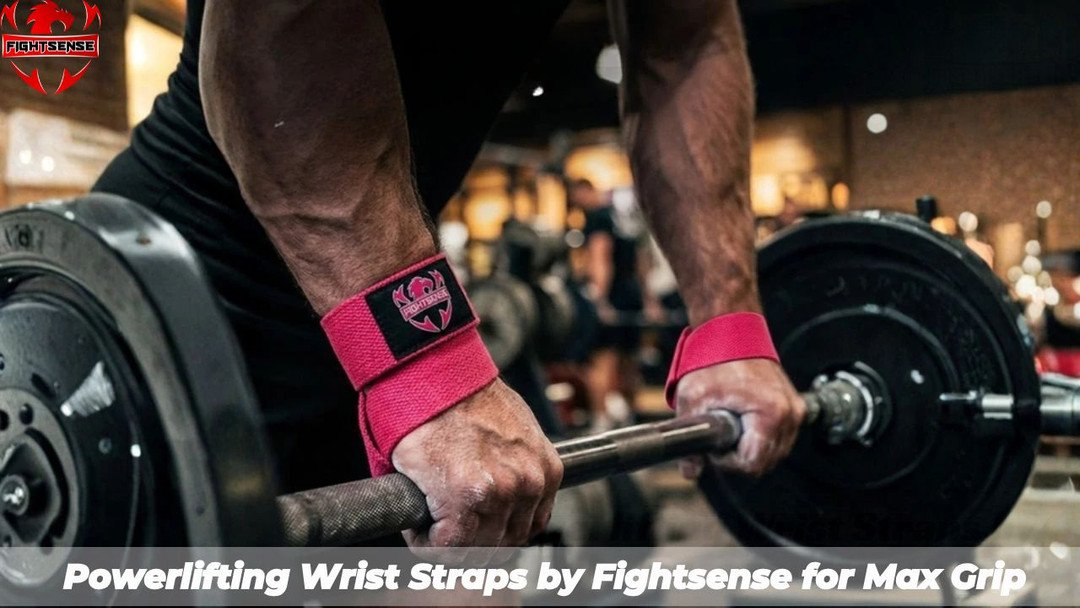
Powerlifting Wrist Straps by Fightsense for Max Grip
Powerlifting Wrist Straps—what really happens when the weight gets heavy on bench or overhead press? It’s often not strength failing, but wrist stability breaking down under load. These straps don’t add strength; they improve support, alignment, and control so force transfers better during heavy lifts. In this guide, we’ll see how they work and why lifters use gear like Fightsense in intense training.
Keynotes:
- Engineered for lifters who value consistent wrist stability during heavy pressing movements
- Supports progressive overload by maintaining reliable joint alignment under increasing training loads
- Enhances control and comfort during bench press, overhead press, and other compound lifts
- Delivers steady performance without restricting natural movement or lifting mechanics
- Suitable for all training environments, from beginner setups to advanced strength programs
What are wrist straps for powerlifting?
Powerlifting Wrist Straps are supporting wraps used to stabilize the wrist joint when lifting weights. They wrap over the wrist and provide external support to help prevent it from bending back too much during press movements.
These aren’t like the lifting straps used for deadlifts or rows and aren’t intended to develop your grip strength. They don't . They enhance joint fit and stability .
In genuine training situations, especially when you push hard, the wrist tends to want to “fold back” under the pressure. That little collapse changes how the force goes through the arm. Some energy is lost instead of pushing straight into the bar due to improper alignment.
Wrist bands help prevent such breakdown by reinforcing a stronger, more stable wrist position.
Why Wrist Stability Breaks First in Heavy Lifts?
Here’s something most beginners don’t know: Your wrists aren’t built to take a lot of heavy compressive loading for a long time.
The force in the bench press and overhead press travels from the bar → to the wrist → to the forearm and shoulder chain. If the wrist fails, the whole chain is less efficient.
A popular example in the actual world:
When you do a big set of bench presses close to your max your chest and triceps may have some gas left in the tank but your wrists start to shake or flex. That's often the first clue your structural support is failing.
It’s not a matter of strength. It’s a matter of stability.
That’s where Powerlifting Wrist Straps come in as a training support equipment.
Key Benefits of Powerlifting Wrist Straps:
1. Improved Wrist Alignment When Loaded
The main advantage is improved positioning. Keeping the wrist more neutral provides for greater transfer of force through the bar.
2. More Confidence in Training
When your wrist is stabilized, your brain quits "protecting" the movement. This frequently translates to higher bar speed and cleaner reps.
3. Enhanced session-to-session consistency
The stable joints provide for more repeatable performance, especially in high volume training phases.
4. Improved activation of target muscles
You don't have to worry about wrist discomfort and instead you can be thinking about chest, shoulders or triceps engagement."
When You Really Need Wrist Support
Not every lifter requires wrist restraints all the time. But there are some good hints that they may work.
- Your wrists are bent backwards in the benchpress
- You experience more pain in your wrists than weariness in your muscles
- Heavy overhead press seems off for some reason
- Your form only breaks down at bigger weights.
- You don’t progress weight because of wrist pain
If these ring a bell, it is not a method failure, it is often a constraint of stability.
Wrist Straps vs Lifting Straps:
This is one of the most misunderstood topics in gym accessories.
Wrist Straps
- Support wrist joint
- Used for pressing movements
- Improve stability and alignment
- Bench press, overhead press, front squat
Lifting Straps
- Improve grip strength
- Used for pulling movements
- Reduce grip fatigue
- Deadlifts, rows, shrugs
Basic Rule:
If the bar is pushing into you → wrist straps help
If you are pulling the bar → lifting straps help
Understanding this prevents misuse and improves training results.
How to Choose the Right Wrist Straps?
Not all straps are equal. Poor-quality wraps can actually reduce performance instead of improving it.
Material Quality
Look for durable, slightly rigid fabric that holds structure under pressure. If it’s too soft, it won’t provide support.
Proper Length
- Short wraps → lighter support, quick use
- Long wraps → heavier support, more restriction
Powerlifters usually prefer longer wraps for maximal lifts.
Secure Closure System
Velcro or hook-and-loop systems should stay tight throughout the set without slipping.
Comfort vs Support Balance
Too stiff = uncomfortable
Too soft = useless
The best option sits in the middle.
This is where brands like Fightsense focus on building gear that balances comfort with real lifting stability.
Why quality is more important than you think?
Low-quality wrist support generally loses tension and support within weeks as it stretches out. This creates inconsistent performance and dissatisfaction.
Best Quality gear will not change shape with repeated severe loads.
That's one of the reasons why a lot of lifters finally choose Fightsense when they start to train hard. Not just a matter of comfort, but also of constant assistance in the strong pressing cycles.
Real Training Insight: How Lifters Really Use Them
In most rigorous strength programs wrist restraints are not used from the first warm-up set.
The common strategy is:
- Warm-up sets – no straps
- Moderate working sets → utilize optional
- Heavy top sets = Straps recommended
This way, the normal development of wrist strength is maintained, but the joints are still protected at the highest intensity.
Do Wrist Straps Weaken Your Wrists?
No—if used correctly.
This is a myth.
Your wrist strength comes from overall training, not from avoiding support tools. The key is balance:
- Use straps for heavy sets
- Train without straps for volume work
- Strengthen stabilizers naturally
When used correctly, Powerlifting Wrist Straps support performance without replacing adaptation.