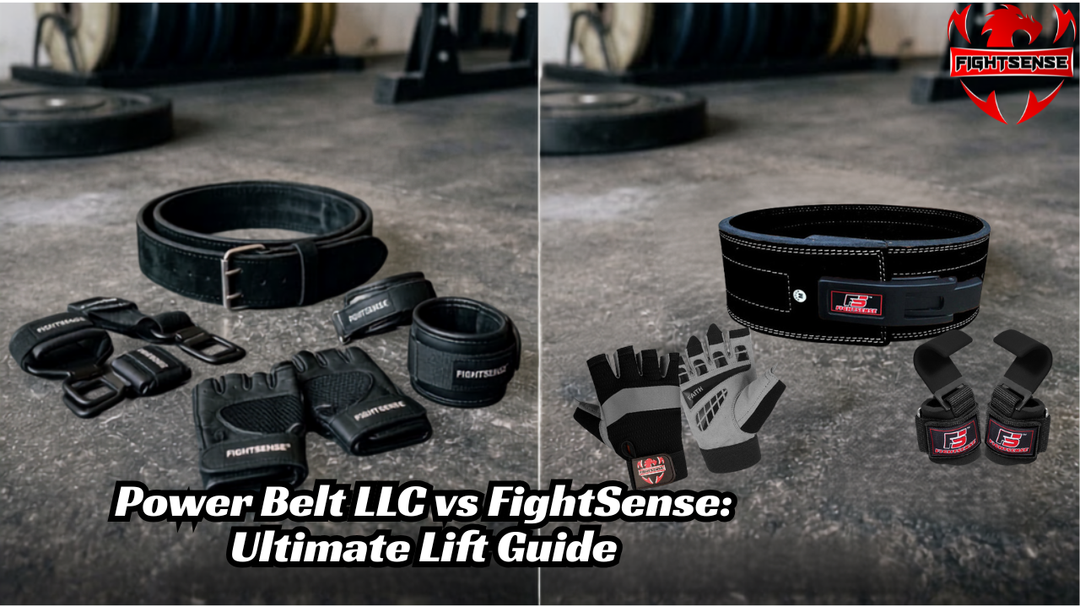
Power Belt LLC vs FightSense: Ultimate Lift Guide
When stepping up to a heavy barbell squat or deadlift, your spine demands absolute core support. Intra-abdominal pressure and lumbar stabilization depend heavily on the material density and locking efficiency of your lifting gear.
As lifters search for reliable waist support, Power Belt LLC and FightSense often emerge as top considerations. Choosing between these options comes down to analyzing leather grain quality, buckle engineering, and long-term durability under heavy loads.
In this guide, we break down the key differences so you can select the right belt to crush your personal records safely.
Understanding the Mechanics of Powerlifting Belts
Before comparing brands, it is critical to understand how a powerlifting belt actually aids human performance. A common misconception among beginner lifters is that a waist belt acts like a spinal brace, passively supporting the lower back like a medical band. In reality, a heavy-duty belt works as a rigid wall for your abdominal muscles to push against.
When you perform the Valsalva Maneuver—inhaling deeply into your diaphragm and contracting your abdominal wall—the air pressure inside your thoracic cavity increases dramatically. A rigid, uniform 4-inch leather belt restricts outward abdominal expansion. This restriction amplifies internal pressure, creating a pneumatic cushion that locks the lumbar spine in a neutral position and prevents spinal flexion under heavy loads.
Commercial Power Belts vs FightSense: Comprehensive Comparison
To understand how these two options perform under commercial gym stress and heavy powerlifting demands, review the side-by-side technical breakdown below:
|
Technical Feature |
Commercial Power Belts |
FightSense Weightlifting Belt |
|
Material |
Commercial / Synthetic Leather |
|
|
Thickness |
10mm Standard |
10mm & 13mm Competition-Grade |
|
Width |
4-Inch Standard |
4-Inch Uniform 360° Support |
|
Closure |
Steel Prongs / Basic Lever |
Stainless Steel Lever & Double-Prong |
|
Stitching |
Standard Double-Row |
Multi-Row Reinforced Nylon |
|
Edge Finish |
Basic Painted Edges |
Rounded Anti-Chafe Edges |
|
Break-In |
Fast (Softer Build) |
Moderate (Durable Natural Leather) |
|
Ecosystem |
Standalone Belts |
Full Gear (Hooks, Straps, Wraps) |
|
Best For |
Casual Fitness |
Heavy Powerlifters & PR Hunters |
In-Depth Feature Analysis
Leather Density & Tensile Strength
The core material of any powerlifting belt determines its longevity and structural resistance to stretching.
- Power Belt LLC: Typically utilizes standard commercial leather formulations or bonded leather blends. While comfortable out of the box and suitable for general resistance training, softer commercial leather can gradually stretch or bow over extended periods of exposure to heavy sweat and loads exceeding 400 lbs.
- FightSense: Engineered using dense, solid-grain genuine leather designed specifically to absorb immense shear stress. Available in both 10mm (for a balance of mobility and stiffness) and 13mm (for maximum competition rigidity), FightSense belts maintain structural shape year after year without warping or stretching under load.
Lever Mechanisms vs. Stainless Steel Prongs
Your belt's locking closure dictates how efficiently and securely you can lock in maximum abdominal tension before stepping onto the platform.
- Power Belt LLC: Employs basic alloy steel prongs or entry-level lever plates. While functional for general workouts, lower-grade lever mechanisms can develop slop or feel stiff to operate after continuous high-tension cycles.
- FightSense: Utilizes heavy-duty stainless steel quick-release lever mechanisms alongside reinforced double-prong options. The FightSense quick-release lever lets you engage maximum abdominal compression with a single push and release tension instantly between heavy sets without struggling.
Edge Geometry, Contour, and Stitching Precision
A belt's edge finish determines whether it acts as an extension of your torso or causes painful bruising along the ribs and pelvic crest.
- Power Belt LLC: Features standard factory edge cuts. Under deep hip hinge movements like deficit deadlifts or bottom-position squats, sharp or unburnished edges can press aggressively into the hips.
- FightSense: Built with hand-burnished, rounded edges that eliminate pinching. Every stress seam is locked in with multi-row reinforced nylon threading, ensuring the leather layers never delaminate under heavy strain.
The Complete FightSense Strength Ecosystem
Achieving peak performance on compound lifts requires more than just lumbar support. Total kinetic chain stability involves securing every major contact point between your body and the barbell.
One major structural advantage of choosing FightSense over standalone suppliers like Power Belt LLC is the ability to build a fully unified strength training setup:
- FightSense Weightlifting Hooks & Straps: Eliminates grip strength as a bottleneck during heavy barbell shrugs, Romanian deadlifts, and heavy rows, transferring full tension directly into your target muscle groups.
- FightSense Wrist Wraps & Ankle Supports: Provides stiff, adjustable wrist joint stabilization during heavy bench presses and shoulder presses, while stabilizing lower limbs on heavy leg days.
Step-by-Step Guide: How to Properly Brace with a Power Belt
Wearing a belt correctly requires more than just cinching it tightly around your waist. Follow this step-by-step procedure to maximize intra-abdominal pressure:
- Placement: Position the 4-inch leather belt directly over your navel, covering the midpoint of your abdominal wall. Adjust higher or lower depending on whether you are squatting or deadlifting.
- Sizing Adjustment: Tighten the belt so that you can comfortably fit two fingers flat between your stomach and the inner lining while relaxed. Over-tightening restricts diaphragmatic movement.
- Diaphragmatic Inhale: Draw a massive breath deep into your stomach—expanding your belly outward 360 degrees—rather than pulling air into your chest and shoulders.
- Abdominal Engagement: Flex your abs hard against the rigid inner wall of the belt as if preparing to take an impact. Maintain this external force throughout the entire concentric and eccentric phase of the rep.
- Set Reset: Release the air lockout at the top of the repetition, execute a fresh diaphragmatic inhale, re-brace against the belt wall, and initiate the next rep.
Expert Tips for Leather Belt Care and Maintenance
- Avoid Trapping Moisture: Never leave your sweat-soaked leather belt sealed inside a dark gym bag overnight. Hang it up in a well-ventilated space to dry naturally.
- Condition Periodically: Apply a thin layer of natural leather conditioner or mink oil to the exterior genuine leather twice a year to keep the grain supple and prevent surface cracking.
- Inspect Hardware: Periodically check the screws on your lever buckle to ensure they remain tightly fastened to the leather backing plate.
Common Powerlifting Belt Mistakes to Avoid
|
Common Mistake |
Quick Solution |
|
Placing Belt Too Low |
Move it higher over the navel and core wall instead of resting on hip bones. |
|
Over-Tightening Lever |
Keep 2-finger space so your abs can expand 360° into the belt wall. |
|
Shallow Chest Inhales |
Breathe deep into your diaphragm/belly, pushing air outward against the leather. |
|
Warm-Up Set Overuse |
Go unbelted under 60–70% 1RM to preserve natural core stability. |
Shop Now !
FAQs:
How does a quick-release lever compare to a traditional prong belt?
A lever belt allows a lifter to lock into maximum pre-set tightness with a simple push and release instantly between sets. A prong belt uses a traditional buckle pin, offering easy tightness adjustments between different movements.
Does wearing a powerlifting belt weaken core muscles?
No. Studies show that bracing against a rigid belt actually increases electromyographic (EMG) muscle activation in the rectus abdominis and obliques under heavy loads.
How long does it take to break in a dense leather power belt?
A solid genuine leather belt typically breaks in after 2 to 4 weeks of consistent use as body heat and movement mold the dense leather fibers to the lifter's waist shape.
Why should a power belt be combined with FightSense weightlifting hooks?
Pairing a power belt with FightSense weightlifting hooks eliminates grip fatigue on heavy pulls, allowing the posterior chain and back muscles to take full load without the grip failing prematurely.
How should a leather power belt be stored to maintain its shape?
Store the belt flat or loosely coiled in a dry, ventilated area. Avoid folding or creasing the leather sharply, as this can damage internal fibers..
Final Verdict:
While Power Belt LLC offers functional waist support for general fitness enthusiasts, FightSense emerges as the superior choice for lifters seeking long-term durability, competition-grade leather density, and heavy-duty lever engineering.
By offering a complete strength training ecosystem—including heavy-duty weightlifting hooks, wrist wraps, and 10mm/13mm leather belts—FightSense delivers the ultimate performance setup for serious lifters ready to smash their PRs.
Disclaimer:
This blog serves just for informative purposes. See a fitness professional always before switching your program or workout gear.