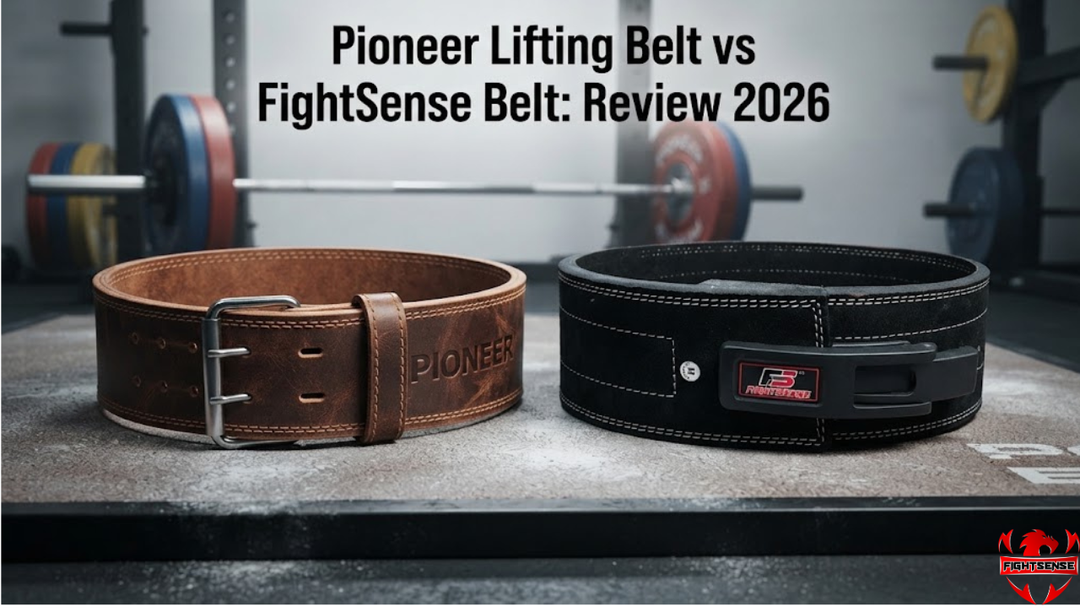
Pioneer Lifting Belt vs FightSense Belt: Review 2026
Choosing the right weightlifting belt can mean the difference between setting a new personal record and suffering a severe lower back injury. If you carry heavy weight on your back during squats or pull massive loads off the platform during deadlifts, intra-abdominal pressure is your main line of defense. The Pioneer lifting belt has earned a solid reputation among powerlifters, but newer options like the FightSense lever belt are changing the conversation around value, performance, and heavy-duty support.
In this comprehensive 2026 comparison review, we break down leather quality, buckle mechanics, lumbar stabilization, pricing, and overall longevity. By the end of this guide, you will know exactly which belt deserves a permanent spot in your gym bag.
Understanding Belt Mechanics: Why Your Choice Matters
A weightlifting belt does not support your back by acting as a passive brace. Instead, it gives your abdominal muscles a rigid wall to push against when you brace. This intra-abdominal pressure stabilizes your spinal column under extreme axial loading.
Whether you choose a classic prong closure or a quick-release lever mechanism, the thickness, width, and material strength determine how effectively that force is contained. Both 10mm and 13mm sole leather options offer distinct levels of stiffness, depending on whether you are an everyday lifter or a competitive powerlifter.
Quick Comparison: Pioneer vs. FightSense
|
Feature |
Pioneer Lifting Belt |
FightSense Weightlifting Belt |
|
Primary Closure Type |
Pioneer Cut (Prong) / Lever |
Heavy-Duty Steel Lever System |
|
Thickness Options |
10mm & 13mm |
10mm & 13mm |
|
Material Construction |
Genuine Vegetable-Tanned Leather |
Premium Suede & Cowhide Leather |
|
Width |
4-inch uniform width |
4-inch uniform width |
|
Break-In Period |
Moderate to Long |
Short to Moderate |
|
Ideal For |
Customization enthusiasts, Powerlifters |
Powerlifters, Strongmen, Value-Seekers |
Pioneer Lifting Belt Overview
Pioneer (General Leathercraft) is legendary within the strength sports community. Their standout innovation is the patented Pioneer Cut, which uses offset holes spaced 1/2-inch apart rather than the standard 1-inch spacing found on traditional prong belts.
Key Features of Pioneer Belts
- Pioneer Cut Technology: Allows micro-adjustments for a tighter, customized fit between training sessions.
- Premium Leather: Sourced from high-grade vegetable-tanned hides that resist stretching over time.
- Handcrafted Aesthetic: Extensive customization options ranging from embroidered logos to specialized suede linings.
FightSense Belt Overview
FightSense has rapidly established itself as a go-to combat sports and strength conditioning brand. Known for heavy-duty powerlifting gear, FightSense lever belts focus on structural rigidity, anatomical containment, and accessibility for lifters who need maximum bracing power without inflated costs.
Key Features of FightSense Belts
- Heavy-Duty Lever System: Features a reinforced steel buckle mechanism engineered for instant clamping and quick release.
- Multi-Layer Leather Core: Constructed with dense, non-stretch leather layers wrapped in anti-slip suede to prevent movement during heavy sets.
- Anatomical Lumbar Support: Uniform 4-inch width provides consistent 360-degree abdominal wall compression for squats, bench presses, and deadlifts.
Head-to-Head Feature Analysis
1. Closure Mechanics & Adjustability
The Pioneer Cut excels if your body weight fluctuates day-to-day or if you like different tightness levels for squats versus deadlifts. FightSense, on the other hand, utilizes a traditional steel lever system. Lever belts offer an unmatched lock-in feeling: once set to your waist size, you simply flip the latch for immediate maximum tightness.
2. Material Durability & Stitching
Both brands employ heavy-duty double stitching along the perimeter to prevent layer delamination. FightSense uses reinforced inner suede to absorb moisture and maintain grip against your shirt, while Pioneer utilizes thick sole leather that softens over months of heavy use.
3. Price to Performance Ratio
Pioneer belts carry a premium price tag due to custom crafting and brand reputation. FightSense delivers comparable structural rigidity and lever security at a significantly lower entry point, making high-level strength support accessible to everyday gym-goers and serious lifters alike.
Pros & Cons Comparison
Pioneer Lifting Belt
- Pros: Micro-adjustability with half-inch hole spacing; handcrafted construction; long-term durability.
- Cons: Higher price point; long shipping times for custom builds; stiff break-in period.
FightSense Belt
- Pros: Quick-release lever mechanism; excellent value for money; heavy-duty back support; fast shipping.
- Cons: Requires a screwdriver to adjust buckle placement for waist size changes.
Common Mistakes When Buying Weightlifting Belts
- Measuring Sizing Incorrectly: Never use your pant size to buy a lifting belt. Always measure around your belly button with a flexible tape measure while pulling slightly tight.
- Choosing 13mm Too Early: While 13mm leather offers maximum stiffness, it can cut into your ribs or hips during deadlifts if you have a shorter torso. A 10mm option is often better for general strength training.
- Expecting the Belt to Fix Poor Form: A belt enhances bracing technique; it does not replace proper spinal alignment and core engagement.
Expert Tips for Maximizing Belt Support
- Brace Into the Belt: Inhale deeply into your stomach (diaphragmatic breathing), pushing your abdominals outward against the inner surface of the leather before initiating your lift.
- Positioning Varies by Lift: Wear the lifting belt slightly higher on your torso for deadlifts to prevent rib pinch, and lower for deep squats.
- Air Out Your Gear: Store your leather belt in an open space after intense workouts to prevent sweat moisture from breaking down the suede lining.
Shop Now!
FAQs:
Is a 10mm or 13mm belt better for powerlifting?
A 10mm belt provides plenty of support for 90% of lifters while offering flexibility and a shorter break-in period. A 13mm belt is ideal for competitive heavyweights who need maximum rigidity under extreme loads.
Can a lever belt be used for functional fitness or CrossFit?
Lever belts are best suited for static strength movements like squats, deadlifts, and overhead presses. For high-rep metabolic conditioning, a flexible nylon belt is generally more comfortable.
How should a FightSense lever belt be maintained?
Keep the lever mechanism free of debris, occasionally check the screw tightness with a screwdriver, and wipe down the inner suede with a damp cloth after sweaty sessions.
Is the Pioneer Cut better than a standard lever system?
The Pioneer Cut offers faster micro-adjustability between sets. However, a steel lever system like FightSense provides a faster snap-lock closure and superior lock-in tightness.
Why is uniform 4-inch width recommended over tapered belts?
A uniform 4-inch width ensures your abdominal wall has the exact same surface area to push against in the front as your lumbar spine has in the back. Tapered belts lose bracing power at the navel.
Do FightSense belts conform to powerlifting standards?
Yes, 4-inch-wide belts with 10mm or 13mm thickness conform to standard powerlifting federation dimensional guidelines for squats, bench presses, and deadlifts.
How should a FightSense lever belt be maintained?
Keep the lever mechanism free of debris, occasionally check the screw tightness with a screwdriver, and wipe down the inner suede with a damp cloth after sweaty sessions.
How long does a genuine leather lifting belt last?
With proper care, high-quality leather belts from reputable brands last for many years of continuous heavy training.
Conclusion:
Choosing between the Pioneer lifting belt and the FightSense belt ultimately depends on your training priorities, budget, and preference for closure mechanisms:
- Pioneer Lifting Belt is ideal for lifters who prioritize micro-adjustability between sets, custom aesthetic options, and handcrafted traditional construction.
- FightSense Belt is perfect for athletes seeking maximum bracing rigidity, a fast-locking steel lever mechanism, and high-density leather durability at an accessible price point.
Both belts offer exceptional intra-abdominal pressure and lumbar stabilization to help you lift heavy safely. Assess whether you value micro-fit flexibility or instant lever-locking power, and choose the belt that best aligns with your strength training goals in 2026.
Disclaimer:
This review is for informational purposes only. Fitness gear preferences vary based on individual body mechanics and training needs. Always consult a certified strength coach or healthcare professional before attempting heavy lifting.