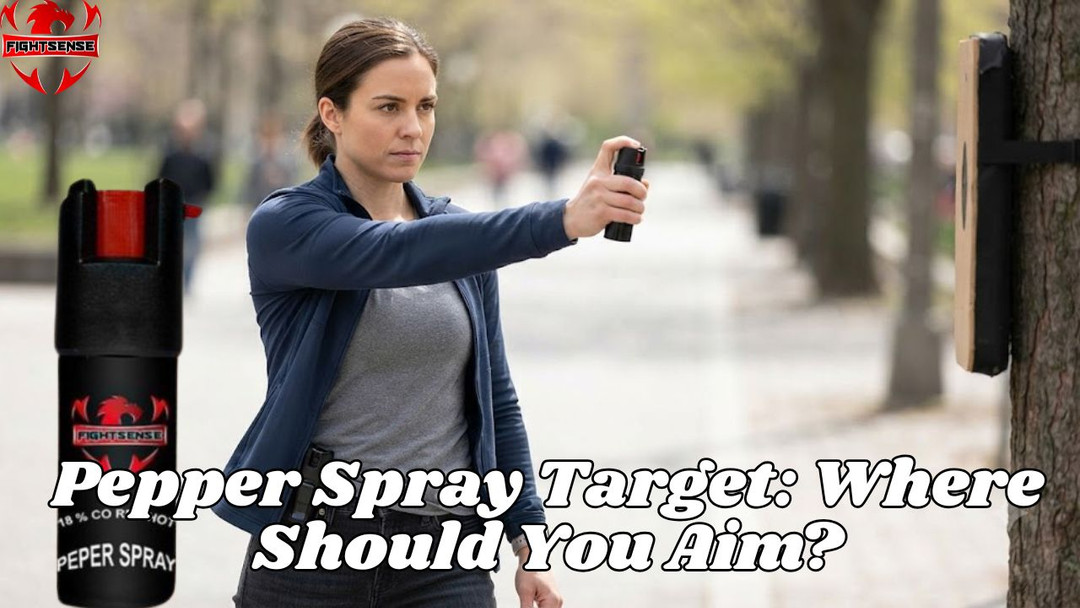
Pepper Spray Target: Where Should You Aim?
Look, no one ever expects a threatening situation to happen to them, but when it does, every single second counts. Carrying a reliable self-defense tool is a great first step, but simply having it on you isn't enough if you don't know the right pepper spray target. In a high-stress moment, panic kicks in, and a split-second hesitation or a poorly placed shot can completely change the outcome. Knowing your exact pepper spray target ensures maximum incapacitation of an attacker while giving you the upper hand and a clear window to escape.
In this comprehensive guide, you will learn the best target areas for pepper spray, how to maximize your accuracy, ideal spraying distances, and essential safety tips to ensure you are fully prepared.
Keynotes
- Primary Target: Aim for the face (eyes, nose, and mouth) to instantly disrupt vision, breathing, and coordination.
- Proper Technique: Maintain a safe distance, extend your arm fully, and use short, controlled bursts instead of continuous spraying.
- Wind & Environment: Account for wind direction to prevent dangerous blowback, utilizing pepper gel or stream formulas in windy conditions.
- Areas to Avoid: Never target the chest, arms, legs, or heavy clothing, as these fail to incapacitate an attacker.
- Practice & Safety: Build muscle memory and confidence using inert training sprays while keeping your live canister easily accessible.
- Ultimate Objective: Use pepper spray strictly to create a temporary window to escape to a safe, populated location.
What Is the Best Pepper Spray Target?
Understanding the Primary Target Area
The primary target when using self-defense spray is the facial region of an attacker. Specifically, the eyes, nose, and mouth form the critical zone that yields immediate incapacitating effects. Hitting this target disrupts an aggressor's vision, breathing, and coordination.
Why Accuracy Matters More Than Speed
While it is tempting to react quickly out of panic, rushing a spray often leads to missed shots. Precision is far more valuable than speed because a well-placed burst to the face instantly neutralizes the threat, whereas a hasty spray that misses leaves you vulnerable.
How Proper Targeting Improves Personal Safety
When you aim correctly, the active ingredients (such as OC gas) cause immediate involuntary closure of the eyes, intense burning, coughing, and temporary disorientation. This buys you the precious seconds needed to disengage and escape to a secure location.
Why Every Detail of the Face Is the Primary Target
Eyes
The eyes are the most vital target. Pepper spray causes immediate inflammation of the ocular membranes, resulting in severe burning, tearing, and involuntary eye closure (temporary blindness). This instantly strips the attacker of their sight.
Nose
Inhaling pepper spray particles through the nose triggers severe irritation of the mucous membranes. This leads to uncontrollable coughing, shortness of breath, and a feeling of suffocation, breaking the attacker's momentum.
Mouth
A direct hit around the mouth causes severe burning on the lips and tongue. Inhaling the mist orally also triggers heavy coughing and gagging, making it extremely difficult for the assailant to speak, coordinate, or continue their attack.
Why Targeting the Face Creates Time to Escape
Combining these three facial elements creates an overwhelming sensory overload. An attacker dealing with temporary blindness, respiratory distress, and intense pain will be entirely focused on recovery, allowing you to evacuate the area safely.
How to Aim Pepper Spray Correctly
Hold the Canister Properly
Grip the canister firmly with your dominant hand, wrapping your fingers securely around the body. Place your thumb or index finger (depending on the safety mechanism) on the actuator button. Avoid holding it like a traditional aerosol can; instead, keep a firm, defensive grip.
Maintain a Safe Distance
Keep the attacker at an optimal distance—usually between 6 to 18 feet, depending on your specific spray type. This keeps you out of arm's reach while ensuring the spray reaches its mark with maximum velocity.
Aim at Face Level
Extend your arm fully toward the attacker's face. If you are using a stream or gel pattern, aim directly for the eyes and forehead area, allowing gravity and momentum to pull the product down across the nose and mouth.
Use Short Controlled Bursts
Instead of holding down the trigger continuously, deliver 1-to-2-second bursts. This conserves your supply, allows you to adjust your aim if the target moves, and ensures maximum pressure output with each spray.
Move to Safety Immediately
The moment the spray makes contact, do not stay to evaluate the damage. Immediately pivot, move in the opposite direction of the attacker, and head toward a populated or well-lit area to call for help.
Ideal Pepper Spray Distance
The effectiveness of your defense relies heavily on choosing the right spray pattern for your environment.
Pepper Spray Range & Comparison Table
|
Spray Type |
Typical Range |
Best Use |
|
Stream |
10–18 ft |
Outdoor use (resists wind better than mists) |
|
Gel |
12–18 ft |
Windy conditions & indoor spaces (sticks to the target) |
|
Cone |
6–10 ft |
Close range (creates a wide defensive barrier) |
|
Fog |
8–12 ft |
Multiple threats (creates a wide cloud of coverage) |
How Wind Affects Pepper Spray Accuracy
Headwind
A headwind blows directly from the target back toward you. If you spray into a headwind, the mist or spray can easily blow backward and incapacitate you instead of the attacker. Always factor in wind direction before deploying your defense.
Crosswind
A crosswind blows from the side. When facing a crosswind, you must aim slightly upwind of your target so that the wind carries the spray particles directly onto the attacker's face.
Indoor vs. Outdoor Conditions
Indoors, wind is not a factor, making stream or gel sprays ideal because they do not contaminate the surrounding air heavily. Outdoors, wind speed and direction dictate whether a stream, gel, or heavy fogger is the safest choice.
Tips to Reduce Blowback
- Check wind direction before stepping outside or keeping your canister ready.
- Switch to a pepper gel formula in high-wind scenarios, as gel is much heavier and less susceptible to wind drift.
- If blowback occurs, shield your face and move away immediately.
Pepper Spray Target Areas to Avoid
Chest
Spraying the chest is largely ineffective because skin is less sensitive there, and clothing can absorb the chemicals, preventing them from reaching the skin or mucous membranes.
Arms
An attacker's arms may move wildly, but aiming for them wastes valuable spray. It does not impair vision or breathing, allowing the assailant to continue forward momentum.
Legs
Legs are too far away from the respiratory and ocular systems. Spraying the legs will do nothing to stop an aggressor from grabbing or striking you.
Heavy Clothing
If an attacker is wearing a heavy jacket, hoodie, or scarf, spraying those garments will block the formula from reaching the skin, drastically reducing its effectiveness.
Why These Areas Are Less Effective
Pepper spray relies on contacting mucous membranes and sensitive facial tissue. Hitting non-facial areas wastes your limited supply and gives the assailant an opportunity to close the distance.
Practice Without Using Live Spray
Use an Inert Training Spray
Purchase an inert training canister (water or dummy spray with the same deployment mechanism). This lets you practice your draw, grip, and spray accuracy safely without the risk of accidental exposure.
Practice Drawing the Canister
Muscle memory is your best friend in an emergency. Practice pulling your canister out of your pocket, purse, or holster smoothly and efficiently in under two seconds.
Improve Your Grip and Aim
Stand a few feet away from a safe target (like a tree or large paper target) and practice snapping your arm out, locking your wrist, and pointing accurately at head level.
Build Confidence Through Repetition
Regularly drilling these movements ensures that when adrenaline spikes, your body reacts instinctively without hesitation.
Common Pepper Spray Target Mistakes
- Spraying from too far away: The spray loses velocity and disperses before reaching the face.
- Standing too close: Allows the attacker to lunge, grab, or physically overpower you before you can deploy your defense.
- Ignoring wind direction: Results in painful chemical blowback onto yourself.
- Panicking: Losing composure leads to wild, uncoordinated spraying that misses the target entirely.
- Failing to move to safety after spraying: Wasting crucial seconds watching the attacker instead of prioritizing your own escape.
Tips to Improve Pepper Spray Accuracy
- Stay calm under pressure through regular mental preparation and tactical drills.
- Keep the canister accessible in an easily reachable pocket, clip, or keychain rather than buried at the bottom of a bag.
- Practice regularly using inert training sprays to refine your hand-eye coordination.
- Be aware of your surroundings to spot potential threats before they get close enough to ambush you.
- Check expiration dates routinely; pepper spray canisters typically lose pressure and potency after 2 to 4 years.
- Learn your spray pattern inside and out so you know its exact range and spread.
Choosing the Right Pepper Spray for Reliable Performance
Selecting the right self-defense tool means balancing accessibility with stopping power. Whether you prefer a long-range stream spray for outdoor protection or a sticky gel spray designed to resist wind and indoor contamination, having the right gear matters. For everyday carry, compact keychain models offer discreet, ready-to-use safety that fits seamlessly into your daily routine.
When evaluating your personal safety needs, trusted brands like FightSense pepper spray options provide reliable performance, ergonomic grips, and dependable delivery systems designed to help you stay prepared wherever you go.
Legal Considerations
Before carrying pepper spray, it’s crucial to understand the legal framework in your area. While pepper spray is legal in many places, laws vary by state and country, with some places having restrictions on:
- Canister Size: Some regions have a limit on the size of the pepper spray container you can carry.
- Location: Certain locations, such as government buildings, schools, or airports, may prohibit pepper spray, even for self-defense.
- Usage: Misusing pepper spray, such as spraying someone without provocation, can result in criminal charges.
Always check your local regulations to ensure that you comply with the law.
Conclusion
- Aim accurately at the facial region (eyes, nose, and mouth).
- Keep the proper distance based on your specific spray type.
- Consider wind conditions to avoid hazardous blowback.
- Practice safely using inert trainers to build muscle memory.
- Use pepper spray only to create an opportunity to escape and get to safety.
Looking for dependable personal protection? Explore the FightSense Pepper Spray collection and choose a compact, reliable option designed to help you stay prepared wherever you go.
FAQs
What is the best pepper spray target?
The best target is the facial region, specifically focusing on the eyes, nose, and mouth to disrupt vision, breathing, and coordination.
Where should you aim pepper spray?
Aim directly at the attacker's face (eyes and forehead area for stream/gel formulas) to ensure maximum chemical contact with sensitive mucous membranes.
How far should pepper spray be used?
Most pepper sprays are designed to be effective between 6 to 18 feet, depending on whether you are using a cone, fog, stream, or gel model.
Does wind affect pepper spray performance?
Yes. Headwinds can blow the spray back onto you, while crosswinds can push the mist off-target, making gel or stream sprays better choices in windy weather.
Can pepper spray work through clothing?
No. If the spray hits heavy clothing, it is blocked from reaching the skin or face, which is why aiming strictly for the facial area is vital.
Is it safe to practice with pepper spray?
Live pepper spray should never be used for practice due to the risk of accidental exposure. Instead, use inert training sprays filled with water or safe dye.
What happens if pepper spray misses the face?
If it misses the face and hits clothing or limbs, the attacker will experience little to no incapacitating effect, leaving you vulnerable to an ongoing threat.
Which pepper spray type offers the best accuracy?
Stream and gel pepper sprays offer the highest level of accuracy because they travel in a targeted line and resist wind dispersion much better than foggers or mists.
Disclaimer: This content is for informational purposes only and does not constitute legal or security advice. Users are responsible for complying with local self-defense laws. The author assumes no liability for the use, misuse, or application of the information provided.