Neck Strength Workout: Best Exercises for Max Power
A neck strength workout is the ultimate secret to elite athleticism and pain-free living, yet it’s the most neglected part of most training routines. We obsess over bench presses and leg day, but what about the foundation that supports your head?
Whether you're battling 'tech neck' from a desk job or looking to build impact resistance for combat sports, a structured neck strength workout is the missing link in your fitness journey. Let’s dive into how you can build bull-like power and bulletproof your posture—safely and effectively.
Key Takeaways:
- Foundation of Power: Neck training isn't just about looks; it's a vital "shock absorber" for your spine and overall athletic stability.
- The "Tech Neck" Fix: Consistent resistance work is the most effective way to reverse forward-head posture caused by hours at a desk.
- Safety First, Always: Proper form is non-negotiable. Start light, move slowly, and prioritize controlled muscle contraction over heavy weight.
- The Harness Advantage: Using a Fightsense head harness provides the targeted, progressive resistance needed to build real muscle density safely.
- Consistency Wins: You don't need daily grind; just 2–3 focused sessions a week are enough to see noticeable improvements in 4–6 weeks.
Why Should You Care About Your Neck?
Most people think of the neck as just a connector between the head and shoulders. In reality, it’s a complex ecosystem of muscles, ligaments, and tendons that support a 10-to-12-pound weight (your head) all day long. When these muscles are weak, your posture suffers. Your shoulders slump forward, your chin juts out, and your spine takes on the brunt of the load.
By training the cervical spine, you aren't just getting a thicker look; you’re creating a "shock absorber" for your body. If you’re using equipment like a Fightsense neck harness, you’re providing the controlled, progressive resistance needed to stimulate actual growth and endurance in those stubborn, small muscle groups.
The Anatomy of a Powerful Neck
Before we get to the exercises, let’s keep it simple. Your neck needs to move in three directions to be truly strong:
- Flexion: Moving the chin toward the chest.
- Extension: Moving the head backward (looking at the ceiling).
- Lateral Flexion: Tilting the head toward the shoulders.
If you only train one side, you’ll look lopsided and risk muscle imbalances. A balanced neck strength workout hits all these angles.
Your Essential Neck Strength Routine
We recommend starting slow. Your neck is sensitive, and there’s no room for "ego lifting" here.
1. The Head Harness Routine (The Pro Choice)
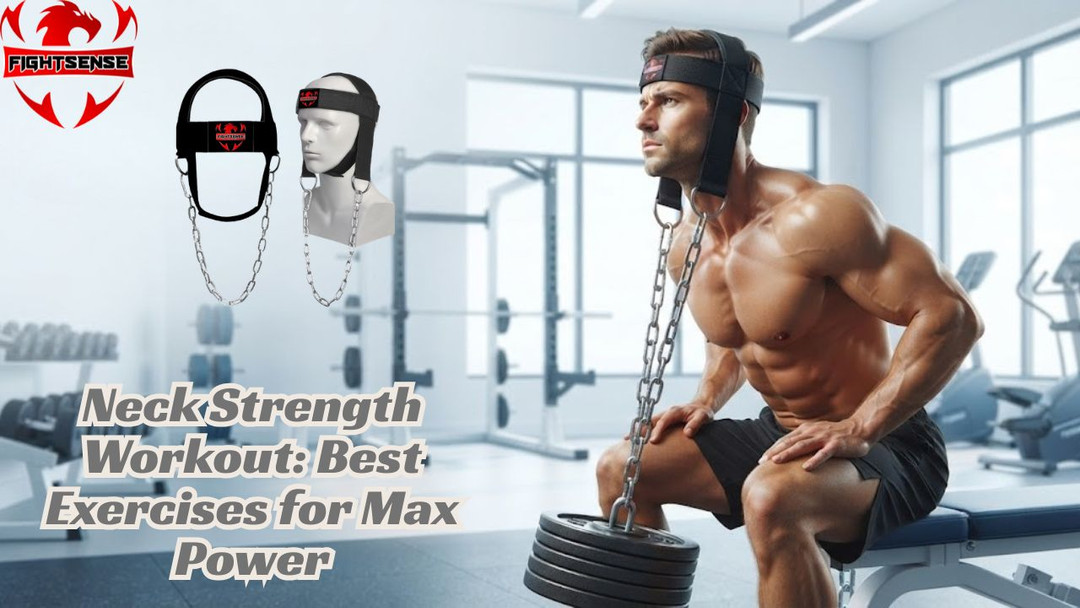
The head harness is the gold standard for a reason. It allows you to load weight directly where it counts. Using a high-quality, padded piece of gear—like the ones engineered by Fightsense—is a game changer. It ensures the weight sits securely without digging into your skin.
Step-by-Step Guide to Using a Neck Harness:
- Step 1: Fit the harness snugly on your head. Ensure the straps are adjusted so the weight chain hangs right in the center.
- Step 2: Attach your desired weight (start with 2.5–5 lbs).
- Step 3: Lean forward with your feet shoulder-width apart and your hands resting on your knees for stability.
- Step 4: Slowly lower your head until your chin is near your chest, then use your neck muscles to lift the weight back up.
- Step 5: Keep the movement slow and controlled. Don't use your back or shoulders to "jerk" the weight up.
2. Isometric Holds
Before you add external plates, start with simple resistance from your own hands. Push your head into your palm, resisting the movement. It’s perfect for building foundational stability.
3. Plate-Loaded Extensions (The "Lying Neck Curl")
If you don't have a harness yet, lie on a bench with your head hanging off the edge. Carefully place a small plate (covered in a towel for comfort) on your forehead. Perform slow, controlled curls.
Comparison: Training Methods
|
Method |
Best For |
Gear Needed |
Difficulty |
|
Isometric Holds |
Beginners/Rehab |
None |
Low |
|
Resistance Bands |
Building Endurance |
Bands |
Medium |
|
Head Harness |
Maximum Power/Hypertrophy |
Fightsense Harness |
High |
|
Machine Work |
Controlled Isolation |
Gym Machine |
Medium |
Practical Tips for Long-Term Success
- The "Slow-Motion" Rule: Your neck muscles have a high density of slow-twitch fibers. Perform every rep with a 3-second lowering phase and a 1-second pause at the top.
- Progressive Overload: Don't jump to 25lbs on day one. Increase your volume (reps/sets) first, then add weight.
- Listen to Your Body: Your neck is connected to your central nervous system—treat it with respect. If you wake up with sharp pain, take a rest day.
Addressing the "Tech Neck" Epidemic
If you spend your 9-to-5 behind a screen, you are likely suffering from forward head posture. A solid neck strength workout will teach your body how to retract the head and align the spine. When the neck muscles are strong, they naturally pull the head back into an optimal, neutral position, instantly making you look more confident and upright.
Common Myths Busted
Is neck training dangerous?
It’s only dangerous if you’re reckless. If you use proper gear, like a Fightsense head harness that distributes weight evenly, the risk is minimal. Think of it like training your quads or chest—you wouldn't try to squat 400lbs on day one, so don't try to load too much on your neck immediately.
Will this make me look like a turtle?
Quite the opposite. A well-developed neck creates a powerful, athletic aesthetic. It frames the face and shoulders, providing that "built" look that only true athletes possess.
FAQs:
1. Does neck training help with tension headaches?
Yes, strengthening the deep cervical flexors and upper trapezius can reduce muscular tension caused by poor posture, which is a leading cause of stress-induced headaches.
2. Can neck training make my face look broader?
While the focus is on the neck muscles, building the trapezius and sternocleidomastoid muscles creates a "thick" look that connects the shoulders to the head, often creating a more powerful, tapered upper-body appearance.
3. Is it normal to feel a "clicking" sound during neck exercises?
Occasional clicking without pain is often just air bubbles in the synovial fluid of the joints. However, if there is persistent pain or grinding, stop immediately and consult a professional.
4. How much weight is too much for a beginner?
If your form breaks down or your neck starts trembling uncontrollably, the weight is too heavy. Start with bodyweight resistance or 2.5–5 lbs and focus on the time under tension rather than the load.
5. Can neck training make my face look broader?
While the focus is on the neck muscles, building the trapezius and sternocleidomastoid muscles creates a "thick" look that connects the shoulders to the head, often creating a more powerful, tapered upper-body appearance.
Conclusion:
You don't need a fancy gym membership to build a neck that commands respect. With a few basic tools, a dedicated neck strength workout plan, and a focus on perfect form, you can bulletproof your spine and enhance your physique.
Whether you're grabbing a Fightsense harness to take your training to the next level or just starting with simple bodyweight movements, remember: a strong neck is the hallmark of a serious athlete. Start today, stay consistent, and watch how your overall training performance changes when your foundation is as solid as iron.
Ready to start? Pick your starting weight, find your focus, and start building. Your future self—posture and all—will thank you.
Disclaimer:
This blog is for informational purposes only and is not a substitute for professional medical advice. Always consult a healthcare provider before starting any new exercise routine.