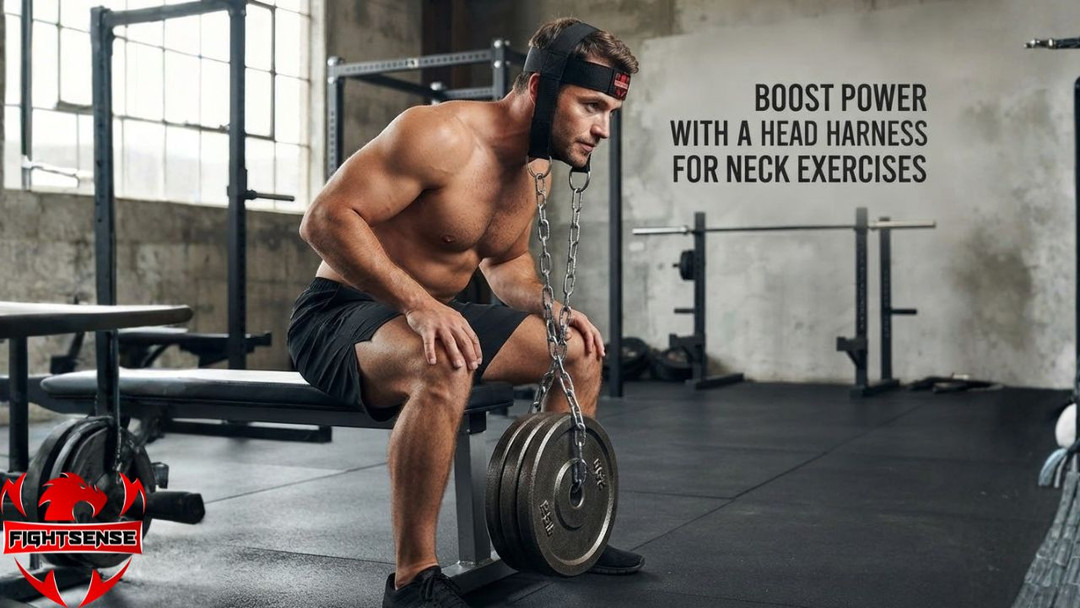
Using a Head Harness for Neck Exercises is the secret weapon most athletes ignore until it’s too late. We all have those training days where we hit the bench press hard, grind through a set of heavy deadlifts, or focus on our core. But look in the mirror—is there a missing piece to your puzzle?
Most of us spend years sculpting our physique, yet we completely overlook the one part of the body that literally holds everything else up: the neck. Whether you’re an athlete constantly dealing with high-impact forces or someone who spends 8 hours a day hunched over a laptop, your neck is likely crying out for some attention. It’s time to stop neglecting your foundation and start building the stability you’ve been missing.
Key Takeaways:
-
Impact Protection: Strengthen your neck to shield your CNS from physical shock.
-
Safety First: Use slow, controlled movements—not heavy weights—for growth.
-
Posture Fix: Targeted training is the best cure for "tech-neck" and fatigue.
-
Efficiency: 2–3 focused sessions per week are all you need.
-
Long-term Health: Building neck strength is vital for lasting spinal resilience.
Understanding the Head Harness Mechanism
Think of a head harness as a simple, no-nonsense tool: adjustable straps that cradle your head, paired with a chain to hang your weight plates. It creates a smooth, constant line of tension for your neck to push against.
Unlike using a partner’s hands, which is never consistent, a Head Harness for Neck Exercises removes the guesswork. It allows you to lock in a specific weight, track your progress, and finally apply the principle of progressive overload—the key to building real, measurable neck strength.
The Muscle Mechanics: What You’re Actually Training
It helps to know what you’re actually training. Your neck isn't just one slab of muscle; it’s a complex web of fibers,Sternocleidomastoid (SCM), the deep Trapezius, and the Splenius Capitis.
When you use a Head Harness for Neck Exercises, you aren't just training the surface; you’re hitting these specific muscles that stabilize your head and protect your cervical spine. Think of it as a complete renovation for your upper back and neck posture.
Pro-Level Warm-up: Prep Your Spine
Before you even touch a weight, you need to set your spine up for success. Start with Chin Tucks—gently pull your chin straight back as if you’re trying to make a "double chin." Hold that for 3 seconds, then release. This simple move resets your spine into a neutral position and activates the deep stabilizers, making your harness work significantly safer and more effective.
Why We Need More Than Just "Posture"
It’s not just about looking powerful. A weak neck is a recipe for chronic headaches, shoulder tension, and reduced confidence. When you train your neck, you aren't just building muscle; you’re building a shock absorber for your spine.
When you start using a Head Harness for Neck, you’ll realize quickly that this isn’t about heavy ego-lifting. It’s about precision. You’re teaching your muscles to stabilize your head against resistance, which translates directly to better balance in the ring and less fatigue during your workday.
Finding the Right Gear: A Reliable Partner
Let’s be honest: your neck is sensitive. You don’t want to be wearing a flimsy, uncomfortable strap that digs into your skin. This is where quality matters. Fightsense has become the go-to for many because they prioritize the user experience—durable stitching and padding that doesn't feel like sandpaper.
When you trust your gear, you can actually focus on your form. Using a Head Harness from Fightsense gives you that "locked-in" feeling that makes all the difference when you're under tension.
Your Neck Training Cheat Sheet
Don't just jump into the deep end. Neck training is a "slow-cooker" process, not a microwave one. Here is how to break down your sessions to see real progress:
Training Frequency & Load Comparison
To get the best results, you need a balanced approach. Here is a breakdown of how to structure your training intensity:
|
Training Level
|
Focus Area
|
Recommended Volume
|
Resistance Goal
|
|
Beginner
|
Stability & Form
|
2 sessions/week
|
Low (No weight or 2.5 lbs)
|
|
Intermediate
|
Control & Range
|
3 sessions/week
|
Moderate (5-10 lbs)
|
|
Advanced
|
Muscle Density
|
3 sessions/week
|
High (15+ lbs)
|
Focus on Time Under Tension
If you’ve hit a plateau, don't just add more weight—change your tempo. Focus on Time Under Tension (TUT): take 3 seconds to lower your head, hold the stretch for 2 seconds, and take 3 seconds to pull back to center. By slowing down, you’ll feel a deeper burn and force your muscles to adapt faster than they would with heavy, jerky reps.
The Art of the Movement
When you’re set up, forget about the weight. Focus on the squeeze.
- The Flexion: Bring that chin to your chest. Feel the stretch in the back and the contraction in the front.
- The Extension: Keep it controlled. Don't let gravity snap your head back; fight the resistance on the way down.
- The Lateral: Treat it like a pendulum. Smooth, controlled, and deliberate.
If you are using Head Harness for Neck Exercises correctly, you shouldn't be gasping for air—you should be feeling a deep, controlled burn in the muscles supporting your spine.
Avoiding the "Stiff Neck" Trap
The biggest mistake? Treating your neck like your biceps. You can’t just hit it every single day and expect it to grow. Over-training leads to tightness, which is the exact opposite of what we want.
If you feel discomfort, take a step back. Using your Head Harness is meant to provide relief and strength, not pain. Always warm up your traps and shoulders first. If your traps are tight, your neck will never move freely.
Enhance Your Neck Strength and Prevent Injuries with a Head Harness Today! Shop Now !
FAQs:
1. Can neck training help alleviate chronic tension headaches?
Yes. Strengthening the deep cervical stabilizers reduces the burden on larger, superficial muscles, which are often the primary source of tension-related headaches.
2. What are the signs of neck overtraining?
Persistent nerve tingling, numbness in the extremities, or a locked sensation in the upper spine indicate the need for immediate rest and a reduction in training volume.
3. Does using a head harness negatively impact TMJ (jaw) health?
Proper form prevents jaw strain. Keeping the tongue pressed against the roof of the mouth and ensuring the jaw remains relaxed during movement eliminates unnecessary pressure on the TMJ.
4. What is the recommended transition from bodyweight training to a harness?
Mastering the movement pattern with zero weight for at least two weeks is essential. Only after achieving flawless range of motion should incremental weight be introduced.
5. Does targeted neck conditioning improve overall posture?
Neck exercises effectively counter "tech-neck" by pulling the head back into proper spinal alignment, which naturally corrects rounded shoulders and forward head posture.
6. Is it possible to develop excessive neck hypertrophy?
The neck is a dense, stubborn area. Significant size gains take years of dedicated training; for most, the result is a more athletic, proportional, and balanced physique.
7. Which rep range is most effective for neck stability?
A moderate-to-high rep range (15–20 reps) under strict, controlled tension is superior to low-rep, max-effort sets for building long-term cervical stability.
8. What is the expected timeline for noticeable results?
Consistency is key. With 2–3 dedicated sessions per week, improvements in posture and stabilization typically become evident within 4–6 weeks.
Final Thoughts
Building a strong neck is one of those "quiet wins." It won't always show in your shirt, but you will feel it in your posture, your recovery, and your overall stability. It’s time to stop ignoring the foundation.
Grab your Head Harness for Neck Exercises, keep your ego at the door, and start moving with intent. Your spine will thank you for it in the years to come.
Quick Pro-Tip:
If you're struggling to find the right angle, try performing your sets in front of a mirror. Seeing your form helps you realize if you’re compensating with your shoulders or leaning too far forward. Consistency is the secret sauce—stay the course, and the strength will follow.
Disclaimer:
This content is for educational purposes only. Always consult a medical professional before starting neck training, especially if you have existing spinal or jaw conditions. Prioritize proper form to prevent injury.