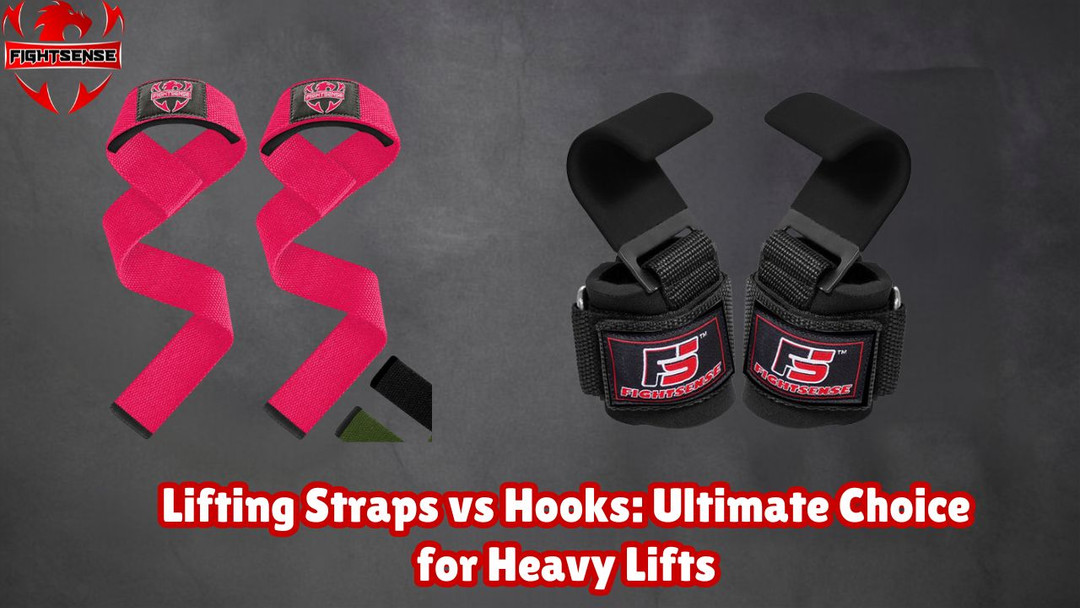
Lifting Straps vs Hooks: Ultimate Choice for Heavy Lifts
Lifting Straps vs Hooks: Are your weak forearms secretly ruining your back gains? When your grip gives out long before your back, lats, or traps are actually fatigued, breaking through plateaus feels completely impossible. That is where high-performance accessories come in to eliminate hand fatigue, secure your bar control, and protect your skin.
But when deciding between Lifting Straps vs Hooks, which option is truly engineered for your specific training style? Let’s dive deep into the key differences, muscle activation secrets, and safety tips to help you lift safer, train smarter, and build raw strength much faster.
Key Highlights:
1. Straps for Endurance: Ideal for maintaining grip during high-rep and volume-heavy sets.
2. Hooks for Heavy Lifts: Provide a rigid, secure hold for max-effort and explosive movements.
3. Grip Support: Minimizes forearm fatigue so you can push closer to muscular failure.
4. Versatility: Straps offer flexibility across varied movements; hooks excel in pulling power.
5. Performance Boost: Both tools enhance performance—your choice depends on your training goals.
Understanding Lifting Straps and Lifting Hooks
Before choosing a side, it helps to understand what each accessory is designed to do:
- Lifting Straps: Simple yet highly effective strips made from durable cotton, nylon, or leather. They wrap securely around your wrists and loop around the barbell or dumbbell. Straps give you extra security while still allowing natural hand movement and minor wrist rotation.
- Lifting Hooks: Built with sturdy metal or reinforced plastic hooks attached to padded wrist wraps. They hook directly onto the bar, providing a rigid, unyielding hold. They drastically reduce the workload on your hands and forearms, making them perfect for brutal, heavy-load exercises.
Core Benefits of Using Straps and Hooks
- Stronger, Secure Grip: Confidently hold onto heavy bars during deadlifts, barbell rows, shrugs, and heavy pulls.
- Lift Heavier Safely: Bypass weak grip strength to train target muscle groups (back, traps, hamstrings) to their full potential.
- Hand Protection: Prevent painful calluses, skin tears, and blisters during high-intensity training sessions.
- Enhanced Versatility: Straps adapt to almost any pulling movement, while hooks dominate maximal, heavy-load lifts.
Anatomical Impact: How Straps and Hooks Affect Muscle Activation
A common debate among fitness coaches is how lifting accessories alter muscle engagement. When your grip fails, your central nervous system prematurely halts muscle recruitment—long before your back or traps are actually fatigued.
- With Lifting Straps: Because you still have to manually squeeze the bar to keep it stable, your forearms, biceps, and upper back stabilizers remain actively engaged. It mimics a natural grip while merely bridging the gap in endurance.
- With Lifting Hooks: By completely taking your hands and fingers out of the tension equation, hooks channel almost 100% of the load directly into your target pulling muscles (lats, rhomboids, traps). However, this means your forearm flexors get virtually zero stimulation during the lift.
Lifting Straps vs Hooks: Detailed Comparison
|
Feature |
Lifting Straps |
Lifting Hooks |
|
Best For |
Endurance, high-rep sets, and wrist mobility |
Maximal loads and heavy, controlled lifts |
|
Grip Support |
Maintains natural grip while engaging forearms |
Significantly reduces grip effort with a rigid hold |
|
Setup & Ease |
Requires wrapping manually around the bar |
Quick slip-on design for fast transitions |
|
Comfort |
Can feel rigid or bulky during extended sets |
|
|
Versatility |
Works with a wide variety of exercises |
Best suited for straight-bar pulling movements |
|
Cost |
Generally more affordable and budget-friendly |
Usually priced slightly higher due to metal hardware |
Which One Should You Choose?
Your choice ultimately boils down to how you train and what your primary objectives are:
- Choose Straps if: You want versatility, need wrist flexibility, and perform exercises with higher rep ranges (like dumbbell rows, barbell rows, or power shrugs). Straps help you maintain your grip without completely taking over the movement.
- Choose Hooks if: Your grip fails instantly on heavy deadlifts or weighted pull-ups, and you want to lock onto the bar with zero forearm strain. They allow you to channel 100% of your focus into the targeted muscle group.
Safety Precautions: How to Avoid Injury When Using Grip Accessories
While these accessories are designed to protect your joints and skin, improper use can lead to sudden accidents or long-term strain. Keep these safety tips in mind:
- The "Quick Release" Rule with Straps: Never wrap straps so tightly or complexly that you cannot quickly release the bar in case of a failed lift (like missing a heavy barbell row). Always practice a quick-unwind motion.
- Wrist Alignment with Hooks: Because metal hooks create a fixed distance between your hand and the bar, they can sometimes place unnatural torque on your wrist joints during heavy loads. Ensure your wrist wraps are firmly tightened to support the joint structure.
- Don't Rely on Them 100%: Use your raw grip for warm-up sets and lighter working weights. Save support tools exclusively for your heaviest working sets to ensure your natural grip strength continues to develop progressively.
Common Mistakes Lifters Make in the Gym
Even experienced gym-goers sometimes misuse grip aids, which reduces their effectiveness and can damage the equipment:
- Wrapping Too High on the Palm: Putting straps too high up on your fingers instead of deep in the crease of your palm causes the bar to roll awkwardly.
- Buying Cheap, Flimsy Materials: Low-quality nylon straps can fray or snap under heavy loads (over 400 lbs), posing a severe safety hazard. Always look for reinforced stitching.
- Ignoring Maintenance: Leather straps and metal hooks need occasional care. Keep leather dry and check metal hooks for stress fractures or loose rivets after months of heavy lifting.
Fightsense: Trusted Gear for Strength and Performance
Looking for reliable accessories that can keep up with your heaviest sessions? Fightsense is a trusted name in sports and weightlifting equipment, offering premium-grade lifting straps and hooks built for serious athletes.
With durable materials, ergonomic designs, and heavy-duty stitching, Fightsense gear reduces hand fatigue, protects your wrists, and empowers you to lift with absolute confidence. Whether you are grinding through endurance hypertrophy sets or chasing a new deadlift PR, Fightsense delivers the performance you need.
Level up your training—explore our collection and lift with confidence!
Conclusion:
Ultimately, your training method determines whether Lifting Straps vs Hooks is the right fit for your gym bag. Lifting straps are a terrific choice if you seek flexibility, comfort, and multi-exercise versatility. Conversely, lifting hooks will provide you with the extreme grip support you need if your goal is to lift as heavy as you can in short, explosive bursts. By understanding the functional differences of Lifting Straps vs Hooks, you can optimize your accessory choice, protect your joints, and shatter your previous lifting plateaus safely.
FAQs:
1. Do lifting hooks affect your range of motion?
Yes, slightly. The metal or plastic hooks create a small gap between your hand and the bar, marginally increasing the pulling distance.
2. Are lifting straps or hooks allowed in powerlifting competitions?
No. Official powerlifting federations only allow raw chalk. However, straps and hooks are widely accepted for bodybuilding and general training.
3. How do these accessories impact nerve pressure in the hands?
They prevent direct bar pressure on the palms, though overly tight wrist wraps on hooks can sometimes restrict localized blood flow.
4. Can you use lifting straps for cable rows or lat pulldowns?
Yes. Straps are highly versatile and work seamlessly with cable machine attachments, rope handles, and straight bars.
5. Why do bodybuilders prefer straps over chalk for heavy loads?
Even with chalk, extreme loads cause skin friction and slipping. Straps mechanically lock your hand to the bar to bypass skin failure entirely.
6. Do lifting hooks prevent palm calluses?
Yes. By shifting the friction onto padded wrist straps, they significantly reduce skin tears and severe palm calluses.
7. Is there a specific technique to unhook quickly during a failed lift?
Yes. Rest the bar on the floor or safety pins, lower your body weight, and rotate your wrists downward to slide out cleanly.
8. How do accessories improve the mind-muscle connection?
By eliminating hand fatigue, they let you shift your mental focus away from gripping and entirely onto pulling with your elbows.
Disclaimer:
This blog's guidance is aimed to help guide your selection of a lifting accessory. Before incorporating new tools into your program, always consult a certified trainer.