
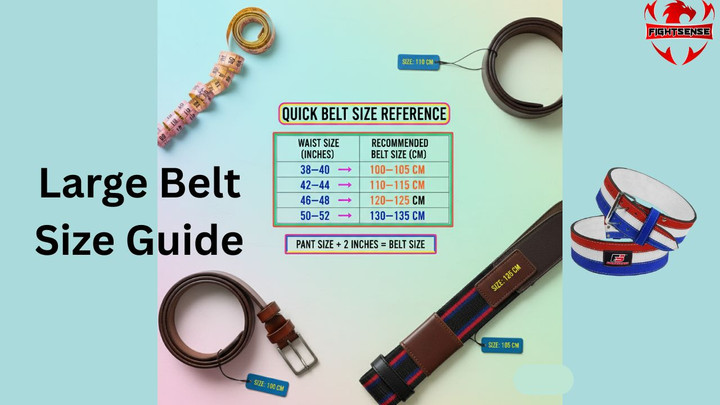
Large Belt Size Guide: How to Pick the Perfect Fit
17th Oct 2025
A large belt size generally refers to belts that are 105 cm (41 inches) or longer. These sizes typically fit people with waist measurements of 38 inches and above. But keep in mind, sizing can vary between brands, countries, and even belt types.
Belt size is not the full length of the belt. It’s measured from the buckle to the middle hole. This means a 110 cm belt is designed for someone whose waist measurement is around 105 cm.
Keynotes:
- Large belt size starts from 105 cm or waist 38+ inches.
- Belt size = Waist size + 2 inches (for best fit).
- Leather belts stretch, nylon belts don’t.
- 110 cm belt size men’s fits 42–44 inch waist.
- Fightsense offers stylish, durable large-size belts.
Quick Belt Size Reference:
|
Waist Size (inches) |
Recommended Belt Size (cm) |
|
38–40 |
100–105 |
|
42–44 |
110–115 |
|
46–48 |
120–125 |
|
50–52 |
130–135 |
To convert your pant size to belt size, just add 2 inches. For example, if you wear a size 40 pant, your ideal belt is around 42 inches (approx. 107 cm)—that’s a large belt size. If you're doing heavy lifting or need extra support, consider going up an additional inch for more comfort and adjustability.
How to Measure for a Large Belt Size:
It's not enough to just guess what size belt you need. This is how to measure correctly:
- Measure around your waist or hips where the belt or weightlifting belt sits.
- Add 2 inches to your waist size for the correct belt length.
- Use an old belt? Measure from the buckle to your most-used hole.
- Choose belts with 5 holes for easy adjustment.
Types of LargeBelts:
There are many types, materials, and uses for large belts. These are the most prevalent types:
- Best leather belts are the best choice for business clothes. They are usually black or brown
- Casual belts are thicker and more relaxed in style, and they look excellent with jeans or chinos.
- Tactical belts are strong and great for outdoor or workwear. They can usually be adjusted.
- Stretch belts are comfortable to wear every day and can aid with waist alterations.
Common Mistakes to Avoid:
- Guessing your size—measure correctly for lowering the chance of injury.
- Don’t buy belts equal to pant size—add 2 inches for a better fit.
- Style over fit can backfire, especially in large sizes, instead of lowering the chance of injury.
- Material matters—some belts stretch, others don’t, affecting support.
- “One size fits all” isn’t ideal for big waists or lowering the chance of injury.
Styling Tips for Large Belt Sizes:
- For formal outfits, make sure your shoes and belt are the same color.
- If you're taller or bigger, pick wider belts for everyday wear.
- Don't wear buckles that are too shiny; they bring attention to the waist.
Stretch belts are great if your weight changes.
- You should always have at least one broad belt in a neutral hue in your closet.
My First Experience with a Large Belt Size:
When I first needed a powerlifting belt, I assumed a 110 cm belt would fit my 38-inch waist perfectly. I was wrong—it was far too long. It didn’t feel secure, looked awkward, and was generally uncomfortable. After some research, I learned that the proper way to size a belt is to add just 2 inches to your actual waist measurement. That small adjustment made all the difference.
Next, I got a 105 cm belt, and it fit perfectly.This little tweak made a big impact in how comfortable and confident I felt. I don't guess belt sizes anymore; I always measure beforehand. Even when buying a 32 waist belt size for someone else, I now make sure to follow sizing rules. A 32 waist belt size may seem straightforward, but proper measurement is still key to a perfect fit.
Why I Recommend Fightsense Belts:
Fightsense is one of the greatest companies for high-quality belts in a big size. Their belts are:
- Sizes go up to 130 cm
- Made with real leather, strong nylon, and other high-quality materials
- With fashionable but robust buckles
- Available in both formal and tactical styles
Their 110 cm belt size men's collection is quite popular with people who want a belt that fits well, is robust, and looks beautiful. They also have belts that fit waist sizes from 32 to 36, so there is something for everyone.
Final Thought:
It's not just about comfort when you choose the proper large belt size. You also need to think about fit, functionality, and confidence.Taking a little extra effort to measure correctly and choose the perfect brand (like Fightsense) will save you time, money, and irritation whether you're buying a men's belt size 110 cm, a women's 32 waist belt size, or even an 80 cm belt size for slimmer profiles.
Disclaimer:
Belt sizes may vary slightly by brand and style. Always consult the brand’s size guide before purchase. This content is based on general sizing standards and personal experience.
FAQS:
1. What waist size is a big belt size?
In general, a waist size of 38 inches or more is considered large, and you need a belt that is at least 105 cm long.
2. Is a belt size of 110 cm big?
Yes, a men's belt size of 110 cm is considered large and usually fits waists between 42 and 44 inches.
3. If my waist is 36, may I wear a belt that is 32 inches wide?
No, a 32-inch waist belt would be too tight. Always go up two inches from your waist size.
4. Do the materials used to make belts affect how they fit?
Yes. Leather belts can get a little longer over time, while nylon or synthetic belts usually keep the same size. Always keep this in mind when you buy.
5. Is it possible to make a belt shorter?
Yes. You can trim or adjust many belts, especially leather ones, from the buckle end if they feature a clamp or ratchet system.