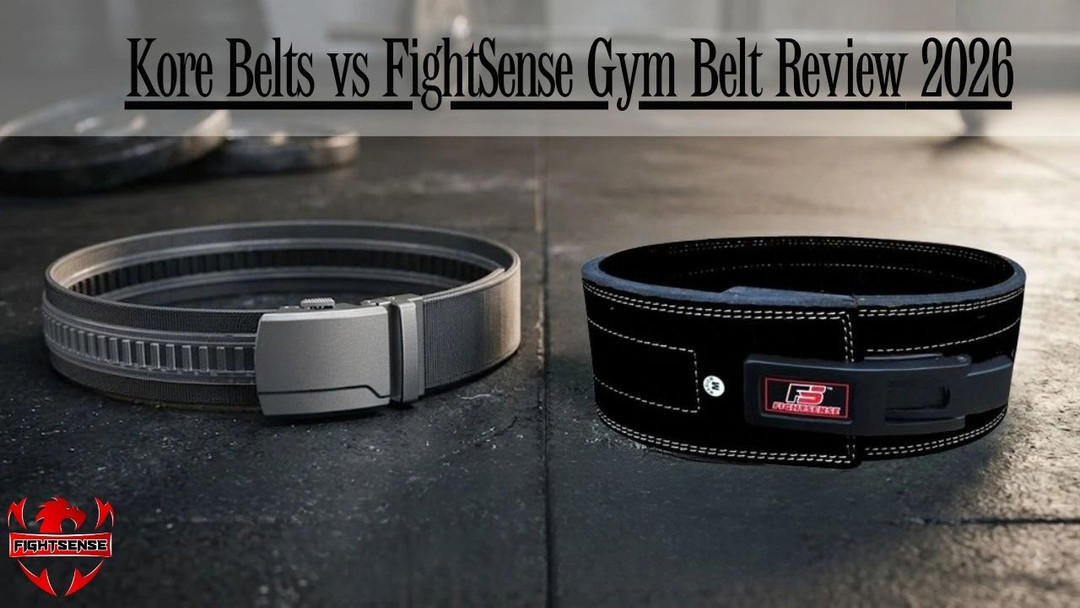
Kore Belts vs FightSense Gym Belt Review 2026
Finding the right support for heavy lifting can transform your training session. When you are pushing through heavy squats or deadlifts, a reliable belt protects your spine and improves core intra-abdominal pressure. Today, we are reviewing two popular options in the market: the Kore Belts and the FightSense Gym Belt.
While both options aim to stabilize your core, they serve slightly different functional needs, design preferences, and budgets. In this comprehensive review, we will break down their material quality, locking mechanisms, support levels, and overall value so you can decide which belt belongs in your gym bag.
Understanding Belt Design: Kore Belts vs FightSense
Before stepping into heavy sets, understanding how a lifting belt functions is crucial. A gym belt gives your abdominal wall a firm surface to push against, creating internal stabilization.
- Kore Belts: Known primarily for its track-based ratchet mechanism, Kore belts offers micro-adjustable sizing without traditional prong holes. While famous for everyday wear and tactical gear, their fitness and utility tracks provide precise micro-adjustments in $1/4$-inch increments.
- FightSense Gym Belt: Built specifically for strength training, powerlifting, and bodybuilding, FightSense focuses on high-grade neoprene and heavy-duty leather construction with secure closure systems designed purely for athletic performance.
Key Features & Material Quality
Micro-adjustable belts Features
- Micro-Adjustable Track: Allows precise tightening without feeling restricted between pre-punched holes.
- Reinforced Core: Features a stiffened inner lining to prevent belt rollover under tension.
- Sleek Profile: Designed with low-profile buckles that avoid interfering with barbell pathways during cleans or deadlifts.
FightSense Gym Belt Features
- Ergonomic Back Support: Contoured or uniform lumbar pads designed to support lower back alignment.
- Heavy-Duty Stitching: Double-stitched edges ensure long-term durability against sweat and tension.
- Quick-Lock / Steel Buckle System: Offers quick-release capabilities between sets so you can catch your breath easily.
Head-to-Head Comparison Table
|
Feature |
Track system belts |
FightSense Gym Belt |
|
Primary Focus |
Micro-adjustment & versatile utility |
Dedicated fitness, gym & strength training |
|
Closure Mechanism |
Ratchet track system |
Heavy-duty steel buckle / velcro lock |
|
Sizing Precision |
$1/4$-inch micro-adjustments |
Standard sizing notches / wide strap velcro |
|
Material |
Reinforced synthetic / leather composite |
Heavy-duty neoprene or full grain leather |
|
Best For |
Everyday training & precise adjustment |
Heavy squats, powerlifting & gym workouts |
|
Value for Money |
Premium investment |
Highly affordable & entry-to-mid level budget |
Support & Performance During Heavy Lifts
Squats and Leg Press
During deep squats, uniform support around your waist keeps your spine neutral. The FightSense lever Belt provides a wider, firm surface area that braced lifters prefer for maximum load distribution.
Deadlifts and Pulling Movements
During deadlifts, a bulky buckle can get caught on the bar. The low-profile design of the track system belts track buckle stays flush against your waist, eliminating awkward barbell contact at the bottom position.
Pros & Cons Breakdown
No-hole adjustable belts
Pros:
- Extremely precise fit due to the track mechanism.
- Durable construction with high resistance to wear and tear.
- Minimalist design that doesn't get in the way of barbell movements.
Cons:
- Higher price point compared to entry-level gym belts.
- Track mechanism requires proper alignment to avoid jamming with excessive chalk or dirt.
FightSense Gym Belt
Pros:
- Purpose-built for core gym exercises and weightlifting.
- Excellent value for money and solid durability.
- Easy to brace against during heavy compound movements.
Cons:
- Fixed sizing holes or strap widths may feel slightly too loose or too tight between settings.
- Stiffer leather options may require a short break-in period.
Expert Tips for Choosing the Right Weightlifting Belt
- Measure Your Actual Waist Size: Measure around your belly button—not your pant size—when picking your belt size.
- Consider Your Lifting Style: Powerlifters generally prefer thick, uniform leather weightlifting belts, while functional fitness athletes benefit from flexible neoprene or micro-adjustable options.
- Prioritize Quick Release: Look for a belt that lets you loosen tension quickly between heavy sets without completely removing it.
Common Mistakes When Buying a Gym Belt
- Buying Based on Pant Size: Always measure at your navel with a flexible tape measure.
- Over-Tightening the Belt: A belt should allow you to take a full breath in and brace outward, not cut off your breathing completely.
- Relying on a Belt Instead of Core Strength: Belts enhance core engagement; they do not replace proper bracing mechanics.
Shop Now !
FAQs:
Is a Kore Belts suitable for heavy powerlifting?
The Kore Belts offers solid rigidity and micro-adjustments, making it suitable for general weightlifting. However, competitive powerlifters often prefer certified lever belts or thick 10mm/13mm leather belts.
Which belt is better for beginners?
The FightSense Gym Belt is an excellent, cost-effective option for beginners looking to improve their gym form without a major investment.
What is the advantage of a track system over traditional belt holes?
A track system provides tiny micro-adjustments ($1/4$-inch increments), meaning you never have to settle for a belt that feels either slightly too loose or overly tight.
Does a gym belt prevent back injuries?
A gym belt supports intra-abdominal pressure and reminds you to keep your spine neutral, but it does not completely prevent injury if your lifting form is improper.
How tight should a gym belt be?
Your belt should be snug enough that you feel resistance when expanding your abdomen outward, but loose enough to take a deep, full breath.
Are wide weightlifting belts better than narrow ones?
A 4-inch wide belt is the standard sweet spot for most lifters as it provides ample coverage for both lower back and abdominal support.
Conclusion:
Both belts bring distinct advantages to your gym setup. If you prioritize maximum adjustment control, low-profile buckles, and seamless versatility, the Kore Belts delivers high performance with its micro-adjustable track system. On the other hand, if you want a reliable, cost-effective belt designed purely for strength training, bracing, and heavy compound lifts, the FightSense Gym Belt offers incredible performance and structural support.
Disclaimer:
This blog is only for informational purposes. Always consult a doctor or fitness expert before making a huge chnage in your fitness or exercise journey.