Is a Knuckles Weapon Right for You? A Guide to Discreet Self-Defense Gear (2026)
Introduction
Personal safety matters to everyone who walks alone or commutes through unfamiliar areas, and many people look into a knuckles weapon as a compact everyday-carry option. Before you buy anything in this category, though, you need two facts straight: how these tools work, and how strictly they are regulated where you live. This guide covers both, and points you toward safer options with the same secure grip and less legal risk. The honest answer, up front: traditional metal knuckles are banned or heavily restricted in many states and countries — and that matters more than how discreet or affordable they look online.
Quick Answer: Knuckles Weapon
A traditional metal knuckle tool is a rigid grip that fits over the fingers and concentrates the force of a punch. Because of that, it is classed as a prohibited weapon in many states — including California, New York, Illinois, and Michigan — and in countries such as the UK and Canada.
Modern alternatives keep the same ergonomic, finger-groove grip but replace blunt force with a high-voltage electrical discharge, treated differently by the law in many places. If you like the grip style, the electric alternative is the safer route — but you must still check the rules where you live before buying or carrying anything.
What Is a Knuckle-Style Tool?
A knuckles weapon is designed to fit in the palm of the hand, offering a solid, ergonomic grasp in moments of stress. The classic design is all about hand placement and force distribution: the rigid frame sits across the knuckles, the fingers lock into grooves, and the tool is hard to drop or twist away in a struggle. That secure grip is the real appeal — people who look at this category want something compact, extremely portable, and hard to slip from their grasp.
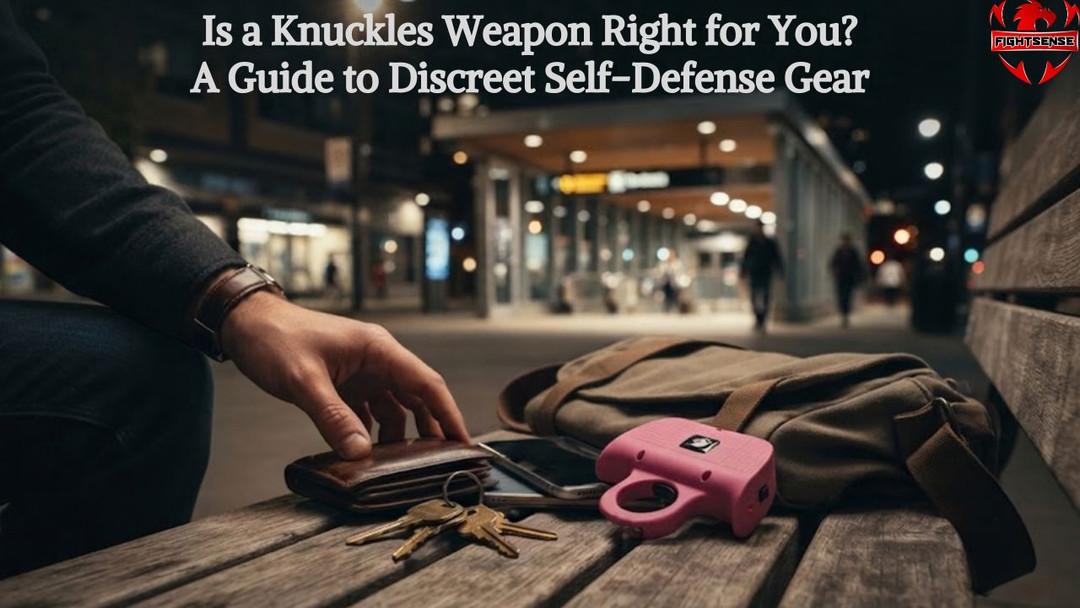
Modern designs have kept that ergonomic shape and added electrical deterrents instead of relying on impact alone — a high-voltage contact device built into a knuckle-shaped grip, often with a built-in flashlight and a rechargeable battery. FightSense builds in this direction: compact, rechargeable civilian safety tools with safety switches, non-slip grips, and built-in lighting. To compare contact devices more generally, see the guide to a good stun gun.
Legal Considerations and Responsible Carry
The rules around a knuckles weapon vary sharply by state, country, and city, and this is the part of the decision you cannot skip. Some places ban metal or weighted hand tools altogether; some allow them only in limited circumstances; others allow electric safety devices while still banning the metal original. A few states, such as Texas, have relaxed their rules, but weapon-free zones — schools, airports, government buildings — still apply.
That patchwork is exactly why general statements about legality are dangerous. Before you purchase or carry any defensive tool, check the current state law and the city or county rules where you live, work, and travel. Read the guide on are brass knuckles legal for a state-by-state overview, and the knuckle dusters guide for more on traditional metal designs. Wikipedia's article on brass knuckles summarises how widely these tools are restricted. Remember that legality is not the same as permission everywhere: private venues, workplaces, and transport systems set their own rules. Never carry any knuckle-style tool in an aircraft cabin — aviation security rules ban them in carry-on bags. The TSA lists brass knuckles among items banned from carry-on bags. This article is general information, not legal advice.
Comparison: Self-Defense Tools at a Glance
| Tool Type | Portability | Ease of Use | Primary Advantage |
|---|---|---|---|
| Knuckle-style grip tool | High | Moderate | Secure, non-slip hand retention |
| Pepper spray or gel | Very high | High | Distance deterrent |
A knuckles weapon relies on impact alone, while an electric knuckle-style device adds a high-voltage discharge to the same grip — and a spray or alarm gives you distance and attention, often safer than closing in. Most people are better served by layering two options, such as a contact device plus an alarm, than by betting on one tool. A loud alarm is another layer worth considering — see the guide to the best personal safety alarms. If you want a compact contact device without a knuckle frame, the Mini Jogger Stun Gun is a smaller alternative.
Before you consider a knuckles weapon, ask whether that exact design is permitted where you live — if the answer is no or uncertain, do not buy it. Look instead at the electric contact devices in the self-defense stun gun guide — a secure grip and a strong deterrent without the metal impact design that draws the strictest bans.
Common Mistakes to Avoid
- Buying a knuckles weapon without checking local rules: The costliest mistake in this category. A device that is lawful in one state can be a criminal offence in another.
- Assuming all knuckle-style tools are treated the same: Metal impact tools and electric contact devices are regulated very differently. Know which one you are buying.
- Over-relying on gear: If all you carry is a grip tool and you do not practise situational awareness, you still have safety gaps. Awareness, avoidance, and leaving the area come first.
- Failing to maintain equipment: Do not let rechargeable equipment go dead — check the battery every month.
- Carrying it where it is banned: Schools, airports, and courthouses can turn a lawful purchase into a serious problem.
FAQs
What is a knuckles weapon used for?
It is a handheld tool designed to fit over the fingers and give a secure grip, traditionally by concentrating the force of a punch. Modern electric versions use the same grip shape but deliver a high-voltage discharge instead.
Are knuckle-style tools allowed in every state?
No — rules vary greatly by state and country. Traditional metal designs are banned in several US states and in countries such as the UK and Canada, while electric alternatives are treated differently in many places. Always verify local laws first.
What is the difference between traditional metal knuckles and electric knuckle-style devices?
Traditional metal knuckles rely on blunt force and are prohibited weapons in many jurisdictions. Electric knuckle-style devices use a high-voltage, low-amperage discharge to disorient an attacker, with an ergonomic grip, a built-in flashlight, and a rechargeable battery.
What is the best alternative when metal knuckles are restricted?
Popular alternatives in many areas are pepper spray, a portable personal alarm, or a compact contact stun device without a knuckle frame — distance, attention, or a deterrent without the legal exposure of metal impact weapons.
Final Verdict
A knuckles weapon may look like a simple answer to personal safety, but the legal reality is complicated: traditional metal designs are banned or heavily restricted in many places, and carrying one where it is prohibited can create far more trouble than protection. The grip itself is not the problem — the metal impact design draws the strictest rules.
If you like the secure, finger-groove grip, choose the modern electric alternative instead: it keeps the ergonomics, adds a loud deterrent arc and a flashlight, and is treated differently by the law. Check your local rules first and pair it with awareness and a plan to get away.
Shop the product: FightSense Stun Gun Knuckles – Discreet Self-Defense Solution
Disclaimer:
This article is general information only, not legal advice, and does not encourage illegal use of any weapon. Laws vary by state and city, and they can change — always check the current rules where you live before buying, carrying, or using any self-defense tool.