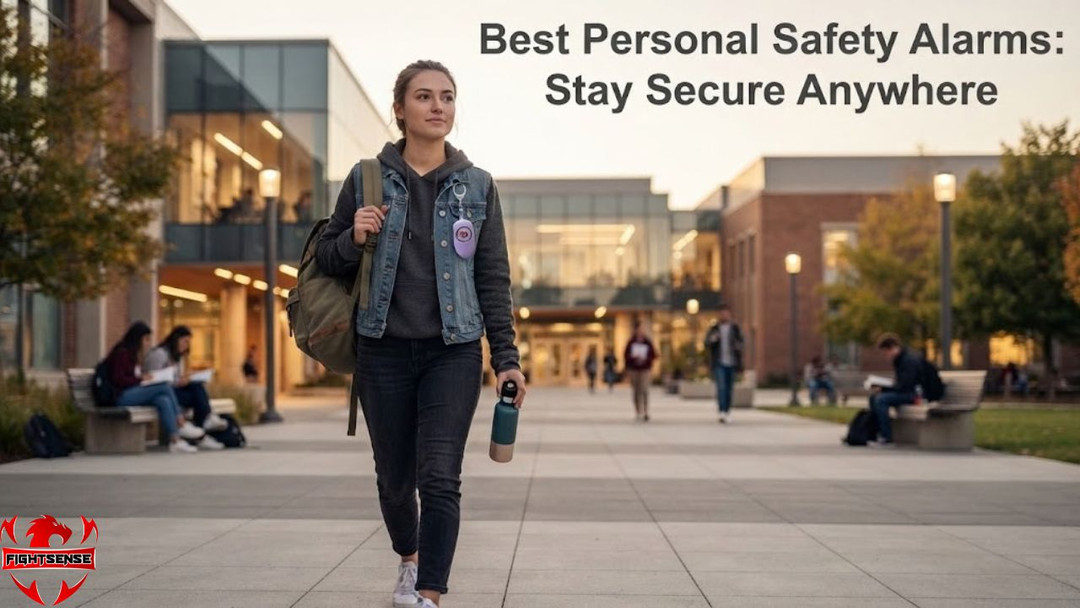
Best Personal Safety Alarms: Stay Secure Anywhere
Introduction
In today's fast-paced world, feeling secure during a late-night jog, a walk across a dim parking lot, or while travelling is a top priority. Traditional self-defense tools can sometimes feel intimidating or difficult to use under high-stress conditions. This is where modern personal safety alarms transform personal security.
These compact, loud emergency devices provide an instant layer of protection without physical confrontation. Whether you are a student, a night-shift worker, or someone who values peace of mind, understanding how to choose the best personal safety alarms can make all the difference.
Quick Answer
The best personal safety alarms share three traits: a loud siren, instant activation and a design you will actually carry. Look for a siren of 120 to 130 decibels, a pull-pin or button you can trigger in a second, and a keychain clip that keeps the device in your hand or on an outer strap, not buried in a bag.
What Are Personal Safety Alarms?
Personal safety alarms are tiny electrical devices you can carry in your hand. When turned on, they produce a very loud siren, generally about 120 to 130 dB. They are designed to attract the attention of people passing by and to frighten off and discourage possible attackers before a threatening situation becomes serious. They require no physical strength or specialised training to use, and have become a mainstay of civilian self-defense worldwide.
How Personal Safety Alarms Work
These devices rely only on sound, unlike pepper sprays or stun guns. Pull a pin, push a button or flip a toggle and the internal battery-powered circuit emits a shrill warning. The pull-pin design activates immediately under stress. The sound carries hundreds of feet, disorienting an attacker and alerting anyone nearby, and most devices keep sounding until the pin is put back in.
Key Benefits of Carrying a Safety Alarm
For the everyday commuter, the benefits are obvious. The alarm is non-lethal: it drowns out danger with noise, with no chance of accidentally hurting yourself. It is legal and travel friendly in most places, including on aircraft and school campuses, where other equipment may be restricted. It is compact and lightweight, easily attached to keychains, backpacks or belt loops. Compared with sprays and stun guns, the best personal safety alarms are the simplest option, because there is nothing to aim and no close contact is needed.
Why Students and Night-Shift Workers Need Portable Protection
There are special dangers in walking down dark streets, in deserted university libraries, and in quiet corporate parking garages late at night. For students and night-shift workers, the safety alarms are a simple layer of protection. They link the feeling of helplessness to an instant sound that calls for public attention, which is exactly what an attacker does not want.
Psychology of Sound: How Alarms Stop Attackers
A sudden screeching sound is a severe psychological shock. Attackers rely mainly on surprise and on their victim staying quiet. The moment a high-decibel siren pierces the silence, every eye and ear turns toward the scene, and most attackers flee rather than risk exposure.
How to Choose the Best Personal Safety Alarms for Your Lifestyle
The right device depends on your schedule and environment. Runners should choose a light, weatherproof one; students walking campus at night need a slim keychain device with fast access. Always check the decibel rating, and confirm the activation mechanism will not go off accidentally in your pocket or bag.
Pairing the best personal safety alarms with awareness habits matters more than the device alone: stay off your phone in unfamiliar places, keep the alarm in your hand in dark areas, and stick to well-lit routes where you can.
Comparison: Safety Alarm vs Traditional Self-Defense Tools
| Feature | Personal Safety Alarm | Pepper Spray | Stun Gun |
|---|---|---|---|
| Mechanism | High-decibel acoustic siren | Chemical irritant spray | Electrical shock |
| Legal restrictions | Few in most places | Restricted in some states and countries | Highly regulated or banned in many regions |
| Ease of use | Extremely easy, pull-pin | Requires aim and wind awareness | Requires close physical contact |
| Risk of self-harm | Zero | Low to moderate, blowback risk | Moderate, requires proximity |
An alarm also pairs well with other tools: a siren draws attention while you move away, and a spray gives you distance if a threat keeps coming. For a fuller comparison, read the guide to contact vs projectile devices and the self-defense stun gun guide. To understand spray as a second layer, see how to use OC spray and the pepper spray gel gun guide.
Best Practices for Maintaining Your Emergency Device
Regular maintenance is a must. Even the best personal safety alarms fail if the battery is dead, so test the siren briefly every few months and keep replacement batteries on hand, or recharge the unit if it uses USB charging. Avoid excessive wetness unless it has a high waterproof rating, and check the casing regularly for damage.
Keep it accessible: do not hide it at the bottom of your purse. Carry it in your hand or clip it to an outer strap in dark locations. For a comparison of electric options that pair with an alarm, see the guide to a good stun gun.
Common Mistakes to Avoid
Dead batteries are the most common failure: not checking battery status makes the device useless in an emergency. Stashing the alarm in a zipped compartment slows your reaction time. Neglecting maintenance can shorten its lifespan.
Finally, do not rely on gear alone: awareness, avoidance and a plan to leave come first, and the alarm is there to buy you attention and time. A compact kit that layers an alarm with spray is a practical option, such as the self-defense tools for women combo, which pairs an alarm with pepper spray.
FAQs
How loud are the best personal safety alarms?
They are often in the 120 to 130 decibel range, which is similar to the sound of a police siren or a low-flying jet.
Are these alarms allowed on planes?
Yes, in most cases. They are generally accepted for travel as they contain no weapons, poisons or sharp edges, but always check the current rules before you fly.
Are these devices safe for children and older people?
Yes. Their simplicity makes them suitable for kids coming home from school or older family members who need an easy way to call for help.
How long does the battery last?
Most devices have long-life batteries that allow months of standby, or continuous sounding time before replacement or recharging is needed.
Will an alarm really keep an attacker away?
A sudden loud noise brings instant public attention and shocks most attackers, who run away immediately. No device guarantees safety, so pair it with awareness and a plan to leave.
Do I need any specific training to use one?
No. If you can push a button or pull a pin, you can operate a safety alarm.
Final Verdict
You should never leave your safety to chance. The best personal safety alarms are a cheap, legal and effective way to stay safer wherever life takes you. Choose a loud, simple device you will actually carry, test it regularly, keep it in your hand in dark places, and pair it with awareness.
Shop the product: FightSense Keychain Alarm for Personal Alarm
Disclaimer: This article is for general informational purposes only and is not expert safety advice. Always stay aware of your surroundings and take extra safety precautions when you need to. Laws on safety devices vary by place, so check your local rules before you travel with one.