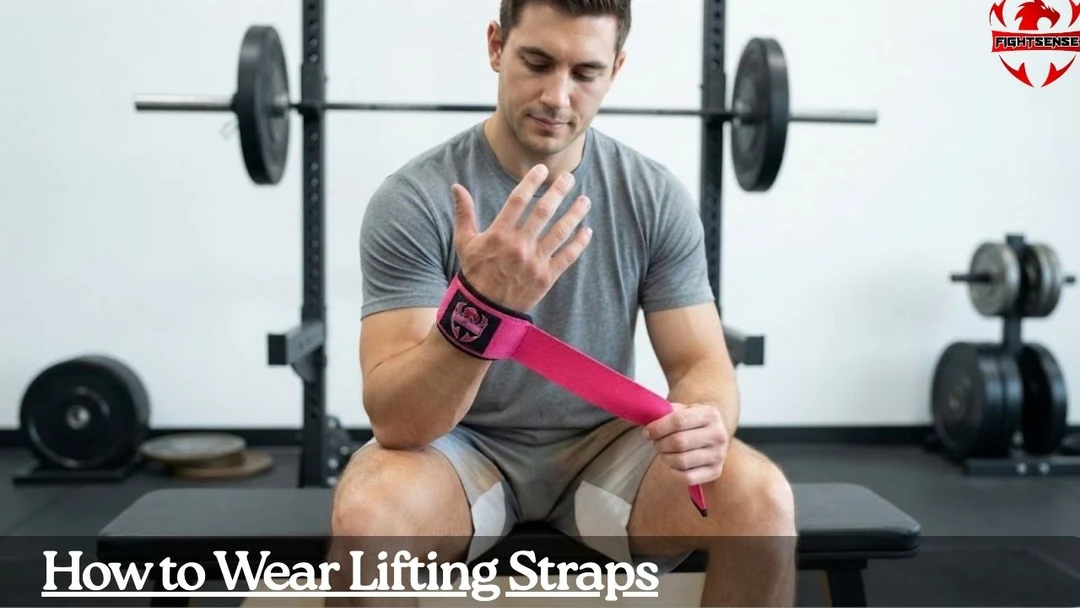
How to Wear Lifting Straps
Key Takeaways:
-
- Stronger grip support allows you to focus on lifting, not holding.
- Correct strap positioning improves control on every rep.
- Straps work best when used for heavy pulling movements.
- Grip strength and strap use should develop side by side.
- Small technique adjustments can lead to better lifting performance.
What Are Lifting Straps?
Lifting straps are simple gym accessories made of durable cotton or nylon that wraps around your wrist and the barbell. They are mostly used to strengthen grip support during heavy pulling workouts like the deadlift, rows and shrugs.
The straps take some of the gripping away from your fingers so that your back, legs and target muscles perform the real job. This is especially helpful when your grip is not as strong as your true strength to lift.
Basically, leather lifting straps allow you to lift greater weights without your grasp limiting you.
Many athletes rely on excellent gear like Fightsense straps because they are built to offer stability, durability, and comfort during strenuous training sessions.
Why Do You Need Lifting Straps For Strength Training?
One of the largest hurdles to strength training is grip fatigue. Often when you train large compound actions your forearms will fail before your target muscles are fully engaged.
That’s where lifting straps come in . They reduce grip load and allow you to focus more on muscle activation .
They are not a shortcut, they are a tool used in strength training regimens all around the world, especially when you crank up the training intensity.
Fightsense makes gym gear for this precise aim - to help lifters in hard progressive overload exercise.
When Should You Use Lifting Straps?
Understanding timing is just as important as learning How to use Lifting Straps?
You should use straps during:
- Heavy deadlifts
- Barbell and dumbbell rows
- Shrugs
- Romanian deadlifts
- Heavy lat pulldowns
Avoid using them during warm-ups or light sets because grip strength still needs natural development.
Experienced lifters use straps strategically, not excessively.
How to Wear Lifting Straps Properly?
The Setup.
Let’s break it down plainly right now so you can use it at the gym.
Wrist Strap Placement
To properly comprehend How to Wear Lifting Straps, begin by looping the strap around your wrist with the loose end dangling on the palm side. It should be snug but not constricting.
Barbell Wrap Around
Next, take the loose end and wrap it around the barbell from underneath it. Twist your hand over the bar to tighten the strap as you hold.
Grip Securely
Finally squeeze the bar and secure your gym wrist straps in a stable position. Now your grasp should be tight, and the strap should take most of the load.
Check Proper Use
You have now studied How to Wear Lifting Straps in a real-life training environment.
Pro tip to improve stability
Fightsense straps are made of durable equipment, which helps to achieve superior grip stability and less slippage with big loads.
How to Improve Grip Strength Alongside Straps?
Straps should complement your workout, not replace grip development.
To build grip strength, add:
- Farmer carries
- Dead hang
- Plate pinches
- Static bar hangs
- Bar training thick
These workouts will allow you to achieve balanced strength growth when combined with the correct use of the straps.
Many lifters with Fightsense equipment see improved long term performance because they combine grip training with strap assisted lifting.
Top Benefits of Using Lifting Straps for Better Strength Training Results
When you start utilising straps correctly, you’ll see results quickly.
What you will experience:
- Increased lift capacity
- Improved involvement of back and leg muscles
- Less grip fatigue
- Longer, more productive sets
- Better confidence with large loads
Here’s why advanced lifters use straps on big pulling workouts all the time.
Learning how to use lifting straps allows you to have more concentrated and successful workouts.
Are Lifting Straps Safe for Strength Training
Lifting straps are safe from a training safety standpoint, and when used correctly and responsibly.
They are commonly utilized in strength training practice for beginners, moderate lifters and competitive athletes. The trick is not to be overdependent .
But you should still practice your grip individually so that you’ll acquire balanced strength.
High quality straps from reputable manufacturers such as Fightsense lessen this risk by ensuring improved grip security and constant support during heavy lifting.
Advanced Tips for Better Control:
Once you understand How to Wear Lifting Straps, you can refine your technique further.
Try these tips:
- Keep the bar closer to your fingers before wrapping
- Maintain a neutral wrist position
- Engage your core before lifting
- Use chalk for added grip security
These small adjustments improve control and reduce unnecessary strain during heavy lifts.
At this stage, using straps should feel natural and seamless.
Closing Thoughts:
By using lifting straps you can lift more and safer by increasing your grip support during heavier sessions. Once you understand How to Wear Lifting Straps correctly, you can train with better control, stronger performance, and more effective muscle engagement. The trick is to use them properly and with constant training.
FAQs:
Can lifting straps affect natural grip strength development over time?
Yes, if overused. Straps reduce grip load, so relying on them in every set can slow grip strength progress. That’s why balanced training is important.
Should lifters use straps in every pulling exercise?
No. Straps should only be used when grip becomes the limiting factor, usually in heavy compound lifts like deadlifts or rows—not during warm-ups.
Can poor strap technique increase injury risk?
Yes. Incorrect wrapping or wrist positioning can cause instability, which may increase strain on wrists or forearms during heavy lifts.
Are lifting straps useful for muscle hypertrophy training?
Yes. By reducing grip failure, they allow you to perform more reps and maintain tension on target muscles, which supports better hypertrophy.
Note:
This article is for informational purposes only and should not be considered professional medical or fitness advice. Always use proper lifting techniques and consult a qualified trainer if needed.