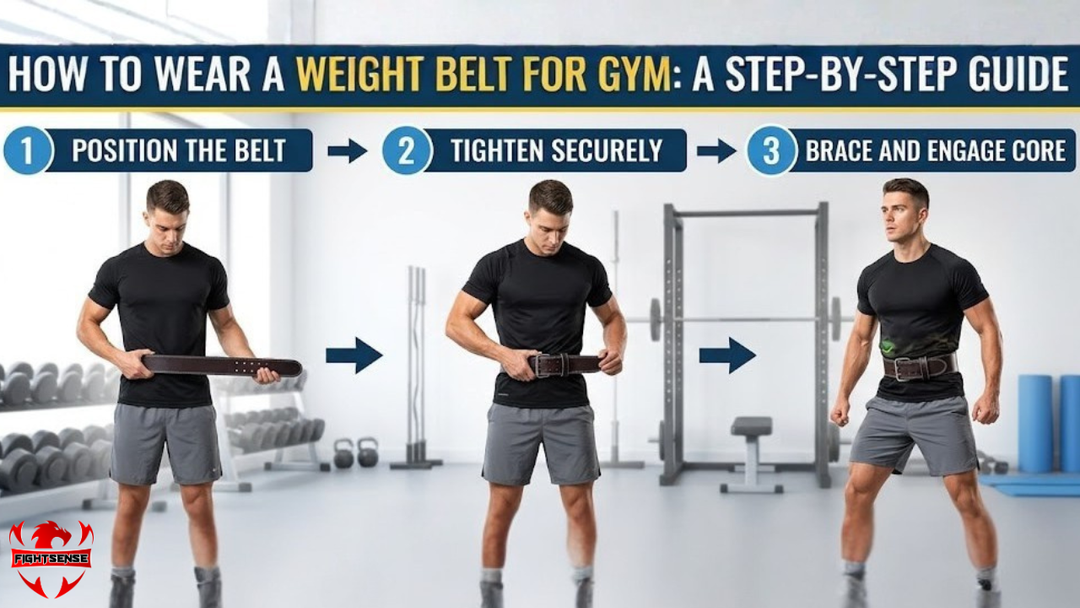
How to Wear a Weight Belt for Gym: A Step-by-Step Guide
If you are serious about strength training, learning how to wear a weight belt for gym workouts correctly is essential. A weightlifting belt helps improve core stability, supports your lower back, and allows you to lift heavy weights more safely and confidently.
However, many gym-goers wear their belts incorrectly, which reduces support and affects performance. With high-quality lifting gear from Fightsense, you can ensure better durability, support, and training comfort during every workout.
Key Highlight:
- Correct way to wear a weight belt for gym stability and support
- Proper bracing technique to increase lifting strength and safety
- Best timing to use a lifting belt in heavy compound exercises
- When to avoid using a weight belt for better core development
- How Fightsense belts enhance comfort, durability, and training performance
What Is a Weight Belt?
A weight belt is a supportive fitness accessory designed to stabilize your core during heavy lifts. It increases intra-abdominal pressure, helping protect your spine and improve lifting mechanics.
Weight belts are commonly used for:
- Squats
- Deadlifts
- Overhead Press
- Olympic Lifts
- Powerlifting
Understanding how to wear a weight belt for gym workouts properly ensures you get the full benefit of this important training tool.
Advantages of using a weight belt in the gym:
Before you know how to utilize a lifting belt, it’s necessary to know why athletes wear them.
Improved Core Stability
A gym belt helps your abdominal muscles brace harder when you’re lifting heavy.
Enhanced Lifting Performance
With a good weightlifting belt many lifters can lift more weight safely.
Low Back Support
A weight belt might assist take some stress off your lower back during compound lifts.
More Self-Confidence
A gym belt can help you feel more steady and secure while lifting large weights
How to Wear a Weight Belt for Gym:
1. Select a belt fit for you
Choose initially and most critically a weight belt suitable for your waist size. A belt that is too loose will not provide the support you need, even if one too tight may obstruct circulation or breathing. To acquire the best fit, make sure the belt is snug but not painfully tight.
2. Changing the Belts' Position
Just over your hip bones, around your waist, make sure the belt runs over your torso. The belt should cover your lower back and abdomen if you want best support.
3. Avoid tightening too forcefully
Though the belt should be tight, try not to overdo it. For you, exercises should still be free from constraint. Belt over-tightening might limit your mobility and compromise lifting performance.
When To Use A Weightlifting Belt
One topic that comes up frequently regarding wearing a weight belt at the gym is when you should wear one.
You should wear a belt in:
- Squats heavy
- Deadlifts
- Multi-joint barbell movements
- Lifts over 75-80% of your max
You do NOT require a belt for:
- Warm-ups
- Cardio
- Isolation exercises
- Light exercise
Common Mistakes When Wearing a Weight Belt:
Avoid these common lifting belt mistakes:
Wearing It Too Tight
Over-tightening limits breathing and reduces proper bracing.
Using It for Every Exercise
Your core still needs natural strength development.
Incorrect Placement
A badly positioned belt won’t support your lifts properly.
Poor Bracing Technique
Even the best lifting belt won’t help without proper breathing and core engagement.
Best Weight Belts for Gym Training:
If you want premium-quality gym belts, Fightsense offers professional-level options designed for strength athletes.
Fightsense Weightlifting Belt
The Fightsense Weightlifting Belt is ideal for:
- Daily gym training
- Squats
- Deadlifts
- Functional fitness
- Bodybuilding workouts
Features:
- Durable construction
- Comfortable support
- Adjustable fit
- Excellent lower back stability
This belt is perfect for athletes learning how to wear a weight belt for gym training while improving lifting performance safely.
Fightsense Lever Belt
For advanced lifters, the Fightsense Lever Belt provides elite-level support and fast adjustments.
Benefits:
- Quick lever locking system
- Consistent tightness
- Heavy-duty support
- Ideal for powerlifting
If your goal is maximum strength performance, a lever belt is an excellent investment.
Do beginners wear a weight belt?
Beginners can use a belt, but only after they’ve learned basic lifting technique.
A belt should support:
- Corrected form
- Central brace
- securely progress
It should never substitute good lifting mechanics.
FAQs:
1. Can I wear a weight belt for every workout?
No, weight belts are best used during heavy compound lifts rather than for every exercise.
2. What is the ideal position for a gym belt?
A gym belt should sit around your lower back and abdominal area for maximum core support.
3. Why do lifters push their stomach against the belt?
This creates intra-abdominal pressure, which improves stability and spinal support during lifts.
4. How to Wear a Weight Belt Correctly for Better Lifting?
A properly worn weight belt can help improve posture, stability, and lifting alignment when used with correct bracing technique.
5. Does belt thickness matter in strength training?
Yes, thicker belts provide more rigidity and support for advanced heavy lifts.