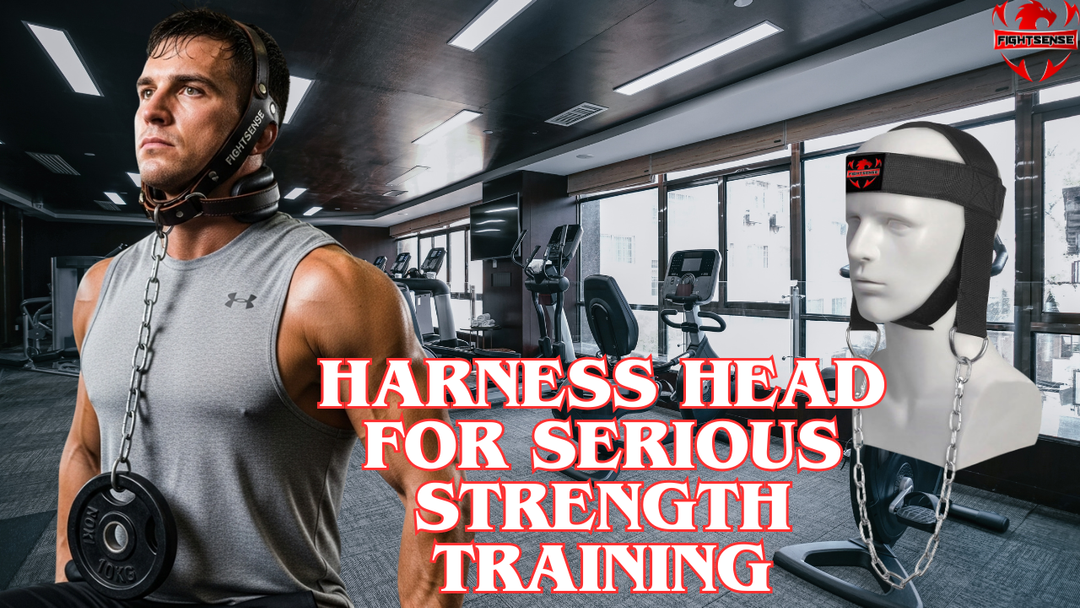
Head Harness for Serious Strength Training Guide
Most lifters train every muscle they can see in the mirror and skip the one that holds their head up. The neck supports the head through every squat, press, and carry, yet it rarely gets its own progressive workout. A head harness for serious strength training changes that: it lets you load the neck directly, in small steps, with the same care you give any other muscle group.
This guide explains what a head harness is, who it helps, how to choose one that fits, and how to use it safely. You will also find a simple starter routine, the mistakes to avoid, and the supporting gear that keeps the rest of your training balanced.
Keynotes
- Direct neck loading: A head harness lets you add plates in small steps, so progress stays controlled and measurable.
- Start light: Begin with 5-10 pounds, move slowly, and add load only when your form stays clean.
- Fit comes first: Snug, even straps and a secure chain keep the load steady and comfortable.
- Leather for heavy use: Leather suits long-term, heavier training, while padded nylon suits lighter sessions and comfort.
- Train it like any muscle: Two or three short sessions a week, with rest between them, is enough to build strength.
What Is a Head Harness?
A head harness is a padded strap system that fits around the head and connects to a chain, so you can hang a weight plate from it and train the neck through flexion, extension, and side bending. In simple terms, a head harness for serious strength training is a practical way to give the neck the same progressive resistance that barbells give the rest of the body.
FightSense's head harness for neck training comes in Normal and Long sizes and in Black, Blue, and Red, with adjustable straps, reinforced stitching, a soft lining, and sturdy D-rings and clips. It is listed at $19.99, down from $29.99, and it is the piece of gear this guide is built around.
Strength training works by gradually increasing the resistance a muscle faces, and the neck is no exception. Wikipedia's guide to strength training explains progressive overload - the idea that muscles grow stronger when they are asked to do a little more over time - and the same principle applies to neck work.
Why a Head Harness for Serious Strength Training Works
Most neck exercises use bodyweight alone, which is hard to measure and harder to progress. A harness changes the equation: you know exactly how much weight you used last session, so you can add a small plate and track improvement week by week. That measurability is what turns occasional neck work into real training.
A stronger neck also supports better posture and steadier head position under the bar. Lifters who train the neck often notice that heavy squats and carries feel more stable, because the head and upper back move as one unit instead of fighting each other. That is why a head harness for serious strength training earns its place in a program built around heavy compound lifts, rather than as an afterthought.
Neck Strength That Carries Over to Big Lifts
Wrestlers, boxers, football players, and rugby players have trained the neck for decades, because a strong neck helps them hold position in contact. The same logic applies in the gym: when the neck is strong, the upper back and traps share the load more evenly, and the head stays in a neutral position during heavy pulls and presses. Neck work will not replace your main lifts, but it removes a weak link from them.
How to Choose the Right Head Harness
Three things decide whether a harness works for you: fit, material, and the hardware that holds the weight. A harness that slips, pinches, or twists will distract you on every rep, so treat fit as the first test, not an afterthought. Check that the straps adjust in small steps, the padding sits evenly, and the chain and clips feel solid before you load a plate.
Choosing a Head Harness for Serious Strength Training That Fits
Measure around your head where the straps will sit, then compare that measurement with the size guide before you order. The harness should feel snug without squeezing, with the padding flat against your forehead and the back of your head. If you are between sizes, the Long size gives more room for adjustment, while the Normal size suits a closer fit. Try it with a light plate first: if the harness stays put through slow reps in every direction, the fit is right.
Material is the second choice. Leather is the classic pick for heavy, long-term use, while nylon is lighter and often softer against the skin. The comparison below sums up the trade-off.
Leather vs. Nylon: Which Material Suits You?
|
Feature |
Leather |
Nylon |
|
Durability |
Excellent |
Good |
|
Comfort |
Padded and soft |
Light and flexible |
|
Weight capacity |
High |
Moderate |
|
Care |
Wipe clean and condition |
Wash and air-dry |
|
Best for |
Heavy, long-term training |
Lighter sessions and travel |
If you plan to train the neck two or three times a week for months, leather is the safer long-term buy. If you want something light for occasional sessions or for a gym bag, nylon does the job. Whichever material you pick, a head harness for serious strength training should feel like equipment you can trust under load, not something you have to think about mid-rep.
How to Use a Head Harness Safely
Safe neck training is slow, light, and boring - and that is exactly the point. The neck muscles are small, so small loads go a long way. Start with 5-10 pounds, warm up with gentle neck movements, and keep every rep smooth. Never jerk the weight, bounce at the bottom, or train through sharp pain. Treat it the same way you would any loaded lift: a head harness for serious strength training rewards patience, and it punishes rushing.
A Simple Starter Routine
Train the neck two or three times a week, after your main lifts or on a lighter day. Do two or three sets of 10-15 slow reps in each direction: forward, backward, left, and right. Rest a minute between sets, keep the range comfortable, and add 2.5 pounds only when all of your sets feel controlled. A full session takes about ten minutes.
Keep a simple log - date, weight, sets, and reps - so progress is visible. When the same weight feels easy for two sessions in a row, add the smallest plate you have.
Form Cues That Keep Every Rep Safe
- Move through a comfortable range; never force the head further than it wants to go.
- Keep the chin slightly tucked and the movement smooth from start to finish.
- Breathe steadily; do not hold your breath to grind out a rep.
- Stop the set if you feel pinching, dizziness, or sharp pain.
- Check the straps, chain, and clips before every session.
Common Mistakes to Avoid
The most common mistake is starting too heavy. A 25-pound plate may look modest next to a deadlift, but it is a lot for the neck. The second mistake is training the neck every day: like any muscle, it needs rest to grow stronger. A third is jerky, fast reps, which turn a controlled exercise into a strain risk. Finally, do not skip the warm-up - a few minutes of gentle movement prepares the neck far better than jumping straight to loaded reps.
Another mistake is buying a harness that fits poorly and then fighting it for months. If the straps slip or the padding bunches, adjust the fit or change the size before you add weight.
Pair Your Harness With the Right Support Gear
Neck work sits inside a bigger program, and the right support gear keeps the rest of your lifts progressing alongside it. A FightSense weight lifting belt helps you brace during heavy squats and deadlifts - it is listed at $28.99, down from $40 - and our lifting belt guide for women explains how to choose and wear one.
For grip and arm work, FightSense weight lifting straps (listed at $6.99, down from $9.99) keep the bar secure on heavy pulls, while the FightSense arm blaster (listed at $32.99, down from $50) helps you isolate the biceps with a padded neck support and a heavy-duty steel frame. Wrist support matters too: FightSense wrist wraps for weightlifting (listed at $6.99, down from $16.99) use an adjustable hook-and-loop design with reinforced stitching.
Gloves round out the kit. Our best weight lifting gloves guide compares grip and padding options, and the padded weight lifting gloves guide covers comfort and fit in more detail. After training, keep the gear fresh - our guide to cleaning boxing gloves works just as well for any padded training gear that picks up sweat.
Why FightSense Gear Fits Serious Neck Training
FightSense builds training gear for lifters who want dependable equipment without paying premium-brand prices. The head harness, belt, straps, and wraps in this guide are made for regular gym use, with adjustable fits and durable materials that hold up session after session. Orders above $100 ship free, so building a complete support kit in one order is straightforward. Whether you train at home or in a commercial gym, FightSense gear is designed to fit into a serious program and stay out of your way while you lift.
Shop Head Harnesses at FightSense
Train Your Neck Like You Mean It
Give your neck the training it deserves - grab the FightSense head harness and start building strength today.
Shop the Head Harness NowConclusion
A head harness turns neck training from guesswork into a measurable part of your program. Start light, progress slowly, choose a harness that fits, and train two or three times a week. With steady, patient work, a head harness for serious strength training helps you build a stronger, more stable neck that supports every lift you do.
Pick a harness that fits, keep your form slow and controlled, and let the rest of your support gear keep up. Your neck will thank you the next time you get under a heavy bar.
FAQs
What does a head harness do?
A head harness lets you attach a weight plate to a strap system around your head, so you can train the neck through flexion, extension, and side bending with progressive resistance.
Is a head harness safe for beginners?
Yes, when you start with 5-10 pounds, warm up first, and keep every rep slow and controlled. Stop if you feel sharp pain or dizziness, and check the fit before each session.
How often should I train my neck with a head harness?
Two or three times a week is enough for most lifters. Rest at least a day between sessions so the neck muscles can recover and grow stronger.
How much weight should I start with?
Start with 5-10 pounds. Add 2.5 pounds only when all of your sets feel controlled for two sessions in a row.
Leather or nylon - which head harness is better?
Leather suits heavier, long-term training and usually lasts longer, while nylon is lighter and softer against the skin. Choose leather for regular heavy use and nylon for lighter sessions or travel.
Can I use a head harness if I have a neck injury?
Talk to a doctor or physiotherapist first. A head harness is a training tool, not a treatment, and loaded neck work is not right for everyone.
What exercises can I do with a head harness?
The four basics are neck flexion, extension, left side bending, and right side bending. Do two or three sets of 10-15 slow reps in each direction.
How do I care for my head harness?
Wipe leather clean after use and let it air-dry away from direct heat. Wash nylon straps as directed, check the chain and clips before every session, and store the harness somewhere dry.