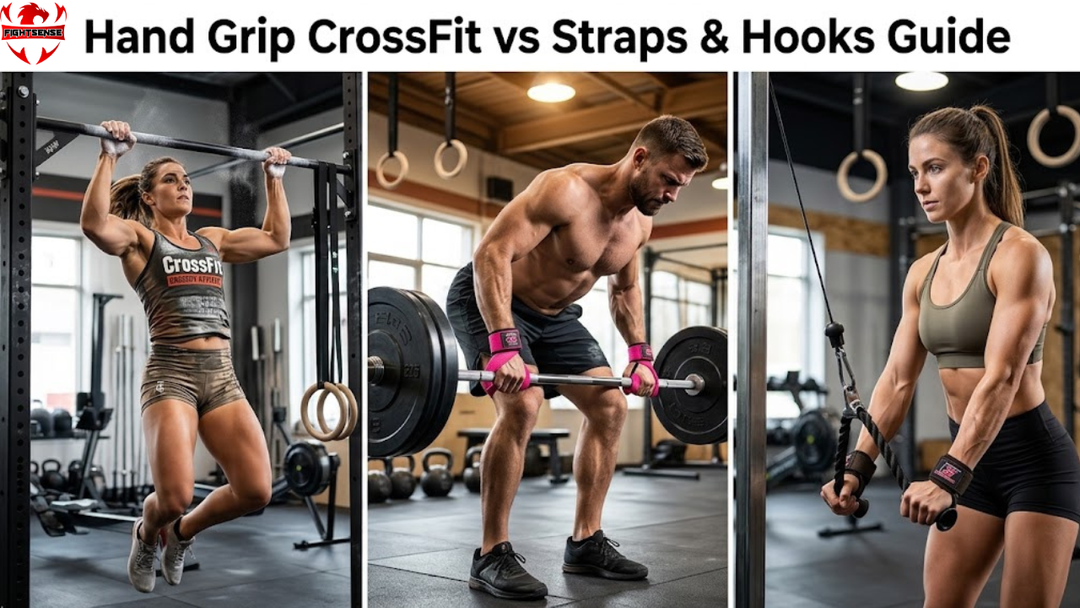
Hand Grip CrossFit vs Straps & Hooks Guide
Introduction
Walk into any serious gym or CrossFit box and you will see the same split: some athletes rely on chalked, bare hands locked onto the bar, while others wrap straps tightly around their wrists or hook metal supports under the bar. Both camps lift heavy, but they are training different things. This guide compares hand grip crossfit training with straps and hooks, so you know exactly what to use, when to use it, and how to get stronger without building a dependency.
Quick Answer: Which Approach Wins?
There is no single winner. Raw grip builds the most transferable strength, straps let you overload heavy pulls, and hooks remove grip demand almost completely. For most athletes, the hand grip crossfit base comes first: train your bare hands most of the time and save support gear for your heaviest sets.
Why Grip Strength Is the Hidden Limiting Factor
Before comparing tools, address the real problem: your hands are usually the weakest link in your entire kinetic chain. Your back may be strong enough to pull a heavier weight, but if your fingers open, the set is over. This shows up most in high-rep workouts, heavy pulls, Olympic lift variations and functional circuits, where grip fatigue slows you down and caps your progress. That is why the hand grip crossfit debate matters: the tool you choose shapes how your hands develop over months of training.
Hand Grip CrossFit: Building Real, Transferable Strength
Training the raw hold is about building genuine, functional strength that carries over to other movements, sports and everyday life. You do not rely on equipment, and your body adapts naturally to the demands you place on it.
Key exercises include kipping and strict pull-ups, toes to bar, heavy barbell cycling, farmer's carries and rope climbs. These do not isolate the hands — they build hold strength inside whole-body movements. The long-term payback is more stamina for high-rep workouts, better lifting efficiency and less dependence on outside help. For direct hand training, the grip training guide covers home exercises that build real hand power.
Weight Lifting Straps: Strategic Support, Not a Crutch
Straps are not the enemy. Used well, they are one of the smartest tools in your kit: they let you push past the point where your hands fail on heavy lifts. They shine when your hold gives out before your target muscles, when you are training for hypertrophy on back day, and when you are doing a lot of pull volume.
The hand grip crossfit approach still comes first for most athletes — straps are a complement to it, not a replacement. For the full technique walkthrough, read the guide on how to use weight lifting straps. For the heaviest lift of all, the deadlift strap guide covers strap choice in detail.
Weight Lifting Hooks: Maximum Load, Minimum Grip
Hooks are built for one purpose: lifting the maximum weight possible with little or no involvement from the hands. They suit lifters with wrist or hand injuries, athletes learning a new movement pattern, and sessions where grip is not the point at all.
The trade-off is real: hooks sit at the opposite end of the scale from hand grip for crossfit work. Grip development becomes minimal, functional carryover drops, and bar control in dynamic movements suffers. The hook-style straps use metal hooks instead of fabric for a faster setup on heavy sets. If bar knurling tears your skin on high-rep days, the gym glove guide covers padded palms.
Real-World Comparison: What Actually Matters
On pure grip development, hand grip crossfit wins outright; straps give a marginal upgrade and hooks almost none. On load handling, the order flips: a raw hold is naturally limited, straps boost it greatly, and hooks allow the most weight of all. On strength carryover to sport and daily life, raw grip transfers best, straps sit in the middle, and hooks transfer least. The pull-up grip guide explains how hand position changes a pull, and the back training straps guide covers strap use for back work.
A pair of fightsense wrist wraps can steady the joint on heavy sets.
FAQs
Is hand grip crossfit training enough on its own?
For most athletes, yes for general strength — but straps still help on maximal back work where the hold fails before the back does.
Do straps weaken your grip?
Only if you use them for every set. Used for heavy work while you still train your hold separately, they do not harm long-term hand strength.
When should I use hooks instead of straps?
When grip is not the point of the session, or when a wrist or hand injury makes holding the bar painful.
Are hooks allowed in CrossFit competitions?
Generally no — most competitions require a raw hold, which is another reason to keep training your bare hands.
How often should I train my grip directly?
Two to four times a week, using hangs, carries and pinching work alongside your normal training.
Final Verdict
In the end, hand grip crossfit is the foundation everything else rests on: raw grip builds strength that transfers everywhere, straps add overload on heavy pulls, and hooks are a specialist tool for maximum load or injury work. Train your hands first, add support gear second, and your numbers will follow.
Disclaimer:
This article is for informational purposes only and is not medical advice. Consult a healthcare professional before starting any new exercise programme, especially if you have a wrist, hand or elbow injury.