How to Use Weight Lifting Straps to Lift Heavier & Train Smarter
You feel strong in the gym, but your grip fails before your muscles do—why does this keep happening?
This hidden problem silently limits your strength and progress.
There’s a simple solution that can completely change your training
INTRODUCTION:
How to Use Weight Lifting Straps is essential for lifters who want to train safely and efficiently. Gym training is not just about lifting heavy—it’s about lifting smart. Beginners often focus only on muscles, but grip fatigue is what usually limits progress. That’s why learning How to use gym lifting straps matters, as they reduce grip failure and improve performance.
Brands like fightsense are making better, more durable straps. In short: you lift heavier, train longer, and improve muscle growth.
Keynotes:
- Grip fatigue is the real hidden limit, not muscle strength
- Lifting straps unlock heavier loads by removing grip failure barriers
- Smart training focuses on muscle engagement, not hand endurance
- Proper strap use improves consistency and progressive overload
- Quality gear like fightsense enhances stability, control, and performance
WHAT ARE WEIGHT LIFTING STRAPS?
Lifting heavy can be a struggle, but weight lifting straps are a simple yet effective training tool to help increase your grip.
They are normally composed of sturdy fabric like cotton, nylon or leather, and wrap over your wrist and barbell to minimize pressure on your fingers.
The leather straps distribute the burden a little more evenly than your grasp so your back, shoulders and legs can work harder.
When people are first learning How to Use Weight Lifting Straps they sometimes find they have been undertraining for years without knowing it.
Fightsense’s modern exercise equipment has also made straps more ergonomic, boosting wrist comfort, and preventing slippage during hard sets.
WHY IS IT IMPORTANT?
One simple thing that holds back many lifters from their ultimate potential: grip fatigue.
Your legs may still be strong… your back may still have strength… but your hands go first.
That’s where How to Use Weight Lifting Straps Come into play.
It enables you to move through performance obstacles that used to hold you back.
That’s why it’s in genuine training:
- Higher safe lifting capability
- You gain more muscle activation
- You escape early failure of the set
- You raise training volume and consistency
Athletes who use fightsense equipment generally experience better progressive overload as they can finally push sets to genuine muscle failure and not grip failure.
If you’re serious about strength or muscle building, learning how to utilize leather straps gives you a great advantage over average lifters.
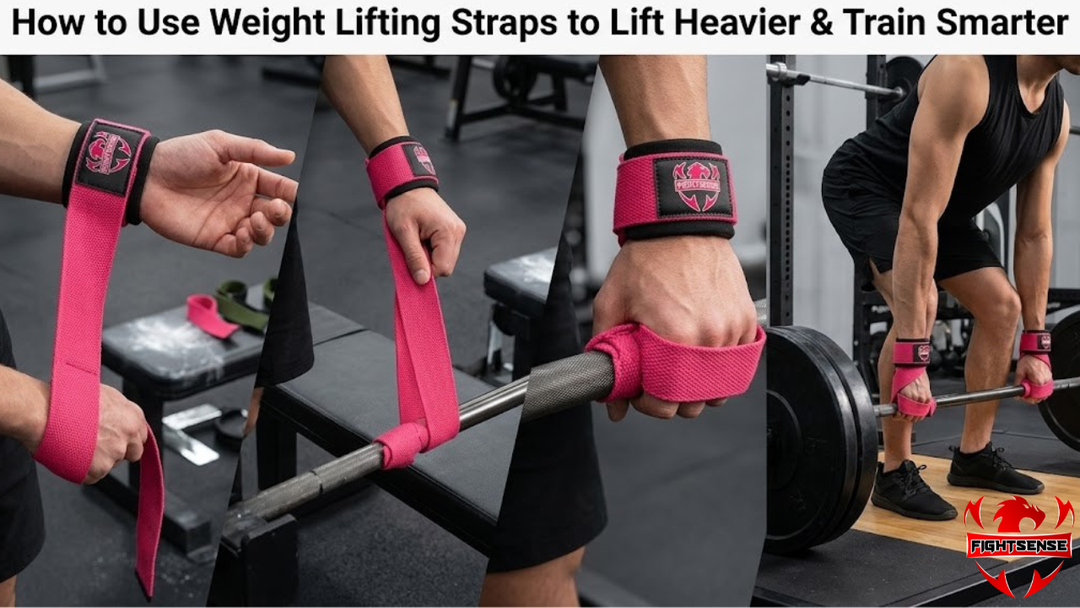
How to Use Weight Lifting Straps (A Step by Step Guide)
Let’s put it under the simplest terms possible.
Step 1: Put the strap on your wrist: Make sure it fits snug but comfortably.
Step 2: Wrap it around the barbell: Make a good firm loop with the loose end so that it grabs the bar securely.
Step 3: Lock your hand over top: You want to use the palm of your hand to push the strap into the bar for stability.
Step 4: Tension before lift: Both sides should be comfortable and secure.
Step 5: Do the lift: Focus on the form as the strap supports the grip pressure.
After you Learn How to use training straps you will see instant improvements in control and lifting confidence.
Fightsense’s high-quality gear also helps prevent wrist strain, making heavy lifting smoother and safer for both beginners and advanced lifters.
ADVANTAGES OF USING STRAPS:
The benefits are stronger than most people imagine .
When used appropriately, How to use gym lifting straps can dramatically enhance your training results.
Here’s what you get:
- Greater potential for strength gains in lifting
- More target muscle emphasis
- Reduced hand fatigue
- Longer, more productive sets
- More regular training
You don’t quit when your hands are fatigued, you stop when your muscles are really tired.
And it is actual progress.
Fightsense gear also helps many lifters enjoy greater exercise flow as they are able to maintain firm grip even under heavy load.
Learning how to use weight lifting straps is like accessing a secret level of your training.
TYPICAL MISTAKES THAT PEOPLE MAKE:
Straps are simple, yet many lifters abuse them.
Some of the most frequent mistakes are:
- Use a strap in every workout.
- Wrapping them to loose or not equally
- Natural grip training is left out
- Light weights depend on straps
- Wrist position in lifts is bad
Remember, How to use training straps right means use them strategically not all the time.
Even top gear like fightsense cannot substitute good training discipline.
Straps are used to supplement your strength – not replace it.
QUICK RECAP:
- Straps improve lifting performance
- They reduce grip fatigue
- Proper usage is important
- Not meant for every exercise
- Technique always comes first
CONCLUSION:
At the end of the day, strength training isn’t about lifting heavier, it’s about lifting intelligently. When you grasp how to utilize lifting straps you stop grip fatigue from controlling your progress, and begin to focus on true muscle growth and performance.
Tools like fightsense help lifters work with more stability, confidence and control. If you want real gym results then one of the easiest yet most significant changes you can make in your training journey is to master how to use weight lifting straps.
FAQs:
1. Should I use straps on every heavy set?
No, use them only when grip limits your target muscle performance.
2. Do lifting straps affect natural grip strength?
Only if you completely avoid grip training outside strap usage.
3. Are straps better for pulling exercises only?
Yes, they are most effective for deadlifts, rows, and shrugs.
4. Can beginners safely use lifting straps?
Yes, but they should first learn proper lifting form without them.