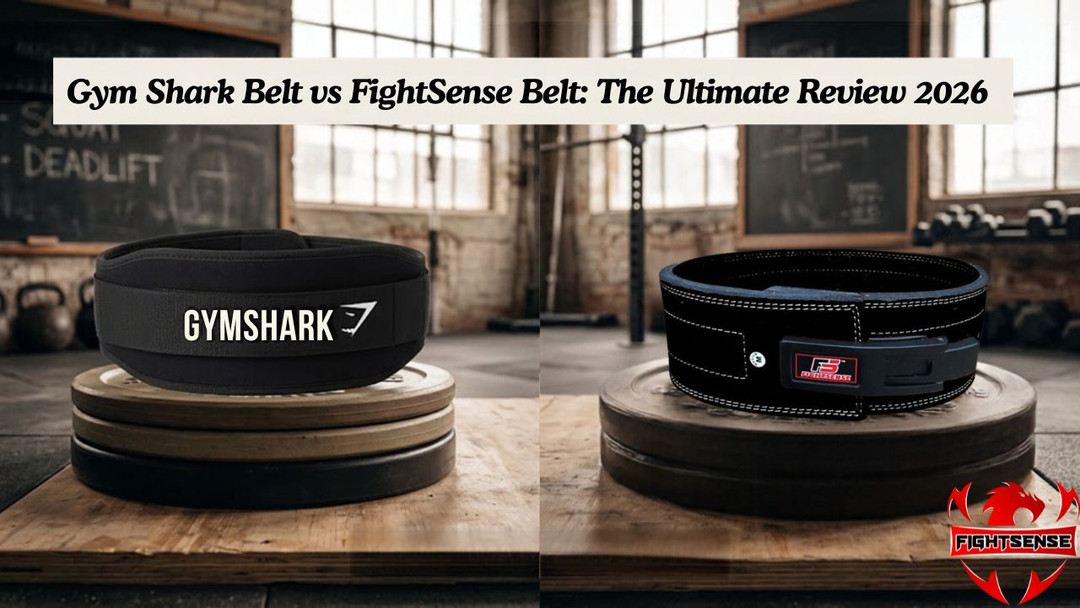
Gym Shark Belt vs FightSense Belt: The Ultimate Review 2026
Choosing the right weightlifting belt can make or break your heavy compound lifts. Whether you are squatting twice your body weight, pulling heavy deadlifts, or aiming to increase your intra-abdominal pressure for overhead presses, core stabilization is vital. Search results for a Gym Shark Belt often lead lifters to stylish, casual gym accessories, but is a fashion-forward gym belt enough to support maximum loads?
In this comprehensive 2026 review, we compare the popular Gymshark weightlifting belt lineup against the heavy-duty FightSense Belt collection. We analyze leather quality, locking mechanisms, core support, and overall value to help you decide which lifting belt deserves a permanent spot in your gym bag.
Understanding Lifting Belts: Why Support Matters
A quality lifting belt is not meant to fix poor form or magically lift weight for you. Instead, a weightlifting belt provides a rigid wall for your abdominal muscles to push against when bracing. This process increases intra-abdominal pressure (IAP), stabilizing your spine and reducing compressive stress on your lower back during heavy squats, deadlifts, and powerlifting movements.
When comparing brands like Gymshark and FightSense, the primary differentiator comes down to construction and target use: casual strength training versus heavy powerlifting performance.
Quick Comparison: Gymshark lever belt vs FightSense Belt
|
Feature |
Gymshark lever belt |
FightSense Belt Lineup |
|
Primary Material |
Nylon, Neoprene, Thin Genuine Leather |
Top-Quality Cowhide Leather & Soft Suede |
|
Thickness Options |
6mm to 10mm Tapered |
10mm Uniform Thickness |
|
Width |
4-inch (Often Tapered) |
4-inch Uniform Width |
|
Closure Types |
Velcro, Double-Prong Roller Buckle, Lever |
|
|
Best For |
Casual Gymgoers, Light-to-Medium Lifts |
Powerlifting, Heavy Squats, Deadlifts & PRs |
|
Durability Level |
Moderate to Good |
Heavy-Duty Industrial Strength |
Deep Dive: The Gym Shark Belt Lineup
Gymshark has built an empire on fitness apparel, and their lifting belts reflect a sleek, modern aesthetic. Their gear catalog includes Velcro weightlifting belts, double-prong leather training belts, and occasional lever releases.
Key Features of Gymshark Belts:
- Lightweight & Flexible: Their nylon and Velcro options are comfortable and easy to wear through dynamic workouts.
- Tapered Design: Many Gymshark leather belts feature a tapered front, which reduces hip digging during bent-over exercises.
- Clean Aesthetic: Subdued colors with iconic minimalist branding appeal to lifters who value gym fashion.
Deep Dive: FightSense Heavy-Duty Lifting Belts
FightSense focuses heavily on combat sports gear and high-performance weightlifting accessories. Built specifically for powerlifters and strength athletes, FightSense leather lever belts and double-prong belts emphasize pure structural integrity.
Key Features of FightSense Belts:
- 10mm Solid Cowhide Leather: Provides rigid support across the abdomen and lower back without flexing under extreme weights.
- Precision Lever Mechanism: Allows instant lock-in and quick release between sets without fumbling with prongs.
- Uniform 4-Inch Width: Offers full 360-degree surface area contact for maximum core bracing.
- Built-in Lumbar Padding: Soft internal suede and padded lumbar zones keep high-pressure lifts secure and comfortable.
Head-to-Head Analysis
To see how these two options perform under real training conditions, let's examine four critical categories.
1. Material & Durability
Gymshark belts frequently utilize flexible synthetic materials, nylon, or thinner leather layers. While comfortable out of the box, softer materials can flex under loads exceeding 300–400 lbs.
FightSense belts are built from 100% genuine cowhide leather with heavy-duty double stitching. This rigid structure maintains its shape over years of heavy use, offering superior longevity for serious lifters.
2. Buckle Mechanism: Lever vs Prong & Velcro
If you prefer fast transitions during workouts, the closure system is crucial:
- Velcro Belts (Gymshark): Quick to adjust, but Velcro can degrade over time and slip under extreme abdominal pressure.
- Prong Belts (Gymshark / FightSense): Highly reliable and adjustable, though pulling a prong tight after a heavy set requires effort.
- Lever Belts (FightSense): The gold standard for powerlifting. Flip the steel lever for a tight lock, and flick it open instantly once your set finishes.
3. Back Support & Intra-Abdominal Pressure
A tapered belt (narrow in front, wide in back) feels less restrictive, but it reduces the surface area your abs can press against. Gymshark offers tapered designs suitable for general hypertrophy workouts.
FightSense maintains a uniform 4-inch width all the way around. This uniform width creates maximum intra-abdominal pressure, keeping your spine rigid during max-effort squats and heavy deadlift attempts.
Pros & Cons Breakdown
Gym Shark Belt
- Pros:
- Stylish design and modern colorways.
- Lightweight, flexible options ideal for general fitness classes and bodyweight movements.
- Soft materials require minimal break-in time.
- Cons:
- Softer materials may lack support for maximal powerlifting loads.
- Tapered profiles reduce frontal core bracing surface area.
- Higher cost relative to raw material thickness.
FightSense Lifting Belt
- Pros:
- Ultra-durable 10mm genuine cowhide leather build.
- Heavy-duty steel lever buckle for instant locking and release.
- Uniform 4-inch width ensures 360-degree lumbar and core stability.
- Built-in lumbar padding for improved lower back comfort during heavy sets.
- Cons:
- Rigid genuine leather requires a short break-in period.
- Heavier and bulkier to transport in compact gym bags.
Step-by-Step Guide: How to Properly Wear a Weightlifting Belt
Wearing a belt incorrectly can limit its benefits or disrupt your mechanics. Follow these four steps for proper placement:
- Position Above the Hip Bones: Place the belt across your lower back and pull it across your belly button, resting just above your iliac crest (hip bones).
- Set the Tightness: Tighten the belt so it feels snug, but not so tight that you cannot take a full belly breath. You should be able to fit one flat hand between the belt and your torso.
- Engage the Lock: Fasten your double-prong buckle or snap the FightSense lever closed to secure the fit.
- Brace into the Belt: Take a deep diaphragmatic breath into your stomach (expanding 360 degrees) and press your abdominal wall against the belt before initiating your lift.
Expert Tips for Max Capacity Lifts
- Do Not Wear It All Workout: Use your lifting belt primarily for working sets above 70–80% of your one-rep max (1RM). Leave it off during warm-ups to train your natural core stability.
- Adjust for Movement Types: Position the belt slightly higher on your torso for deadlifts to prevent the edge from digging into your hips during the setup.
- Pair with Proper Footwear: Combine a rigid 10mm lever belt with flat-soled lifting shoes or heel-elevated weightlifting shoes to maintain optimal joint stacking.
Common Lifting Belt Mistakes to Avoid
- Confusing Pant Size with Waist Size: Always measure your waist circumference around your belly button with a flexible tape measure. Pant sizing does not reflect actual waist dimensions for lifting belts.
- Sucking in Your Stomach to Tighten: Sucking in your stomach creates a hollow brace. Instead, expand your midsection outward into the belt wall.
- Using a Belt to Cover Weak Core Muscles: A belt enhances core bracing; it does not replace abdominal strength or proper squat mechanics.
Shop Now !
FAQs:
Is a Gym Shark Belt good for heavy powerlifting?
While Gymshark offers functional belts for general strength conditioning, serious powerlifters usually require a rigid 10mm or 13mm solid leather belt like the FightSense Lever Belt to sustain maximum intra-abdominal pressure.
What thickness lifting belt should you buy?
A 10mm belt is the ideal thickness for 90% of lifters. It provides maximum rigid support while breaking in faster and feeling less restrictive than a heavy 13mm belt.
Is a lever belt better than a prong belt?
Lever belts offer faster lock-in and instant release between heavy sets. Double-prong belts are easier to share or adjust if your body weight fluctuates frequently, but lever belts remain preferred for competitive lifting.
How do you measure size for a FightSense belt?
Measure around your natural waistline across your navel while relaxing your stomach. Do not rely on your jeans or pant size.
Can beginners use a leather lever belt?
Yes. Beginners learning compound lifts like squats and deadlifts benefit from the firm feedback a leather lever belt provides against their abdominal wall.
How do you break in a stiff leather lifting belt?
Roll the leather tightly inward and outward repeatedly along its length. Regular use over 1–2 weeks will naturally break in the leather to conform to your torso.
Does a 4-inch uniform belt restrict movement?
For heavy compound lifts (squats, deadlifts, overhead presses), a uniform 4-inch width offers optimal core stability without impeding your range of motion.
Final Verdict:
Choosing between a Gym Shark Belt and a FightSense Belt comes down to your training intensity. Generally, the former works well for casual workouts and lighter accessory training. However, if your goal is breaking personal records in heavy squats and deadlifts, the 10mm genuine cowhide leather lever option is the clear winner. It delivers the structural rigidity, lower back protection, and core bracing needed for maximum loads. Ready to elevate your training? Explore the collection today for ultimate support on your next leg day!
Disclaimer
This material serves only for informative needs. Before utilizing weightlifting equipment, always see a fitness professional to guarantee correct form and safety.